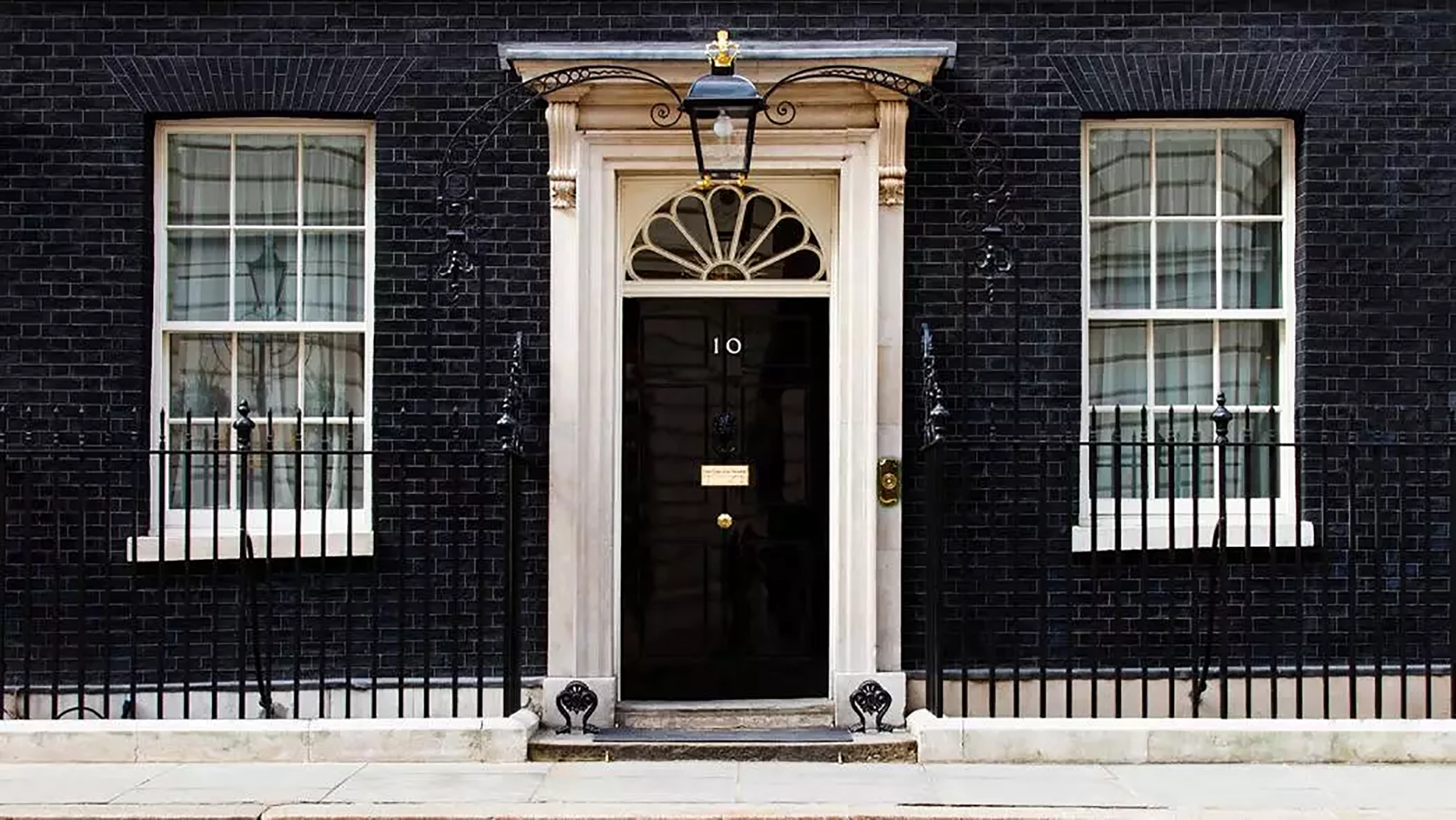
Last week fourteen years of Conservative rule ended in the UK. It was not a surprise to anyone watching the polls or living in the country. We all knew what was coming even if the size of the Tory defeat may have shocked some die-hard believers on the right. Labour have come in and they have started speaking in a different way to that which we had become used to in our politics.

It’s very early days but there seems to be a desire to solve problems, employ experts, engage in conversation and to listen. I will admit a personal view that I am not sad to see the Conservatives lose but that is not the point in my writing this article. The point is that the outcome of the election and the responses from both sides reminds me of the factional nature of the photographic community.

One side looking forward and investing in new thinking and the other looking backwards to a past through rose-tinted-glasses with a heavy dose of cynicism. Since last Friday all I have heard from the losing party is contrition based upon a need to listen. Something no one was stopping them from doing. They have balanced this out with a large dose of disbelief that anything can be better than what they ‘acheived’ combined with loud aggresive rhetoric stating that everything will get worse based upon their opinion and no facts. I hope this soon becomes the political rhetoric of the past. However, I am not convinced.

The similarities between this response to the new and untried and that of photographers concerning analogue and digital (Yes! Still!) and computational and AI image-making are clear to me. We should not be afraid of change, but I have always believed that many of those engaged with photography are conservative by nature. That’s conservative with a small ‘c’. A bizarre position to adopt when involved in a practice based upon technological evolution but one I have observed none the less.

There is a right wing manifesto currently being promoted across the world based upon fear and a distorted view of the past. One not disimilar to the ‘photo wars’ of the last three decades. This we know. It is our choice if we buy into that message. I suggest that by adopting an open mind, looking for facts and avoiding the noise we can all make the right decision.

Whenever people ask me for some advice concerning progressing their work I always say the same thing, be nice. Polite, professional and patient. You can be forthright, straight speaking and strong minded but the three words beginning with ‘p’ are essential. It seems that many of the deposed Conservatives are unaware of this blaming others for their demise and attacking those who have opinions different to their own. Like photographers on social media too keen to stress their views without the knowledge or insight required to do so.

It has been a breath of fresh air to see and hear the approach to politics that Keir Starmer is spearheading. He is not perfect and I am sure that he and we will have choppy waters ahead but his approach is one that I think the photo community could benefit from. Less angry, less argumentative, less accusatory, less doom-mongering. Less self-centred.

I am not sure how well this article will age. I may be getting swept up in a form of post election euphoria. However, this is not my first rodeo. I have been on the horse and been thrown off a few times before. I am also aware of the political challenges taking place globally and particularly in the United States. However, I would like to polietly propose a question. How can we expect change if we do not support it and implement it in our own worlds? Do I get your vote?

Dr.Grant Scott
After fifteen years art directing photography books and magazines such as Elle and Tatler, Scott began to work as a photographer for a number of advertising and editorial clients in 2000. Alongside his photographic career Scott has art directed numerous advertising campaigns, worked as a creative director at Sotheby’s, art directed foto8magazine, founded his own photographic gallery, edited Professional Photographer magazine and launched his own title for photographers and filmmakers Hungry Eye. He founded the United Nations of Photography in 2012, and is now a Senior Lecturer and Subject Co-ordinator: Photography at Oxford Brookes University, Oxford, and a BBC Radio contributor. Scott is the author of Professional Photography: The New Global Landscape Explained (Routledge 2014), The Essential Student Guide to Professional Photography (Routledge 2015), New Ways of Seeing: The Democratic Language of Photography (Routledge 2019), and What Does Photography Mean To You? (Bluecoat Press 2020). His photography has been published in At Home With The Makers of Style (Thames & Hudson 2006) and Crash Happy: A Night at The Bangers (Cafe Royal Books 2012). His film Do Not Bend: The Photographic Life of Bill Jay was premiered in 2018.

Scott’s book Inside Vogue HouseOne building, seven magazines, sixty years of stories, Orphans Publishing, is now on sale.

© Grant Scott 2024


Discover more from The United Nations of Photography

Subscribe to get the latest posts sent to your email.

5 responses to “Photography and Politics: The Right and the Left”

  1. Photographic commentators, photographers even, often fall into the trap of thinking the medium is ‘objective,’ above or beyond politics. Or that as an artform it offers a legitimate escape from politics – certainly from the narrow confines of party political wrangling. It can open doors and be an avenue to a completely different way of thinking. Or it can so often be a dead end street of immitative moribund cliché as photographers struggle to find ‘their unique vision’ in a world absolutely drowning in photographic based imagery.
    In quieter, pre-digital times. John Szarkowski, Director of Photography at New York’s Museum of Modern Art put together the Mirrors and Windows exhibition. This pared down the variety in American photography up to the 1960s, to a dichotomy between two apparently opposing approaches to photography: one offering – through the ‘objective’ nature of the lens (and the intent of the photohrapher) – a window on the world. And the other approach, photography as a means of self expression offering a mirror to the human soul. It was a good model for thinking about photography as a cultural process.
    It was inevitable that we should recognise these two strands of thought as being inextricably entwined. For instance, with the benefit of hindsight we imputed artistry and expressiveness to the legacy humanitarian photographers of Magnum, who we had been led to believe were telling us the ‘truth’ about the world we live in. In fact they were constructing a particular view of humanity (one that I continue to admire – though it has been superceded – certainly in ‘art’ photpgraphy – by an approach that pretends to be more intellectually considered and less sentimentally attached).
    Photographers like Lee Friedlander and Gary Winogrand forayed into the intersection between the objective nature of reality and individual subjectivity, taking pictures of ‘the real world’ that reflected an apparent detachment from it. This apolitical detachment was in itself a form of politics.
    When the ‘objective’ nature of ‘documentary’ reportage became politically suspect (it privileged the position.of mainly, white middle class male photographers), would-be art photographers beat a hasty retreat from expressionistic humanistic photography and reportage to a far more introspective, self reflective approach that avoided treading on another people’s turf. White male photographers could no longer presume to speak for other nations’ peoples, they could no longer objectify women. ‘Documentary photography’ was a cultural construct that needed to be dismantled and reconstituted in more egalitarian or as cynics would call it, more politically correct ways.’ This, by and large critically engaged photographers have tried to do. But photography in itself doesn’t challenge anything. It comes down to the honesty and integrity of the photographer and their intentions. Magnum formed as a photographic agency to circumvent – as far as it could – the limitations then imposed on photographers by the mainstream print media. Today photographers continue to be strung up on the strictures of editorial, publication and exhibition policy dictated by people with greater privileges than they. Photographers can continue to remain politically nieve if they want.
    Alternative media offers one of the only ways out for the modern ‘concerned photographer.’ But even that has limitations. Nevertheless, ‘real stories’ continue to take place with or without professional photographers in attendance. These days photographers can’t go to war unless they are vetted by the military and ’embedded’ with them on their terms. The military control the narrative, that’s the fodder we receive through the mainstream media. Back in the time of the Falklands war, Don McCullin, arguably Britain’s greatest war photographer – certainly at the time, was prevented from going out to cover the conflict. Such was the establishment’s fear of his brutally honest approach to the atrocities of war.
    Today one has to ask: how much, in real terms has the mainstream media offered us of ‘unembedded’ photographic coverage of the war in Ukraine or Gaza? None or very little. And as for Gaza, ‘left or right,’ neutral independent observors and journalists aren’t even allowed in.
    In Britain we live in relative safety compared to these war ravaged places. Keir Starmer’s election offers some short term hope to British people who are suffering the consequences of 14 years of Tory imposed austerity. But British tax payers money will continue to fund the British arms trade to Israel, making us complicit in the Genocide of the Palestinian people. That is a terrible indictment on the British people who have failed to protest this. I would have thought humanitarians of left and right would be in unison in opposing atrocities recognised as crimes of war by the World’s highest court – the International Court of Justice.
    Photrography has a role in all this – regardless of whether one is a Tory or Labour voter. Citizen journalists and photographers show a completely different picture of Gaza to the one presented to us by the British and American mainstream media. That’s modern digital technology for you – we ignore it at our peril. I can only say l am surprised that social media has had such a dearth of imagery from Ukraine, where by all accounts the mortality is far higher.

    1. Thanks for the extensive response. You raise different points to the ones I raised but that’s okay.

  2. Martin Hulbert Avatar
    Martin Hulbert

    Change: Progress, evolution, necessity or dark sinister motives?

    Fortunately I live in Scotland so have had some protection from the excesses of the tory government. The last 14 years have seen many changes made and I am hard pushed to find one that did not have sinister motives behind it. These sinister motives often have a lie as the headline “positive” message [eg Electoral fraud is a big issue in UK elections – cf America with Trump] shouts out the need for change while obscuring the real reason [eg we do not want certain people voting because they will vote for our opponents].

    But let’s turn to photography: something with large equipment, very technical and incredibly slow to operate for wealthy scientists and artists that could be seen by the chosen few became something that is held in a hand, is universal, almost instant and can be seen worldwide in seconds… or can direct a missile or drone with poor intelligence onto a school or hospital, killing hundreds … 180 years of progress?

    I learnt photography with film, no zooms, no autofocus, no exposure meter, and a wait to get your results – even if later I processed and printed myself. Polaroids were high quality test images for large /medium format cameras or with an instant camera produced poorish results. But as we ‘progressed’ or changed, camera prices dropped and £0.99 or free film developing and processing became fashionable… a large consumer market developed and fortunes were made and lost.

    In 2000 digital photography had appeared with normally fairly poor results. Two years later CanNikOly had digital camera that could produce good results. In 2004 I used a digital camera for ‘photographic notes’ alongside a 6×12 film camera for my documentary photography masters.

    Whilst apart from Leica and medium / large format cameras you had to select whether you wanted digital or film and buy accordingly, the change was really in progress. Chemical disposal had suddenly become a ‘problem’ that was discovered, and Ericson then Apple put cameras on their phones.

    Like many others I regret not keeping my film cameras and selling them for about 1/10 of what they cost now. Film has become alternative and your digital camera is soon replaced, takeovers, mergers and diversification have removed some names or resourced others.

    Of course digital now feeds 24/7 “news”, while the ordinary person can see their phone image on television. But more seriously even by 2004, “news’ was created for digital photographers as attacks happened in time for CNN breakfast broadcasts [from Afghan war photographers].

    But now … digital has both created a larger market and become a big industry while film continues with those who want a more contemplative and slower art form, accepting the high costs of material to produce unique images. In the background some go back to alchemy, experiment and are content for a few to see their original work in the ‘Real’, not electronically. While others try to recreate /reinvent this digitally.

    But sometimes change goes full circle, or goes down avenues that no one wanted apart from the big businesses… Supposing you had a device on your phone that could capture what you imagined and transfer it to your ‘followers’ phones to send to their imagination…

    That in the hands of Trump or the far right politicians and media would be…

  3. Dr Scott, wrong on two counts. Firstly the Conservative Party were only in power for nine years, since the General Election of 2015 and the ‘war’ between analogue and digital is well and truly over as film is still manufactured and Pentax have even recently introduced some analogue ‘hardware’ albeit half-frame. I expect other manufacturers to join in the ‘analogue hardware revival’ as a means to make money in the face of some boredom from consumers with yet another black digital box. I use both systems by the way.

    1. I am afraid you are wrong. Cameron was elected in 2010 as part of a coalition government which took no notice of its political partners and the analogue war is over, just a few people won’t accept it.

Leave a Reply

This site uses Akismet to reduce spam. Learn how your comment data is processed.

Trending

Discover more from The United Nations of Photography

Subscribe now to keep reading and get access to the full archive.

Continue reading