
I often find myself travelling down the rabbit hole of old photographic magazines. I have a lot, mainly from the 1960s and 70s. The decades I grew up in and therefore find the most interesting. I enjoy the graphic approaches to advertising, the occasional interviews with photographers early in their careers, the editors letters dealing with issues of the moment and readers letters complaining and praising past articles. However, the ‘meat’ of most of these magazines, aside from the kit reviews, are the photographer profiles and it is these that have instigated this article.
Putting Creative Camera and Camera magazines to one side as they are both full of great photographers work that has stood the test of time. My observation is that most of the photographer’s featured have been forgotten.
This raises a number of questions. Where these photographers known at the time? Was their work considered important? If so why? Why were they featured? I can only guess the answers to these questions, but I can make some observations that may lead to some informed guesses to come to a form of understanding why we remember those we do and not others.
The reality is that the photographers featured in any magazine, or today on any website, are defined by the breadth of knowledge, courage and engagement of the person choosing. Let’s, make it clear from the beginning that we cannot take as a given that any of these characteristics can be expected in anyone with a position of power. The ladder to the top has many ways to climb it. If they are not being present or being implemented then there is a tendency for the safe, generic and ‘popular’ to be promoted.
This in turn becomes a dangerous message to be seen as it can easily be interpreted as a winning formula to getting noticed. Play it safe and copy the fashion of the time. The truth is of course the opposite. We don’t want to see the mundane and boring we want to be challenged, excited and inspired. Don’t we? Not surprisingly, the photographers and work that has been forgotten, too often falls into the first category.
It would be easy at this point to begin a list of those whose names mean nothing to us today who once received four, five or six full pages, even a cover, of photography magazines of the past, but there would be no point. It would be cruel and miss the point of the problem. Which is that as with any creative endeavour many are called, but few are chosen, to misquote and misuse Matthew 22:14.
You can be good at marketing, making friends with the influential, and achieve momentary success with photography. You can cultivate social media likes and followings, but these are all transitory. It is the importance of the work that matters. It is the work that will be remembered. This is the conclusion my page flicking has delivered.
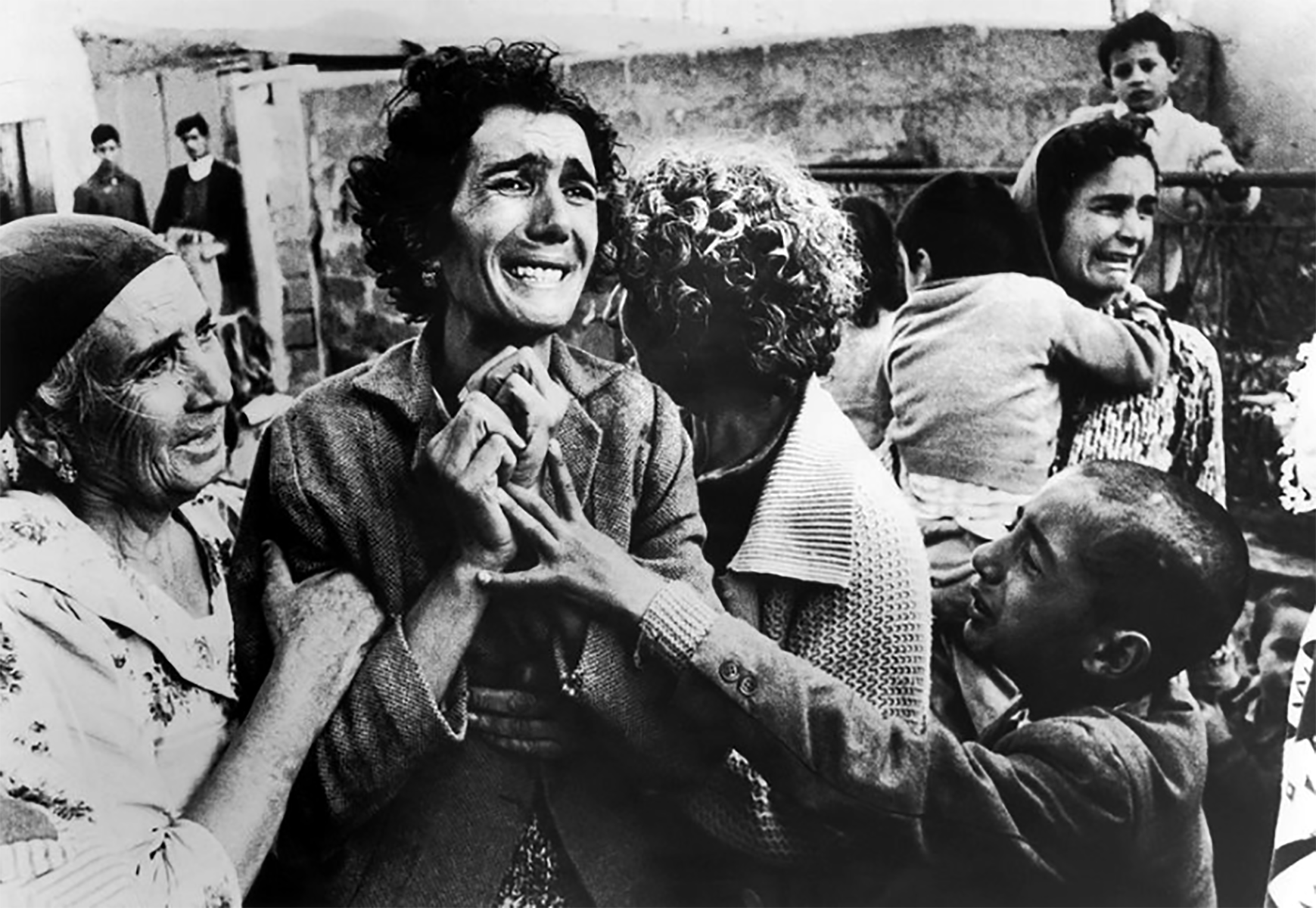
A two-page article I stumbled across in a 1964 issue of the British Journal of Photography listed the winners of that year’s World Press Photo Awards. The article featured a photograph of a young fresh-faced photographer no bigger than the width of a text column. Opposite was the photographer’s winning image. The photographer was named as Donald McCullin of The Observer. The winning image was made in Ghaziveram, Cyprus and featured a Turkish woman mourning her dead husband, a victim of the Cyprus Civil War between Greek Cypriotes and Turkish Cypriotes. It is one of the most powerful images of grief you will ever see and an iconic image of its time. And yet it warranted no more than a quarter of a page.
That photographer and that image has not been forgotten. Everything else in that issue has been. I rest my case.
Dr.Grant Scott
After fifteen years art directing photography books and magazines such as Elle and Tatler, Scott began to work as a photographer for a number of advertising and editorial clients in 2000. Alongside his photographic career Scott has art directed numerous advertising campaigns, worked as a creative director at Sotheby’s, art directed foto8 magazine, founded his own photographic gallery, edited Professional Photographer magazine and launched his own title for photographers and filmmakers Hungry Eye. He founded the United Nations of Photography in 2012, and is now a Senior Lecturer and Subject Co-ordinator: Photography at Oxford Brookes University, Oxford, and a BBC Radio contributor. Scott is the author of Professional Photography: The New Global Landscape Explained (Routledge 2014), The Essential Student Guide to Professional Photography (Routledge 2015), New Ways of Seeing: The Democratic Language of Photography (Routledge 2019), What Does Photography Mean To You? (Bluecoat Press 2020) and Inside Vogue House: One building, seven magazines, sixty years of stories, (Orphans Publishing 2024). His photography has been published in At Home With The Makers of Style (Thames & Hudson 2006) and Crash Happy: A Night at The Bangers (Cafe Royal Books 2012). His film Do Not Bend: The Photographic Life of Bill Jay was premiered in 2018.
© Grant Scott 2026


Leave a Reply