
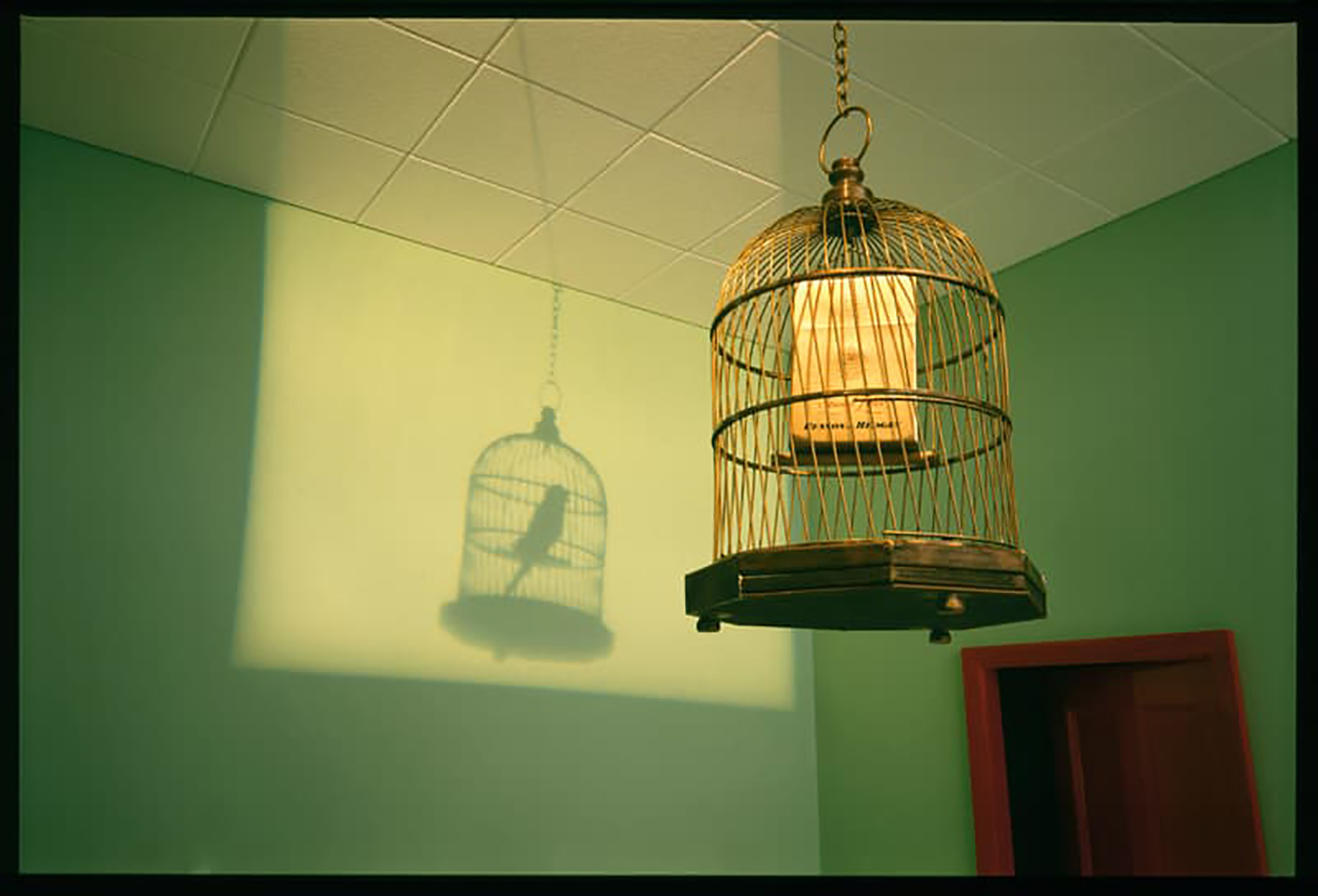
Let me take you back to the 1960s, or 70s, or 80s, we could even travel back to the 1990s if you like. We could look at the tobacco advertising for Benson & Hedges by Brian Duffy; we could look at the editorial still lives created by Irving Penn. Perhaps you would like to view the covers created for Esquire magazine by art director Henry Wolf; Warhol emerging from a can of soup or a wine glass and sachet illustrating instant wine. Or a hand wiping a tear from John F. Kennedy’s eye. All of these and many more were and remain clever visual jokes, commentaries and conceits created by photographers, as photographs and in-camera.
I spent my years in the 80s and 90s coming up with such ideas, building elaborate sets and props to make the imagined real. I now look back and cringe at the moments when I put Kylie Minogue in a giant perspex box, placed Michael Caine with a plate spinner from Folkestone and a restauranter with a live camel in Camden. These were not my finest hours as an art director, although I look back on them now with a wry smile.
The reason I mention these now is because I recently saw a UK based YouTube content creator/photographer state that he had only had one stills commission over the past year and therefore photography for him was over. He was moving literally into the world of the moving image. After fifteen years working as a photographer he claimed that he was no longer progressing technically and that his new world of video making offered more opportunities to learn. I get this. I have been promoting the adoption of moving image by photographers for the past sixteen years. I even launched a magazine titled Hungry Eye to spread this gospel.
The photographer in question has a large studio space filled with expensive lighting, cameras and associated kit perfect for the creation of high quality conceptual images made to please brands such as drink companies, food brands, cleaning products and the occasional portrait. Images with strong, flat colour backgrounds, graphic shapes and impeccable post-production. Images with no personal imprint. In short the very type of photograph that AI can achieve easily and cheaply.
The ideas in the images I have seen many times before, they are not witty, but obvious, professional but dull. The kind of images that have been able to supply a technically compotent photographer with a good living and a room full of expensive kit. The problem is that it is creativity as problem solving rather than as personal language. I reached out to the photographer and he railed against my suggestion that a practice based in technical progression is always at danger of being replaced by technology itself. He claimed that he was not a nerd and was anti-tech, however his words and the large amount of tech based videos on his channel pointed in a different direction. I was not surprised, as he also sells workshops and states that his videos show you what goes into creating a new body of work, that will make you money in photography and videography. Such a promise always rings hollow to me, and reminds me of the enthusiast magazines that promise the same and deliver very little.
It is also strange that a photographer making such a promise is also admitting that they have only had one stills job over twelve months and is leaving photography behind, but I digress. The reason I mention all of this now is as a follow on to my previous writing and podcasting concerning the death of stock photography due to AI. Stock photography was always the home to the visual solution to a commercial problem. An image that says something, simply, clearly and cheaply. The type of work that this photographer was/is producing is now under threat for the same reasons. The concept photograph is grist for the mill of the AI machine. In addition, it is no longer fashionable. Brands today want authenticity, believability and connectability. They do not want cold, hard-edged images that feel alienating. In addition, where once the concept image aimed to wow with a sense of unbelievability, today AI gives us images of incredulity on a hourly basis. The wow has gone.
It has always been the case, but it is even more so today, that the successful photographer brings something new to the party. Something that is unique to them. There is no special sauce that can be purchased through a workshop or downloaded as a PDF. Fitting into a style has always been a mistake and again, it is even more so today. Photography has moved on and inevitably it will leave people behind that are unable to bring a personal vision to the work they make. This is a fact that just has to be accepted. Clever minds can now use AI to form their conceptual dreams as visual outcomes. Photographers have to accept that they are no longer needed to make art director’s dreams real. That their creativity must not be based on technical outcomes and that the only thing they have to sell is who they are, and how they see the world. Today, everyone has an idea and the ability to make images based on what has been. At one time photographers were upset by the phrase that every one is now a photographer. Today, everyone is a conceptual visualizer, if they want to be.
Further Reading and Listening
https://unitednationsofphotography.com/2025/08/31/ai-needs-photographers-creatives-more-than-photographers-need-ai/
https://unitednationsofphotography.com/2026/04/19/photography-connection-and-avoiding-the-fakery/
https://unitednationsofphotography.com/2023/12/27/podcast-a-photographic-life-episode-plus-3/
https://unitednationsofphotography.com/2023/05/15/is-ai-the-end-of-stock-photography/
Dr.Grant Scott
After fifteen years art directing photography books and magazines such as Elle and Tatler, Scott began to work as a photographer for a number of advertising and editorial clients in 2000. Alongside his photographic career Scott has art directed numerous advertising campaigns, worked as a creative director at Sotheby’s, art directed foto8 magazine, founded his own photographic gallery, edited Professional Photographer magazine and launched his own title for photographers and filmmakers Hungry Eye. He founded the United Nations of Photography in 2012, and is now a Senior Lecturer and Subject Co-ordinator: Photography at Oxford Brookes University, Oxford, and a BBC Radio contributor. Scott is the author of Professional Photography: The New Global Landscape Explained (Routledge 2014), The Essential Student Guide to Professional Photography (Routledge 2015), New Ways of Seeing: The Democratic Language of Photography (Routledge 2019), What Does Photography Mean To You? (Bluecoat Press 2020) and Inside Vogue House: One building, seven magazines, sixty years of stories, (Orphans Publishing 2024). His photography has been published in At Home With The Makers of Style (Thames & Hudson 2006) and Crash Happy: A Night at The Bangers (Cafe Royal Books 2012). His film Do Not Bend: The Photographic Life of Bill Jay was premiered in 2018.
© Grant Scott 2026
Image: Brian Duffy, ‘Birdcage, Benson & Hedges advertisement’ was the second of four shot for a B&H advertising campaign.
Leave a Reply