
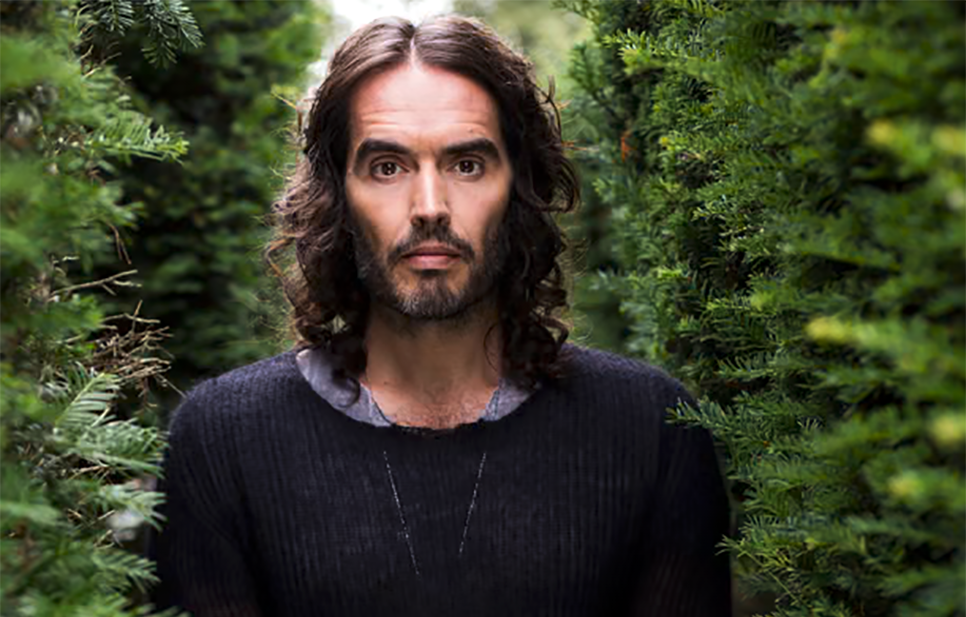
I recently watched a film on the excellent Fred and Harry YouTube channel. Cards on the table, Harry is a friend of mine and I have appeared on his channel (www.youtube.com/watch?v=KiKDa7EFh4I&t=234s) and he has appeared on mine (www.youtube.com/watch?v=hl7YjQfm06s&t=1s) and the A Photographic Life podcast twice. In the film Harry addressed his feelings concerning a photo shoot he had done, with controversial actor, writer, comedian and newly revealed Catholic Russell Brand, a few years ago, and how he felt about it now that Brand is facing criminal charges. Harry seemed conflicted about how he portrayed Brand, and yet he also recognised that in the moment he had done exactly what the magazine, who had commissioned him, had asked. In short, he had been professional in a professional situation.
It’s an interesting conundrum that Harry is considering. Is there a moral responsibility on the photographer, if the person reveals themselves to be other than what you thought at the time of photographing them? The moral stance against photographing and promoting cigarettes, vapes or fatty foods is I think relatively straight forward. You either do it or you don’t, based on how much your conscience will be troubled by such an action. Some may not want to promote alcohol or gambling, or cosmetic medical proceedures. I’d put these into the same category of knowing what you are letting yourself in for. Similarly, with extreme political groups, or those who do not see the world they way you do. In all of these cases you can just say no, or take the money and live with your decision.
However, what Harry was commenting on was different. He felt as if he had been lied to, duped by a master manipulator. Unwittingly used to promote and add to a media image. This had not been the case when Harry had previously photographed DJ, charity fund raiser, TV presenter and paedophile Jimmy Saville. The rumours about Saville were already known, when the images were made, if not confirmed or fully revealed. Therefore, Harry’s images of Saville suggest dysfunction, and an underlying sense of menace. Unlike Brand, who he made to look like a handsome Messiah. Harry’s images of Brand are strong, direct, powerful and just what The Observer, who commissioned them, would have wanted.
I don’t think Harry needs to worry. It is the editorial portrait photographer’s role to create an image that exalts the subject. That raises them up and out of the ordinary in the moment of photographic capture. To build an image that may be completely false, whatever the photographer’s intention. That can take many forms, but it is the truth, however much the photographer hopes to capture some essence of internal truth. I have been on too many commissioned portrait shoots to not understand this. I have photographed people I’ve liked, not liked, that have been easy or difficult. That have been welcoming or antagonistic. All of this comes with the territory. I still have to do my job and produce work the client appreciates.
The issue is, I think, with the length of Harry’s career and that of anybody that works over a series of decades. Such time allows the truth to come out, for misdeeds to be revealed and people to go bad. In the moment that the photographer makes the image they have to communicate with the person that they are photographing. They have to control the situation, but also show empathy and perhaps a little vulnerabilty to establish communication with someone who has been photographed many times, by many different photographers. That can lead to a relationship, however brief, that can lead to a bitter taste in the mouth in the future. This is understandable and inevitable. There is a big differance between agreeing to photograph a convicted mass murderer and someone who has yet to be revealed and tried. The second is not the photographer’s fault or responsibility, the first is a decision that can be questioned, but is at least informed. From a practical perspective its best to accept that our camera lenses capture what we see, not the future.
Mentioned in this episode:
You can see what you think about Harry Borden’s photographs of Russell Brand here https://youtu.be/cNiJtXux75Y?si=1m70nIFscRY-1ZG6.
Image: Russell Brand, 2017: Harry Borden
Dr.Grant Scott
After fifteen years art directing photography books and magazines such as Elle and Tatler, Scott began to work as a photographer for a number of advertising and editorial clients in 2000. Alongside his photographic career Scott has art directed numerous advertising campaigns, worked as a creative director at Sotheby’s, art directed foto8 magazine, founded his own photographic gallery, edited Professional Photographer magazine and launched his own title for photographers and filmmakers Hungry Eye. He founded the United Nations of Photography in 2012, and is now a Senior Lecturer and Subject Co-ordinator: Photography at Oxford Brookes University, Oxford, and a BBC Radio contributor. Scott is the author of Professional Photography: The New Global Landscape Explained (Routledge 2014), The Essential Student Guide to Professional Photography (Routledge 2015), New Ways of Seeing: The Democratic Language of Photography (Routledge 2019), What Does Photography Mean To You? (Bluecoat Press 2020) and Inside Vogue House: One building, seven magazines, sixty years of stories, (Orphans Publishing 2024). His photography has been published in At Home With The Makers of Style (Thames & Hudson 2006) and Crash Happy: A Night at The Bangers (Cafe Royal Books 2012). His film Do Not Bend: The Photographic Life of Bill Jay was premiered in 2018.
© Grant Scott 2026

Leave a Reply