In episode 374 UNP founder and curator Grant Scott is in his garage reflecting on the small and big things that impact on the everyday engagement we all have with photography.

Mentioned in this episode:

https://unitednationsofphotography.com/2021/02/25/diane-arbus-a-personal-snapshot/

Dr.Grant Scott
After fifteen years art directing photography books and magazines such as Elle and Tatler, Scott began to work as a photographer for a number of advertising and editorial clients in 2000. Alongside his photographic career Scott has art directed numerous advertising campaigns, worked as a creative director at Sotheby’s, art directed foto8magazine, founded his own photographic gallery, edited Professional Photographer magazine and launched his own title for photographers and filmmakers Hungry Eye. He founded the United Nations of Photography in 2012, and is now a Senior Lecturer and Subject Co-ordinator: Photography at Oxford Brookes University, Oxford, and a BBC Radio contributor. Scott is the author of Professional Photography: The New Global Landscape Explained (Routledge 2014), The Essential Student Guide to Professional Photography (Routledge 2015), New Ways of Seeing: The Democratic Language of Photography (Routledge 2019), and What Does Photography Mean To You? (Bluecoat Press 2020). His photography has been published in At Home With The Makers of Style (Thames & Hudson 2006) and Crash Happy: A Night at The Bangers (Cafe Royal Books 2012). His film Do Not Bend: The Photographic Life of Bill Jay was premiered in 2018.

Scott’s book Inside Vogue HouseOne building, seven magazines, sixty years of stories, Orphans Publishing, is now on sale.

© Grant Scott 2025

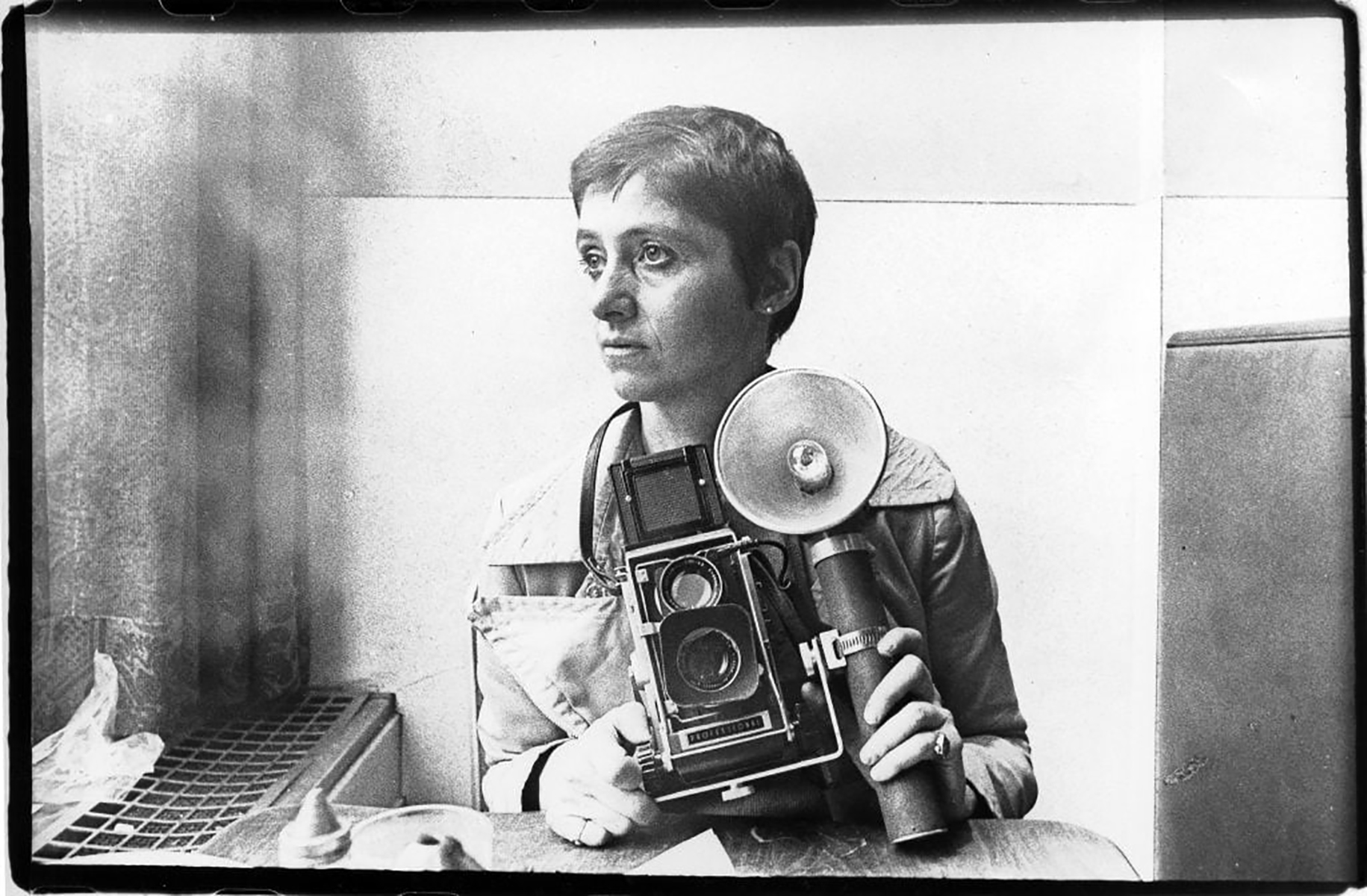
Image: NEW YORK, NY -CIRCA 1968: Photographer Diane Arbus poses for a rare portrait in the Automat at Sixth Avenue between 41st & 42nd Street in New York, New York circa 1968. (Photo by Roz Kelly/Michael Ochs Archives/Getty Images)


Discover more from The United Nations of Photography

Subscribe to get the latest posts sent to your email.

6 responses to “PODCAST: A Photographic Life, Episode 374: ‘Diane Arbus Backlash and What Photographers Know and Don’t Say!’”

  1. In her time, Arbus’s photography came across as complex and unsettling. Rooted in the nature of the gaze, both the photographer and the viewer confronted the human condition in a way that was unorthodox. Along this through line Sontag criticized Arbus’s work for what she saw as a voyeuristic detachment from the “other” with a lack of empathy. Viewers approached these images not with compassion but with a fascination. Contemporary viewers, on the other hand are more attuned to issues of representation, I think would approach Arbus’s work differently and may reinterpret Arbus’s intent, recognizing her attempts to collapse the boundary between photographer and subject. I feel that this shift does not negate Sontag’s critique but rather re-frames it in a more nuanced cultural context. Just a thought

  2. Much of the Arbus work was created to wrong foot the viewer, the level of exploitation used by her is becoming uncomfortable to modern eyes, even offensive to some.
    Nothing wrong with reavalueating classic photography as it ages, time doesn’t always improve taste.
    I’ve stopped looking for good photographers to follow instead seeking out “interesting” work , both are thin on the ground.
    What I know is that pictures always speak louder than words & that context, history and “stories” are often used to enhance the value of weak work and photographers that can’t stand alone.

    Good one Grant , thank you

    1. “context, history and “stories” are often used to enhance the value of weak work and photographers that can’t stand alone”.

      David, did you intend to use the word photographer, or did you mean photograph?

      Either way, I think you are right in your belief. To my mind, there’s certainly value to the Jack Kerouac school of photography, to twist and distort a style of writing into photographic terms. Stream of consciousness certainly has its attractions, but you seldom see it outwith contact sheets, where it’s too damned small to have much value, unless, like HC-B, you claim to enjoy a head over heels take on life. (Which is odd: the head normally is over the heels, so why does the phrase mean what it means in English?) It’s like political correctness: everything today has to conform with a new set of totally artificial rules; it’s not enough to make a single image – you’re supposed to think in terms of story, continuity, books, zines, but certainly never of just good, interesting photographs that stand alone and require no explanation. How daft and unnatural. Just as well nobody spun Johannes Vermeer such a fable. It would have been interesting to listen to the Vincent van Gogh response to such a prejudice. Maybe that was what the Arbus show was supposed to be: simple photography as stream of consciousness. Apparently, the art world ain’t up for such a dangerous idea quite yet.

      In my humble, you can drop the blame firmly onto the plate of art’s own educational establishment, which finds career in analysing the most simple of things and creating value and meaning way beyond whatever the artist ever imagined in the heat of pressing the button. The thing is, photography is basically one of the most simple of things to do. (Working a camera was always very easy once you read the manual; only the Hassy 500 series scared me: you could jam it up so easily if you broke loading or lens changing sequences – more a design fault than anything else. It cost me so much money to buy that I felt paralysed by it for about an entire day! Nikon, by contrast, was so easy. Leica, of course, tried to make a fool of you if you were rash enough to attempt to feed it a film, having said which, despite my love for Nikon, the F4s, supposedly self-loading, never did do that first time. In fact, I sold mine to step backwards to an F3 for that single reason: the humiliation of fumbling in front of a model or client or, worse, both.) That said, it’s not all dark: friendships created in schools can become helping hands up the career ladder later in life, especially if the gallery word turns you on.

      As I suggest, photography is instinct. If you lack it, too bad: think of something else. I love music: I can neither sing nor play anything, despite owning a guitar from the age of eleven until I sold it to an equally challenged youth in my late teens. Forget this American import, the idea that we can all be winners. We can’t. If we could, there would be no recognised stars.

      So yeah, working the camera and the mechanics of processing it either wet or dry can be taught, but seeing the picture (or creating it from scratch), printing it how you want it to look are all dependent on your artistic mindset which arrived or did not arrive, with the first cry you made and independent breath that you ever took. There are – or at least used to be – several expensive schools advertised in American photography magazines selling courses where “famous” photographers would be listed on the staff, the higher their level of fame the more valuable the perception of what it would do for you as a student. But who am I to criticise: after years of no return beyond the value of a cup of coffee, I still do the Euromillion lottery every week. 😉

      1. Hi Rob , “Photographers” plural . creating a generic point rather than a Arbus specific observation.
        Words create a level of expectation of photographers and photographs that is rarely fulfilled or required, especially if the work is as yet unseen.
        As for “Blads’,.I only ever used them as an employee, their okay.when someone else picks up the servicing and repair costs ,Mamiya RB67s fitted my budget and requirements much better when I was paying…

    2. David, what an interesting – and cleanly designed – website you have; you truly do have an eye for your subject. Congratulations!

  3. Diane Arbus. The exhibition may actually have got it right: the less copy decorating the walls, the fewer the gatekeeper comments on how the viewer should understand or perceive the photograph, the more honestly the viewer can take in the image and make up his mind about it. At the end of the day, it’s supposed to be a dialogue between image and viewer – isn’t it? Who knows – I wonder if Arbus even gave the viewer a passing thought.

    She and hubby had both worked commercially in fashion magazines, so I suppose she had an idea about elegance and that kind of thing. The snaps for which she is known show none of that. It’s hard to know the state of her mind at the time; I truly wonder about the state of mind of anyone who takes themself out – and I have know such people: a 50-something musician and also a terribly young teenager.

    From my perspective, and said perspective has shifted over the years, I think her images are just depressing. Earlier on I thought them exploitative, but later, I was less certain that they came bundled with the desire to make some kind of capital out of them, but more likely that she just couldn’t help herself from being sucked into that whirlpool of ugliness that eventually cost her her life.

    As to that writer’s opinion on whether she no longer fits today’s scene, well, she never fitted mine. Frankly, I’m at a loss to know exactly what today’s scene might be. I spend a helluva lot of time thumbing through photography websites and youtube videos, many of my hours drift by looking at flip-throughs of zillions of photo-books, and in all sincerity, the more I see the fewer I feel tempted to buy. As an example of this: I am a fan of Daido Moriyama, find his photography exciting and have even given myself a little project where I attempt to scrape some fresh interest out of my local scene, which I’ve shot for years, by attempting to see it through his filter. I have enjoyed the experience. I don’t live in Tokyo – I live just outside little old Puerto Pollensa, which you may or may not remember from your period on this isle – and there is nothing “metropolis” about it, so as you can imagine, playing around with his look means subverting it to totally different circumstances and subject matter. It’s kept me entertained for quite some time. But the thing is, I feel no desire to buy one of his books. When I do buy books, the motivation comes through years of admiration for the particular photographer, but always there is beauty in the imagery. Not so with Daido (to my eyes), any more than with Arbus. Both are exciting, but in the case of Arbus, an excitement I rather let pass and forget.

    As for the rest of the stuff I find online, I was tempted to buy Tatsuo Suzuki’s Steidl book – street photography as I think fits the definition – but after he admitted using models to set up some of the shots, I kinda lost interest. I found his pictures more interesting than the much vaunted colour pictures from Magnum’s stable of street shooters. Do they represent the good and the great of today’s street photographers?

    Overall, I get the firm impression that the chap writing about the Arbus show has swallowed, hook line and sinker, the art world’s forms and methods of controlling the showing of photography by its traditional rules, and can’t accept the bravery of somebody deciding to do it differently. Of course, instead of bravery and a fresh take, it might just as easily be an organisational mess, or, on the other hand, the ultimate public display of naked emperors.

Leave a Reply

This site uses Akismet to reduce spam. Learn how your comment data is processed.

Trending

Discover more from The United Nations of Photography

Subscribe now to keep reading and get access to the full archive.

Continue reading