
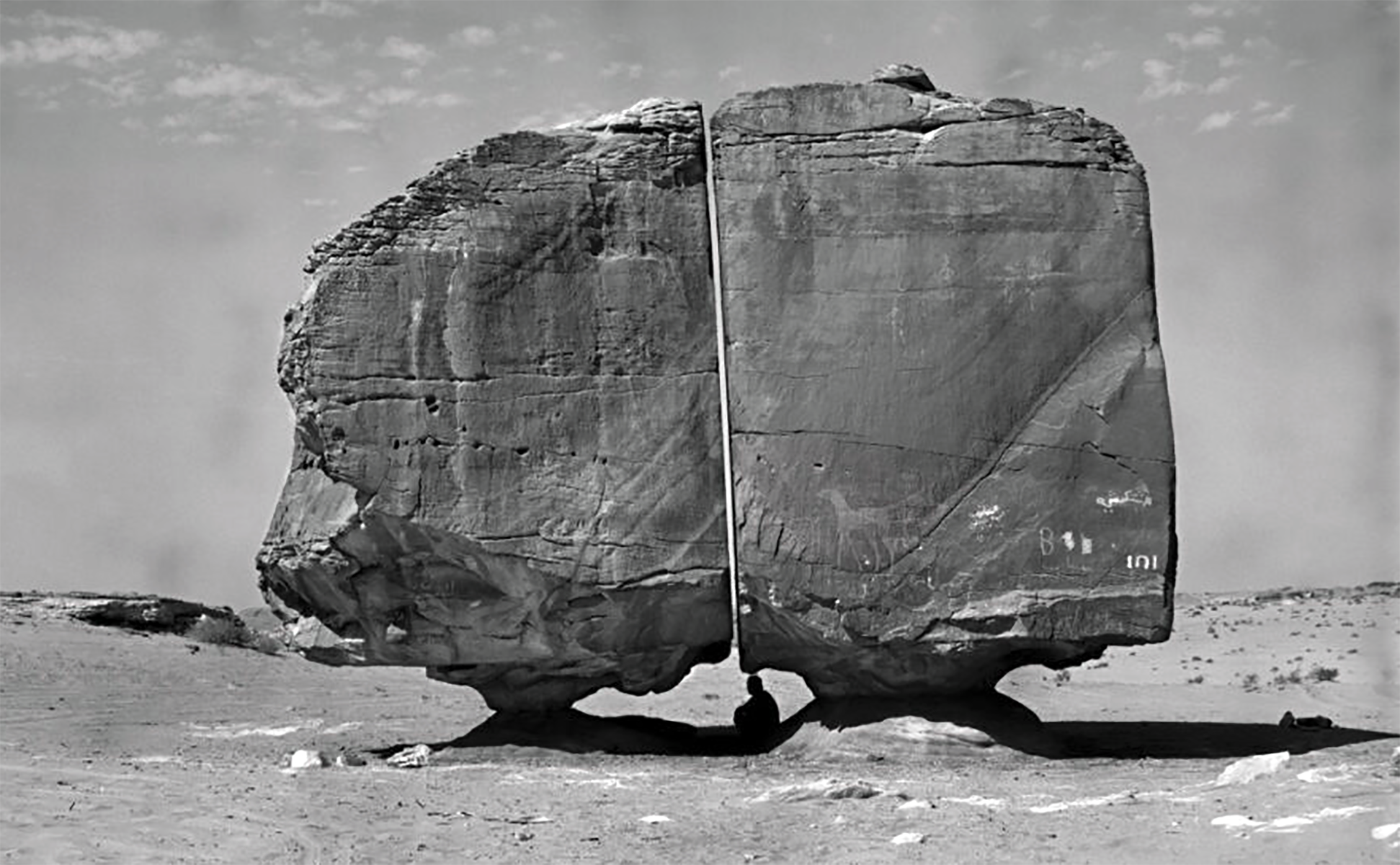
I was watching a film recently in which the Danish photographer Henrik Saxgren (https://henriksaxgren.com) spoke about his work. In the film he talked about photography that added time, rather than stopping time. The opposite to Cartier-Bresson’s ‘The Decisive Moment’. He also spoke of the ability for photography to be peaceful. This made me think. I liked a lot of what he had to say, including his feelings concerning post-production in landscape photography, but it was this idea of peacefulness that I felt deserved further exploration.
Saxgren is intrinsically a landscape photographer, not an area of photography I am particularly interested in, but his images do not fall into the trap that so much landscape image-making does. It is not saturated in post-production manipulation, bound by repetitive compositional choices, and does not aim to be pretty or contemporary. His aim is to create images that are timeless. In this I think he is successful and in doing so his idea of adding time is evidenced. However, I believe that he also achieves images that instigate a sense of quiet contemplation, that could easily be described as medatitive.
I don’t want to get too mystical or spiritual here. That is not my way of approaching the world, however Saxgren’s images do make me consider the power of photography to transcend its basic form as an image on paper to that of a mood changing tool. This may seem like an obvious consideration to address. We know that images of conflict, horror, hate and injustice can have a direct and visceral impact on the viewer. However, how often do we achieve a sense of peacefulness when viewing a photograph?
I know that I have found myself entering a state of calmness when viewing paintings by Mark Rothko in the Rothko Room at Tate Britain. In this I know that I am not alone. The low leather covered benches are placed in the room just for that purpose and are constantly filled with people reflecting on the work. The environment in which we view photography, like art, can have an important influence on how we percieve and engage with the work. A quiet, white room can have an almost church like ambience promoting a sense of reflection. Just as a room full of noisy people can prevent any meaningful connection being made between the viewer and the image. If you want to know more about this just listen to any episode of See/Saw on the A Photographic Life podcast, where we discuss photo exhibitions, photography, photographers, curation, hanging and the visitor experience each month.
Away from the photographic exhibition and the photo book, both of which allow the photographer an element of control over the viewing experience, it is difficult to promote any sense of feeling through a photograph on a back-lit digital screen, aside from the deliberately provocative image. Difficult, but not impossible. Saxgren achieves this through the strength of his work. The composition, the approach and the narrative. His work has an emotional reach beyond the computer screen. It does not require text to provide context; to guide the vewer or present an explanation. Text could be added, but it is not needed.
In essence I think that this is the definition of a successful photograph. In the recently published Josef Koudelka Diaries, Kouldelka notes in 1971, that Cartier-Bresson, said to him concerning his seminal book Gypsies “the book shouldn’t include any photograph that requires text. Any photograph that needs explaining to become a photograph is not a good photo.” I am tempted to agree with HCB, particularly when it comes to the expression of an emotion or state of mind. A photograph either connects or it doesn’t, no amount of explanation can make you feel the way the photographer wants you to, if the image does not achieve that function. I will not laugh, cry or feel peaceful purely because someone tells me to. However, I may do through the power of an image, and I have done on many occasions when it comes to the first two of those emotions. For the third at the moment I will turn to the work of Henrik Saxgren. I wonder if I will find any other photographer that will make me feel the same. I hope so.
Dr.Grant Scott
After fifteen years art directing photography books and magazines such as Elle and Tatler, Scott began to work as a photographer for a number of advertising and editorial clients in 2000. Alongside his photographic career Scott has art directed numerous advertising campaigns, worked as a creative director at Sotheby’s, art directed foto8 magazine, founded his own photographic gallery, edited Professional Photographer magazine and launched his own title for photographers and filmmakers Hungry Eye. He founded the United Nations of Photography in 2012, and is now a Senior Lecturer and Subject Co-ordinator: Photography at Oxford Brookes University, Oxford, and a BBC Radio contributor. Scott is the author of Professional Photography: The New Global Landscape Explained (Routledge 2014), The Essential Student Guide to Professional Photography (Routledge 2015), New Ways of Seeing: The Democratic Language of Photography (Routledge 2019), What Does Photography Mean To You? (Bluecoat Press 2020) and Inside Vogue House: One building, seven magazines, sixty years of stories, (Orphans Publishing 2024). His photography has been published in At Home With The Makers of Style (Thames & Hudson 2006) and Crash Happy: A Night at The Bangers (Cafe Royal Books 2012). His film Do Not Bend: The Photographic Life of Bill Jay was premiered in 2018.
© Grant Scott 2026
Image: Henrik Saxgren
Leave a Reply