
My 14 year-old daughter enjoys all areas of ‘craft’. She paints, collages, draws, designs, makes jewellery, photographs and short-films. She does not describe these activities as art, because she sees that as a subject at school that she studies. Her ‘craft’ is what she does for herself, for fun. Such a definition may be hard to take, for those desperate to describe themselves as ‘artists’ and everything they do as ‘art’. But I’m going off-track.
What I want to talk about is how she sees photography. There is a qualification in photography in the UK, called a GCSE (General Certificate Secondary Education), that any child can take aged 16, alongside more traditional subjects, such as Maths, English, Science, History and Geography. It is a very popular option at schools, where it is offered. This continues at Further Education colleges, where many students consider photography to be an easy option. Sad, but true.
However, such large numbers do not continue into Higher Education at university, where photography is seen as something to study to be a photographer and the majority of young people do not want to be photographers. At least, not in the traditional sense. This is a problem for education and the future of photography, and evidences that photography is no longer just about photographs, to those young of heart and mind. Something that is being addressed by the Arizona State University’s Walter Cronkite School of Journalism and Mass Communication, which is launching a bachelor’s degree in Content Creation.
Let’s look at some facts that widen the conversation. In 2026, 39% of Americans (2 in 5) identify as active content creators across digital platforms according to the Luminate (https://luminatedata.com) six-monthly survey. Goldman Sachs have predicted that next year, the market for paid content creators, will be worth $480 billion dollars. This is evidence of people identifying their skills and finding niche audiences, who wish to learn those skills. Think professionals, who are good at their jobs, coming home at the end of the day and sharing their knowledge with an online audience and getting paid again. This is a self-defining gig economy on a grand scale, but what has this got to do with photography? The answer is everything.
Everyone of those content creators is using photography, or the moving image, sometimes both, at the same time, to create and sell their content. They see photographs as material to use, that create a mood or promote a message, that they can access for free. They are not commissioning it, they are finding it,or more accurately being given it.
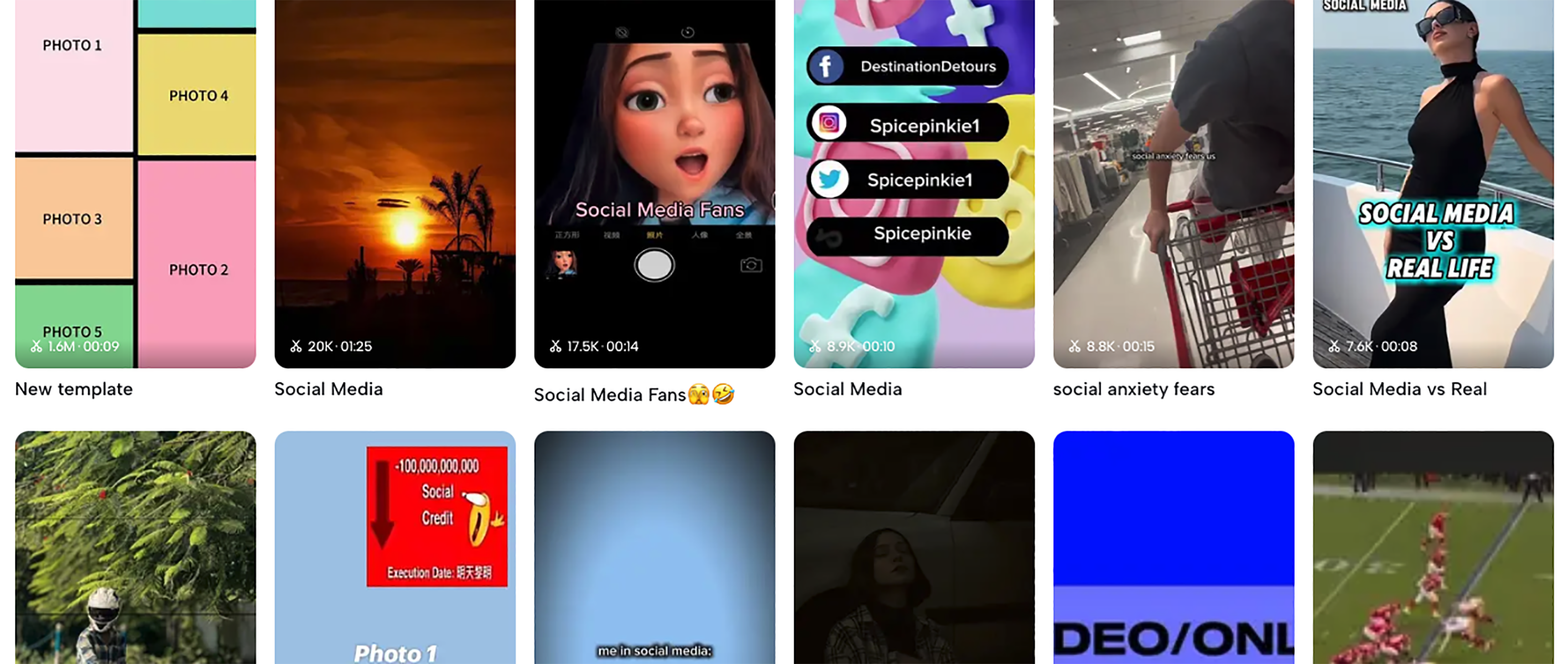
I mentioned earlier that my fourteen-year-old daughter makes films. She does this with her phone and they are really good. In fact so good, that I asked her to show me how to do, what she does. I downloaded the App she uses (it’s called CapCut) and was immediately met with a huge library of content (stills and moving image), described as ‘templates’ that I could use and adapt for my own films. After a short time, I had my first film made. It was simple and free, and with one App, I had become a content creator. I know, I already am, in many ways, across multiple platforms, but if I wasn’t I had become one.
The issue is that the photography on the App felt like AI in places and where it didn’t,it was unattributed. This is image as box filler. Photography as content. Photography that has no relationship with its creator. This is the experience that my daughter and the content creators have with photography. Hyper-real, hyper-fake images out of context.
This is where we are with photography and we should not be surprised. For years images have been stolen and placed on Pinterest ‘mood boards’ out of their original context. Instagram has fulfilled a similar journey in the decontextulization of photography. This is the democratization of photography and content creation, a process that has turned many into ‘Prosumers’. Producer/Consumers, not just photographers or filmmakers but producers, directors and publishers. This is what is exciting for young people and those wanting to create a funded opportunity for themselves.
The traditional understanding of photography, as an art form or profession, is being abused and the abusers do not care. In fact they are revelling in their abuse, as they are unaware of what they are doing, and I have no problem with that. Why should photography not evolve? Is it on too ‘high-a-high-horse’ to be re-imagined? To be reinterpreted? Some, seem to think so and therefore look down on everything that photography is becoming. To those outside of the serious photographic community, such usage and lack or respect and knowlege does not matter. It is not relevant to them, however, understanding algorithms and thumbnail creation is. From my perspective, both can exist side by side, but I do think that it is more important for the traditional photographic community to understand the new than them understanding us. There are more of them and they are the future. We are depleting and based on the past. Controversial? Maybe. True? Definitely.
Dr.Grant Scott
After fifteen years art directing photography books and magazines such as Elle and Tatler, Scott began to work as a photographer for a number of advertising and editorial clients in 2000. Alongside his photographic career Scott has art directed numerous advertising campaigns, worked as a creative director at Sotheby’s, art directed foto8 magazine, founded his own photographic gallery, edited Professional Photographer magazine and launched his own title for photographers and filmmakers Hungry Eye. He founded the United Nations of Photography in 2012, and is now a Senior Lecturer and Subject Co-ordinator: Photography at Oxford Brookes University, Oxford, and a BBC Radio contributor. Scott is the author of Professional Photography: The New Global Landscape Explained (Routledge 2014), The Essential Student Guide to Professional Photography (Routledge 2015), New Ways of Seeing: The Democratic Language of Photography (Routledge 2019), What Does Photography Mean To You? (Bluecoat Press 2020) and Inside Vogue House: One building, seven magazines, sixty years of stories, (Orphans Publishing 2024). His photography has been published in At Home With The Makers of Style (Thames & Hudson 2006) and Crash Happy: A Night at The Bangers (Cafe Royal Books 2012). His film Do Not Bend: The Photographic Life of Bill Jay was premiered in 2018.
© Grant Scott 2026

Leave a Reply