
First let’s deal with some historical facts. The birth of the Arts and Crafts movement in Britain in the late 19th century marked the beginning of a change in the value society placed on how things were made. This was a reaction to not only the damaging effects of industrialisation, but also the relatively low status of the decorative arts. This was a movement that reformed the design and manufacture of everything from buildings to jewellery by returning to traditional crafts, skills and processs. The Luddites were members of a 19th-century movement of English textile workers who protested against the use of automated machinery, due to concerns relating to worker pay, child labour, working conditions and output quality. They often destroyed the machines in organised raids and members of the group referred to themselves as Luddites, self-described followers of ‘Ned Ludd’, a weaver whose name was used as a pseudonym in threatening letters to mill owners and government officials.
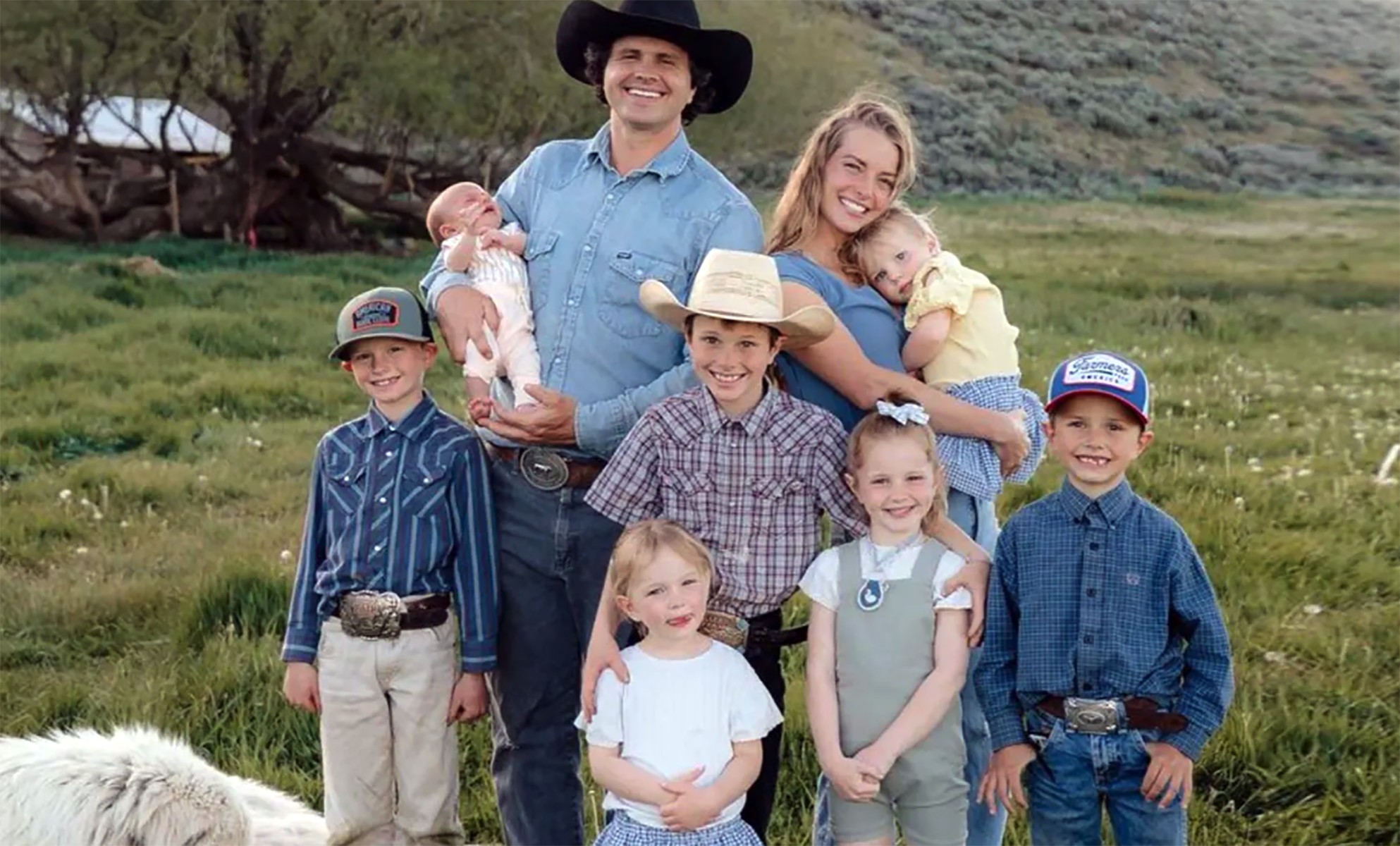
Now, lets look at a definition of the term ‘Trad Wife’. A ‘Trad Wife’ is a married woman who embraces traditional gender roles and values and it is particularly used to describe a young woman who chooses to be a homemaker, makes her own bread, has many children and shares her lifestyle online for considerable finacial profit through creating content based on their ‘perfect’ daily lives. You can find them on Instagram, Tik Tok and You Tube, and they are ultraconservative, Christian National and Gen Z. The two most famous influencers to have been dubbed ‘Trad Wives’ are Neeleman and Nara Smith, who have 10.4m and 4.8m followers on Instagram and 10.5m and 12.4m on TikTok.
So what has this to do with analogue photography? I think it may have quite a lot. Just as the Arts and Crafts movement and the Luddites railed against the industrial revolution, so are those looking toward analogue as a refuge from the AI Revolution. They may not be as fervent in their objection as the Luddites or as pastoral and rural as the Arts and Crafts folk, but a desire to reject the new in favour of the old is a natural human response.
The ‘Trad Wives’ are also looking back in time through rose tinted glasses, if with a more cynical financial motive and dark under current of politics and religion. Their desire is to return to a world in which men were the bread winners and women only expected to be in the kitchen and the matrimonial bed. Beliefs that can be seen as a rejection of modernity. A return to the ‘simple’ life and a release from the modern day pressures and expectations of the digital world. Of course this is as naive, offensive and mis-informed as any simple answer to a complex issue. Yet, it is extremly appealing to many.
Digital photography is cheap, simple and effective, but it lacks the sense of romance and nostalgia of analogue. The ‘Trad Wives’ use a sepia aesthetic of script fonts and soft colours to offer a similar experience. A return to the past and the sense of craft is a very appealing promise, even if it takes more time, costs more money and requires more skills. It’s easy to buy a loaf of bread, but it’s more rewarding to bake one. It’s easy to print a digital image, but it’s more rewarding to struggle in the darkroom to produce your own. You see the connection.
I am often told that I am anti-analogue. This is not true. I worked as a professional photographer with analogue until digital was an option and my clients demanded it. Since 2006 I have seen no reason to work with analogue. I am not interested in process and I have no emotional attachment to film or film cameras. For me photography is about the image not the process. As such I am looking forward, not back. I appreciate the work of those who think differently to me. I am not suggesting that analogue photographers have adopted the beliefs of the ‘Trad Wives’, but I do think that there is a shared sense of rejection of the speed at which the world is moving. Proof of this is often given by photographers who state that they work with analogue as it gives them time to slow down. One of the most common reasons I hear given for working with film. The rise in the number of photographers today working with large format plate cameras also points in this direction. As does the interest in alternative processs.
I am looking at the bigger picture here and attempting to make some connections and draw some threads together. I am not criticising anyone for the choices they make. I am putting forward some thoughts for others to consider. If you see the same connections as me that’s fine, if not that is also okay, but to not be aware of how we respond to the world is to reject our understanding of our own actions. Choosing analogue over digital in photography is a small, and in the wider scheme of things, in consequential decision. However, it may just be one that is part of a much wider and important global and historical thought process.
Dr.Grant Scott
After fifteen years art directing photography books and magazines such as Elle and Tatler, Scott began to work as a photographer for a number of advertising and editorial clients in 2000. Alongside his photographic career Scott has art directed numerous advertising campaigns, worked as a creative director at Sotheby’s, art directed foto8 magazine, founded his own photographic gallery, edited Professional Photographer magazine and launched his own title for photographers and filmmakers Hungry Eye. He founded the United Nations of Photography in 2012, and is now a Senior Lecturer and Subject Co-ordinator: Photography at Oxford Brookes University, Oxford, and a BBC Radio contributor. Scott is the author of Professional Photography: The New Global Landscape Explained (Routledge 2014), The Essential Student Guide to Professional Photography (Routledge 2015), New Ways of Seeing: The Democratic Language of Photography (Routledge 2019), What Does Photography Mean To You? (Bluecoat Press 2020) and Inside Vogue House: One building, seven magazines, sixty years of stories, (Orphans Publishing 2024). His photography has been published in At Home With The Makers of Style (Thames & Hudson 2006) and Crash Happy: A Night at The Bangers (Cafe Royal Books 2012). His film Do Not Bend: The Photographic Life of Bill Jay was premiered in 2018.
© Grant Scott 2026


Leave a Reply