
Where is photography now? What are its uses? What is its importance? All relevant questions for anyone engaged with the photographic medium today. They are questions I am constantly considering. Not to find answers necessarily, but to remain alert to its evolution.
For me to do this requires a sense of analytical reflection in the least obvious places. I was watching the recent Louis Theroux Netflix documentary dealing with leading figures within the ‘manosphere’. It raised many concerning issues concerning misogyny, greed and hate, but it also made me think about the role the still and moving image takes in the dissemination of such messages. One description of the world we find ourselves in that was used in the film caught my attention. I can’t remember who said it, but I immediately made a note of it. The description of the world of the influencer was described as the “attention economy”. It was this comment that made me think.
I have for some time been interested in the use of social media by brands to establish community. Most obviously and traditionally this has been for purely commercial reasons. Often, to sell clothes and accessories based upon the lifestyle of the figurehead of a brand. Most often that of the founder. This is nothing new, influencers are not new, Ralph Lauren, Donna Karen, Gianni Versace, Georgia Armani all adopted the same logic. They all used advertising campaigns and magazines as the vehicles for their brand imagery based on achieving style, luxury and glamour through buying into their personal success and lifestyle.
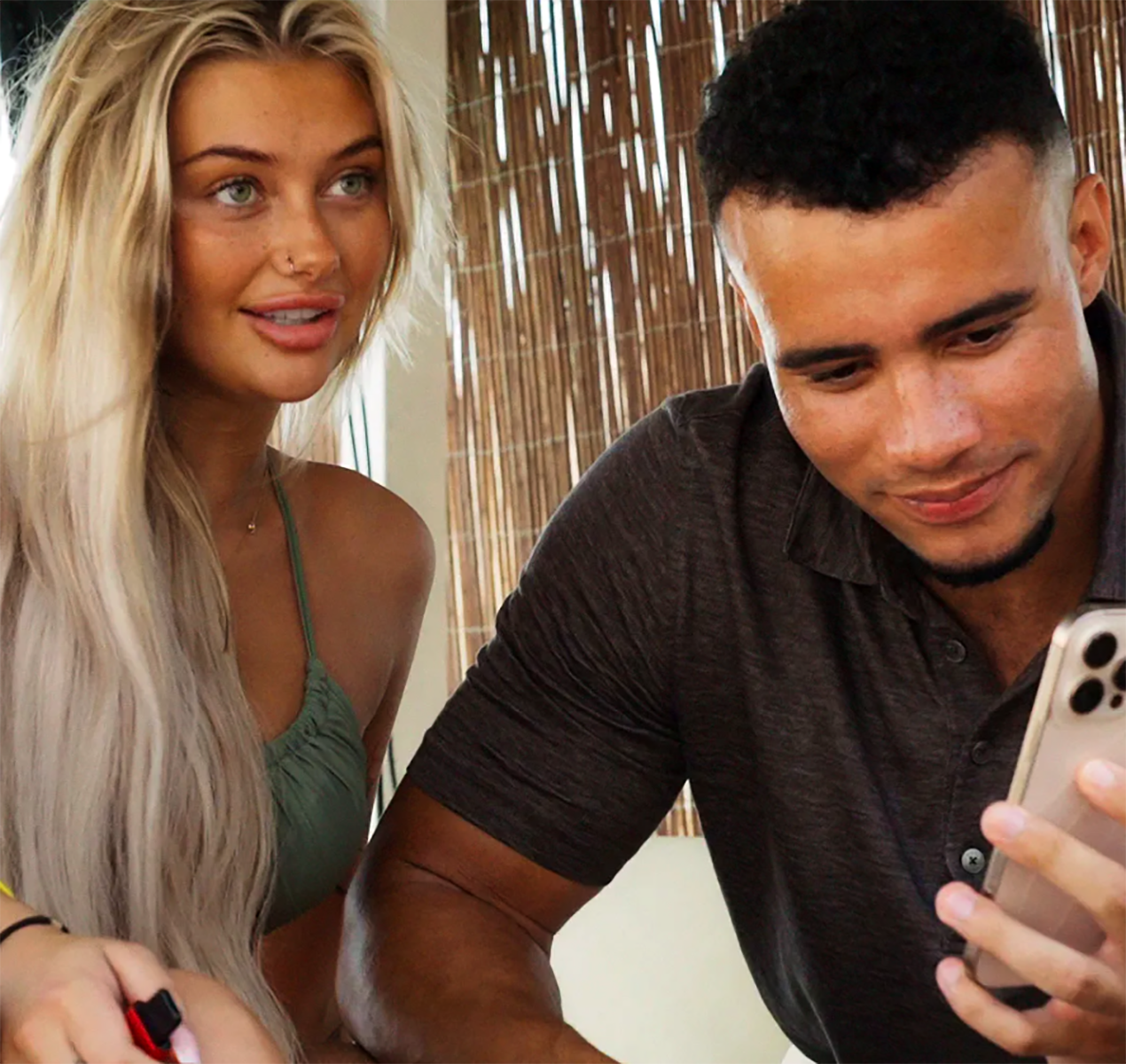
Today all brands taking this approach seriously have their own social media teams. They still commission professional photographers for their major campaigns, but the daily social media bombardment attempting to attract our attention is created by people with smart phones. Moving image is created, edited, clipped and screen shots taken from it at pace ensuring that as soon as it is made it is pushed out to eager subscribers desperate for content. This is a pressurised environment with no deadlines to work towards, or limit on how much can be produced. ‘Now’ is the new deadline, and the more content the better. Despite this lack of boundaries, excellence is expected, innovation rewarded and engagement desired. This is not photography or films made by photographers or filmmakers, many of these people are self-taught creatives who have been absorbed by and within their phones since they were first given them. These are the ‘content creators’ photographers often take issue with. They have little if any knowledge of the history, ethics or conversations surrounding the medium. They don’t need it. Their gods are the brands they work for, not the icons or practices of photography.
To continue the theme of watching television and noting the relevance of the seemingly irrelevant. Whilst watching a true life forensic programme it was revealed that one of the fifteen-year-olds arrested for attempted murder had 45,000 images on his phone. I’m sure that he would not describe himself as a photographer, however, such a number of images may suggest otherwise (but that is a discussion for another time). Images of guns, money, drugs, are catnip for the manosphere. This revelation is where the building of community through image making takes a dark turn. It also reveals the reality and danger of the democratization of visual communication through simple tools available to all. The influencers on the Theroux programme were constantly being filmed and live streamed by their young acolytes on their phones. Like the murder suspect, not being a photographer, they would not see their actions as being those of filmmakers. They, like those promoting brands are content creators, of politically and socially toxic content rather than luxury lifestyles based on consumerism. And yet, I suggest that, they are more similar in creation and intent than they may at first appear. Both are building community to make money from that community based on an aspiration. That aspiration is an image led drug that is being pumped into our systems through our devices without restraint. Unless of course like my father you don’t have a phone!
This is where digital image making is today. In the hands of the untrained, but influential amateur. Where the ideas of material wealth are lauded and applauded. We may think or hope that photography is the preserve of the professional and the enthusiast, but it is not. That is obvious. Instead its powers of communication are being co-opted by those with potentially toxic agendas.
I know that this has always been the case with all image making through history. I am not naive concerning it’s prior adoption by political, social and commercial extremists. However, what I am discussing here is different. The podcast I present each week is called A Photographic Life, a title based on the life I have led and continue to live. It is in that sense a series of reflections. The photographic life the content producers are living is not one of reflection, but of absorption. It is their life, twenty-four-hours-a-day and seven-days-a-week, and that cannot be healthy. Whether you are selling toxic masculinity or cashmere sweaters the pace of the race to a mythical eden can only lead to burn out.
This has happened to photographers as well, but I am not talking about photographers here, I am talking about photography, even when I am discussing the moving image. The same camera or phone make both, and therefore I see no reason to exclude one from another. Content creaters don’t, so why should I in this case? It is easy to believe that everything I have discussed here has nothing to do with photography as you think of it, but as I commented at the beginning of this article, photography is in a state of flux and it always has been. You may agree with my observations here or see them as new and worth considering. You may of course, think that I am talking nonsense. That is your call, but not to reflect on photography’s evolution is I think an opportunity missed. In the past Susan Sontag said “Today everything exists to end in a photograph”, but Gill Scott Heron said that, “The revolution will not be televised… The revolution will be no re-run, brothers, The revolution will be live.” I think Susan was right about then, however Gill was right about content creators. But Christof in The Truman Show was perhaps the most accurate in describing where we are today, “We’ve become bored with watching actors give us phony emotions. We are tired of pyrotechnics and special effects. While the world he inhabits is, in some respects, counterfeit, there’s nothing fake about Truman himself. No scripts, no cue cards. It isn’t always Shakespeare, but it’s genuine. It’s a life.” He just didn’t identify that ‘genuine’ can be both dangerous and dishonest.
Dr.Grant Scott
After fifteen years art directing photography books and magazines such as Elle and Tatler, Scott began to work as a photographer for a number of advertising and editorial clients in 2000. Alongside his photographic career Scott has art directed numerous advertising campaigns, worked as a creative director at Sotheby’s, art directed foto8 magazine, founded his own photographic gallery, edited Professional Photographer magazine and launched his own title for photographers and filmmakers Hungry Eye. He founded the United Nations of Photography in 2012, and is now a Senior Lecturer and Subject Co-ordinator: Photography at Oxford Brookes University, Oxford, and a BBC Radio contributor. Scott is the author of Professional Photography: The New Global Landscape Explained (Routledge 2014), The Essential Student Guide to Professional Photography (Routledge 2015), New Ways of Seeing: The Democratic Language of Photography (Routledge 2019), What Does Photography Mean To You? (Bluecoat Press 2020) and Inside Vogue House: One building, seven magazines, sixty years of stories, (Orphans Publishing 2024). His photography has been published in At Home With The Makers of Style (Thames & Hudson 2006) and Crash Happy: A Night at The Bangers (Cafe Royal Books 2012). His film Do Not Bend: The Photographic Life of Bill Jay was premiered in 2018.
© Grant Scott 2026
Leave a Reply