
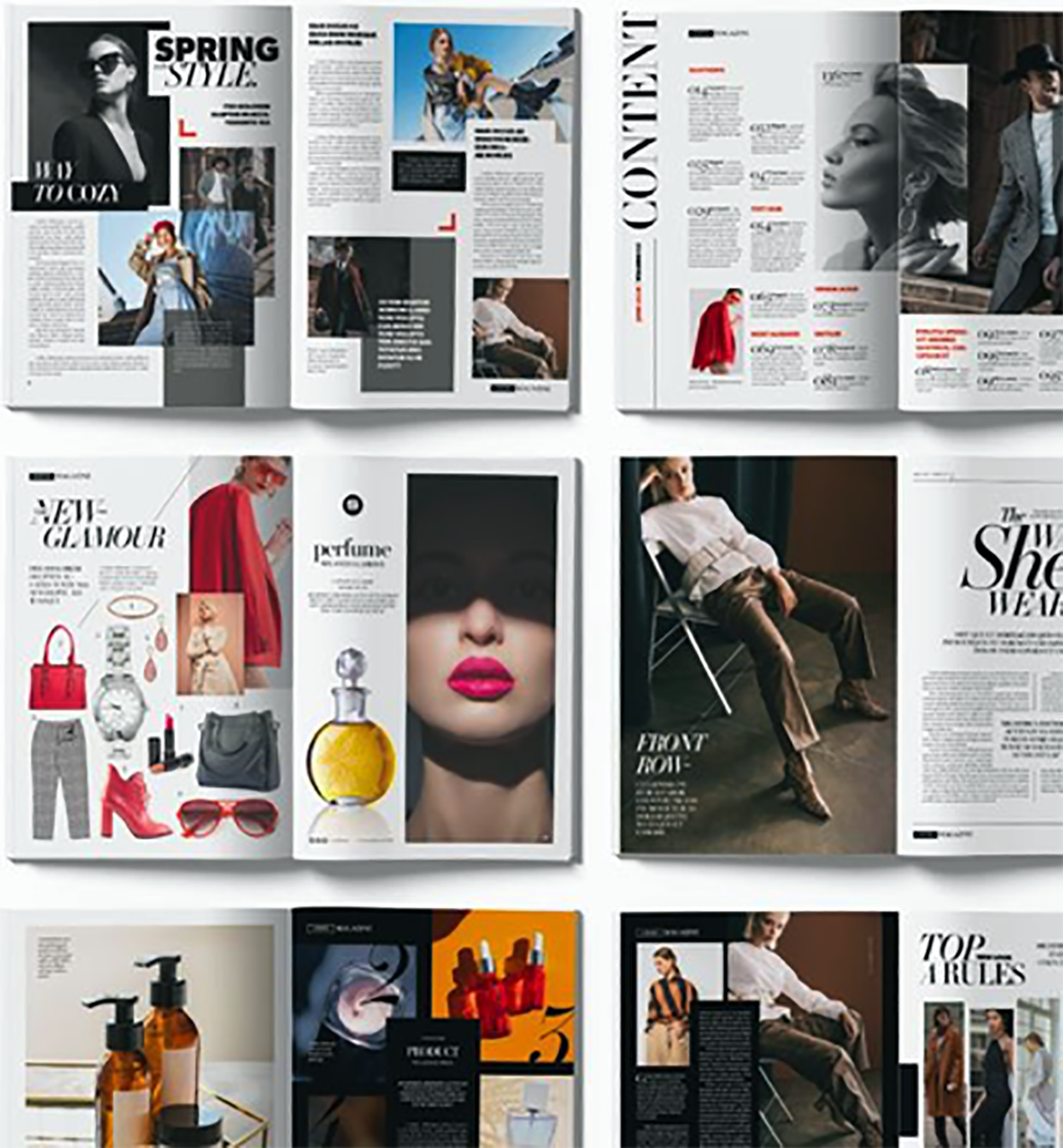
This will not take long. Editorial photography is photography commissioned to accompany text in a magazine, a book or online. It is that simple. The clue is in the word editorial. And yet it doesn’t seem to be that simple for many who have corrupted and adopted the word ‘editorial’ as a photographic ‘style’.
This to me is strange. Having spent my career working on magazines and as an editorial photographer I cannot see why and how this misunderstanding has occured and why it is so widespread. I have even had one of my students describe her work as ‘editorial’ when it could not be further from the definition of the word. Obviously, I explained the reality of where their work sits, but such a misuse of language can be detrimental to a photographer when working within the professional creative industries. It demonstrates ignorance.
From what I can see those misusing the word seem to feel that any and all photography is editorial if they say it is no matter where it is used. I have of course questioned this when I have seen it on social media but I have been met with silence or abuse. Neither of which provide any explanation for their beliefs. The use of the word ‘lifestyle’ is equally meaningless in my opinion and experience. Who’s lifestyle? What lifestyle? But that is another issue for another time.
All subject labelling in photography is inaccurate at best and mostly pointless. A professional photographer will see themselves as precisely that, with an area of specialisation, but not one defined by generic labels, one defined by a broad or specific subject area. I know that some people like to put photographers into boxes, silos and sectors as it makes everything more tidy, but to do so shows a lack of understanding of how the world of professional photography works today or has ever worked. Were Richard Avedon, Irving Penn, David Bailey, Helmut Newton, William Klein, Bruce Weber, Herb Ritts, Cecil Beaton, Norman Parkinson and Saul Leiter, only fashion photographers? Of course not. Do Nick Knight, Tim Walker, Perry Ogden, Tyler Mitchell, Campbell Addy or Jamie Hawksworth only make fashion images? Of course not, but they all, past and present, make editorial images because their work appears within editorial publications. It is that context that makes them editorial photographers, not the work they make. This is important.
All of these photographers work and worked in different ways. Their visual languages are true to them and they are working on a commissioned basis. They have clients and those clients have one specific problem that they hope the photographers they are working with will solve. They need images to accompany text. To sell a product or a story. Portraits, still lives, interiors, landscapes and more. These have no ‘one’ dominant aesthetic. No one ‘style’.
I am not being old fashioned, out dated or misinformed here, just accurate based on experience and knowledge. So, the next time you see someone describe their work as being in an ‘editorial’ style you have two choices of response if you want to help them out. The first is to try and explain what editorial photography really is and the second is to point them in the direction of this article. Either way you will be helping them to be just a little bit more informed and that has to be a good thing.
Dr.Grant Scott
After fifteen years art directing photography books and magazines such as Elle and Tatler, Scott began to work as a photographer for a number of advertising and editorial clients in 2000. Alongside his photographic career Scott has art directed numerous advertising campaigns, worked as a creative director at Sotheby’s, art directed foto8 magazine, founded his own photographic gallery, edited Professional Photographer magazine and launched his own title for photographers and filmmakers Hungry Eye. He founded the United Nations of Photography in 2012, and is now a Senior Lecturer and Subject Co-ordinator: Photography at Oxford Brookes University, Oxford, and a BBC Radio contributor. Scott is the author of Professional Photography: The New Global Landscape Explained (Routledge 2014), The Essential Student Guide to Professional Photography (Routledge 2015), New Ways of Seeing: The Democratic Language of Photography (Routledge 2019), What Does Photography Mean To You? (Bluecoat Press 2020) and Inside Vogue House: One building, seven magazines, sixty years of stories, (Orphans Publishing 2024). His photography has been published in At Home With The Makers of Style (Thames & Hudson 2006) and Crash Happy: A Night at The Bangers (Cafe Royal Books 2012). His film Do Not Bend: The Photographic Life of Bill Jay was premiered in 2018.
© Grant Scott 2026


Leave a Reply