
The title of this article is a serious statement. I do not write it lightly. When I look around at the photography ‘community’ all I see today is fragmentation and disagreement. Confusion and insecurity. Perhaps that is a reflection of the political and social world we find ourselves in. I think it maybe. But, let’s look at some facts that support my assertion and move away from subjective, destructive opinions to find a potential solution.
So, what is the system I am referring to? I suppose you could refer to it as the establishment. The associations, and bodies that have been the guardians and supporters of the medium since its inception. The media and clients that have funded its growth and decimation. The institutions that have provided the training and space for questioning and experimentation. The photographer led inititives that have provided a voice for the disperate unheard individual voices of the self-employed. The brands that gave us the tools we needed. All of these aspects of photography are currently under threat and are fighting for their very exisitence. You may not be aware of this, but it’s true.
In the UK the Royal Photographic Society (founded in 1853) has had to leave its purpose designed building in Bristol (a space that had opened in 2019 with a dedicated exhibition space and a 101 seat auditorium). As they stated in the minutes of their 2025 Annual General Meeting, “the overall deficit in 2024 was £758k…the Society continues to operate with an annual deficit, which is ultimately not a sustainable operating model.” A standard annual membership to the RPS is currently £130.00. A considerable investment for any enthusiastic photographer in these economic times.
The British Journal of Photography (a magazine founded in 1854) was saved from the brink of collapse in 2022. I was unable to find out any information concerning their monthly sales or subcription figures (these are traditionally audited in the UK by www.abc.org.uk) as they are no longer registered with the ABC. However, they did announce a digital edition of the magazine in April 2025 for subscribers at £19.75 per quarter. A subscription to the magazine and the digital version is £37.00 per quarter, a staggering £148.00 per year! How many photographers today can afford that?
I wanted to read the Mintel UK Newspapers and Magazines Market Report 2025, however it would have cost me £2,195.00 (excluding tax) to do so. Therefore, here are some figures I could find concerning the state of the UK printed media marketplace. According to The Press Gazette “Regional daily newspaper sales fell by an average of 18% in the first half of 2025′. In addition national newspapers saw a similarly dramatic decline in 2025, “Sunday Express (down 22.6% to 90,534), Sunday Mirror (down 22% to 120,702), Sunday Mail (down 21.9% to 34,573)…The Daily Express saw the biggest drop in circulation year on year among daily nationals, falling 19.6% to 104,737 average issues.” They also reported that, “Half of magazine print titles saw a distribution drop of 10% or more in 2024.” Just as the RPS report states, this level of decline with substantial overheads is not financially sustainable.
But, it is not only associations and the media that are struggling. In 2023 James Hyman’s venture in West London The Centre for British Photographyclosed as its lease was unexpectedly ended. At the time of writing it is still yet to secure a new venue and has not attracted a major patron or funder. As Hyman stated in January 2024 at its closure, “When we found this place 18 months ago, I wouldn’t have expected to still be providing 90% of the funding.” The Photographers Gallery in London, a registered charity, posted in their data for the financial year ending 31 March 2024, a total income of £4,329,871 and total expenditure:£4,544,764. This included £955,535 from five government grants. I’ll leave you to decide what would happen if these grants were removed. A realistic possibility in these economic times.
A 2023 House of Lords report titled At Risk: Our Creative Future stated that “the Government’s current approach is complacent and risks jeopardising the sector’s commercial potential. Indeed, the creative industries scarcely featured in the 2022 Autumn Statement and were not included in the Government’s five priorities for growth. This lack of focus risks affecting the UK’s future prosperity.” The reality of this realisation is that photography and the arts have been sidelined within the National Teaching Curriculum and reduced to an ‘easy’ option when students make study options. Rather than being seen as a substantial aspect of the UK economy. This in turn has seen a drop in student numbers studying photography in Further and Higher Education with the result being courses and departments closing based on spreadsheet data. Resulting in photography lecturers being unemployed.
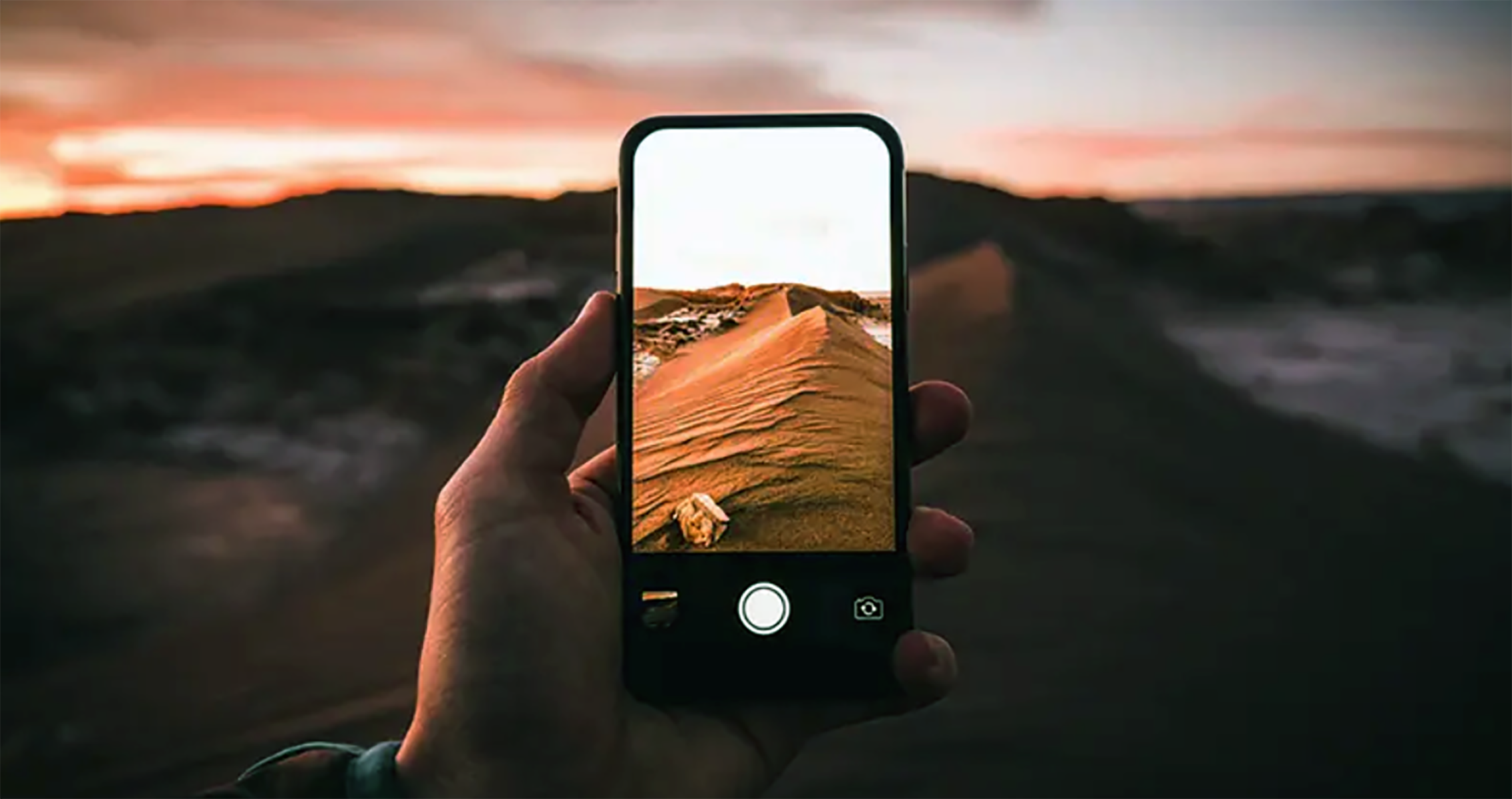
According to a December 2025 report in DP Review, “6.5 million interchangeable lens cameras shipped by CIPA (Camera & Imaging Products Association) members last year represented a 50% fall in sales volume since the high, back in 2010, while the 1.9 million fixed lens cameras represented a fall of 98%.” It goes on to suggest that, “it’s a very different world to the one of fifteen years ago, when a majority of people bought cameras. Now the industry caters to a smaller audience: photographers, vloggers and people who specifically want a dedicated camera, because most people have a perfectly capable phone when they want to take pictures.” We all know this, but the figures are startling, especially if you are in the business of selling cameras.
Photography whatever touch point you have with it is a business. From the moment you buy a camera, to the moment you get paid by a client. Whether you describe yourself as a professional, enthusiast or an artist. Everything I have outlined here is about business, but primarily the financial reality of business. Without money things cannot be funded and cease to exist. A building, a magazine, a job, a university, a gallery, a manufacturer, a photographer! All require a realistic business plan in which ‘income overcomes outgoings’. As it is said “Income is vanity, profit is sanity” and there is currently little profit in the photography business. Sadly, legacy photography is struggling with this simple statement.
We are at the end of the beginning of photography. That beginning has lasted you could say since 1826 or perhaps 1839 but either way it’s been a long beginning, but one that is finally over. We may have emotional attachment to the past and the history of the medium, but that is not going to help us respond to the next stage of photography. The truth is that photography needs to be redefined and recognised as a new form of visual communication for the 21st Century. Sadly, I am not sure that this is being addressed by the establishment. For them to do so requires them to recognise that they are no longer relevant in their past or current forms. That is a difficult acceptance to reach.
It is inevitable that we will lose some but I do not believe that we need to lose them all. However, to ensure we don’t will require brave, imaginative and creative thinking and actions. The independent sector has shown the way embracing new ways of communicating and overcoming small or no budgets. Existing with low overheads, when last creating community and impact. This is what we did, so I know it can be done, but we are not alone.
Will the establishment recognise the need to learn from the independents? Well, there is no sign of it so far. Photography is not alone in refusing to face difficult decisions with innovative solutions, but it is the area that means the most to me having spent over forty years engaged with it. My suggestion to the people making the decisions that have created the situations I have outlined here is to open your eyes, ears and minds. Speak to people you are not speaking with. Many of whom may be reading this article. Allow those people to challenge your perceptions, listen to their ideas and respect them. You don’t have to agree but you have to look and listen. If you know one of those people please send them this article and encourage them to read it and potentially act on it. You could also put them in touch with me. And don’t forget as always the words of Bob Dylan, “Don’t stand in the doorway, don’t block up the hall, For he that gets hurt, Will be he who has stalled, The battle outside ragin’, Will soon shake your window, And rattle your walls, For the times they are a-changin’. Actually Bob they already have.
Dr.Grant Scott
After fifteen years art directing photography books and magazines such as Elle and Tatler, Scott began to work as a photographer for a number of advertising and editorial clients in 2000. Alongside his photographic career Scott has art directed numerous advertising campaigns, worked as a creative director at Sotheby’s, art directed foto8 magazine, founded his own photographic gallery, edited Professional Photographer magazine and launched his own title for photographers and filmmakers Hungry Eye. He founded the United Nations of Photography in 2012, and is now a Senior Lecturer and Subject Co-ordinator: Photography at Oxford Brookes University, Oxford, and a BBC Radio contributor. Scott is the author of Professional Photography: The New Global Landscape Explained (Routledge 2014), The Essential Student Guide to Professional Photography (Routledge 2015), New Ways of Seeing: The Democratic Language of Photography (Routledge 2019), What Does Photography Mean To You? (Bluecoat Press 2020) and Inside Vogue House: One building, seven magazines, sixty years of stories, (Orphans Publishing 2024). His photography has been published in At Home With The Makers of Style (Thames & Hudson 2006) and Crash Happy: A Night at The Bangers (Cafe Royal Books 2012). His film Do Not Bend: The Photographic Life of Bill Jay was premiered in 2018.
© Grant Scott 2026


Leave a Reply to Tessa SinclairCancel reply