
I often write about the importance of an open minded approach to photography and life. A desire to listen and learn, to debate and be challenged, to evolve opinions and be able to admit mistakes. The artists, writers and musicians who inspire me and whom I read about display all of these qualities. However, photography does not always seem capable of adopting this approach.
Every time it is challenged by new functionalities, technologies and practices the photographic community seems to adopt a defensive attitude. A ‘not in my yard’ mindset that puts up a negative force field fence around what it knows and feels comfortable with. If you don’t believe me or feel that I am trading in hyperbole here then take a look at the different responses to the rapid growth of Artificial Intelligence and photography. The doomsayers and the evangelists, with few searching for the middle ground of understanding, acceptance and integration. The premise of these issues are discussed rigorously with my good friend Bill Shapiro on the A Photographic Life podcast Episode 266, so if you are interested in hearing some rigorous discussion coming from two different perspectives that one is for you.
However, Artificial Intelligence is not the only aspect of the new that the photographic world seems to be dealing with poorly. The rise and fall of the NFT last year saw a similar response but I feel with good reason in that case. It was built on sand from my perspective, however there are other challenges that the photographic community needs to face that it seems to be turning its back to. The Metaverse is one of these and another vision of the future Bill and I spoke about on the podcast a few months ago. Did you know that this year saw the second ever Metaverse Fashion Week? It attracted big international fashion brands eager to be connected with the next big thing but few attendees. But that is not the point. There is huge investment being made into these initiatives. Much more than is being made into traditional camera equipment!
There is much debate around the semantics of language around photography. There always has been. So, let’s take the lazy but perhaps most accurate first step in understanding what photography means outside of what photographers making photographs think it means.
One definition is “the art or process of producing images by the action of radiant energy and especially light on a sensitive surface (such as film or an optical sensor)” another “Photography is the skill, process of producing photographs.” Here is another, “The word Photography literally means ‘drawing with light’, which derives from the Greek ‘photo’, meaning light and graph, meaning to draw. Photography is the process of recording an image – a photograph – on lightsensitive film or, in the case of digital photography, via a digital electronic or magnetic memory.”
Nowhere in those definitions does it say that a photograph has to exist as a print, be put in a frame and hung on a wall. Nowhere, does it say that a photograph has to be a form of specific final artefact to be named a photograph. I have made this argument before but it seems worth returning to at this point as the biggest issue I hear with new forms of ‘photograph’ is the description of something that has not been captured by a photographer being called a photograph. I have suggested that it should be called digital art, but I will be ignored, and for the moment I will stick with that but my thought process is fluid and my opinions may change.
My concern for photography is that it will get too hung up on definitions to recognise that we are experiencing a seismic change that makes previous understandings of roles and practice redundant.
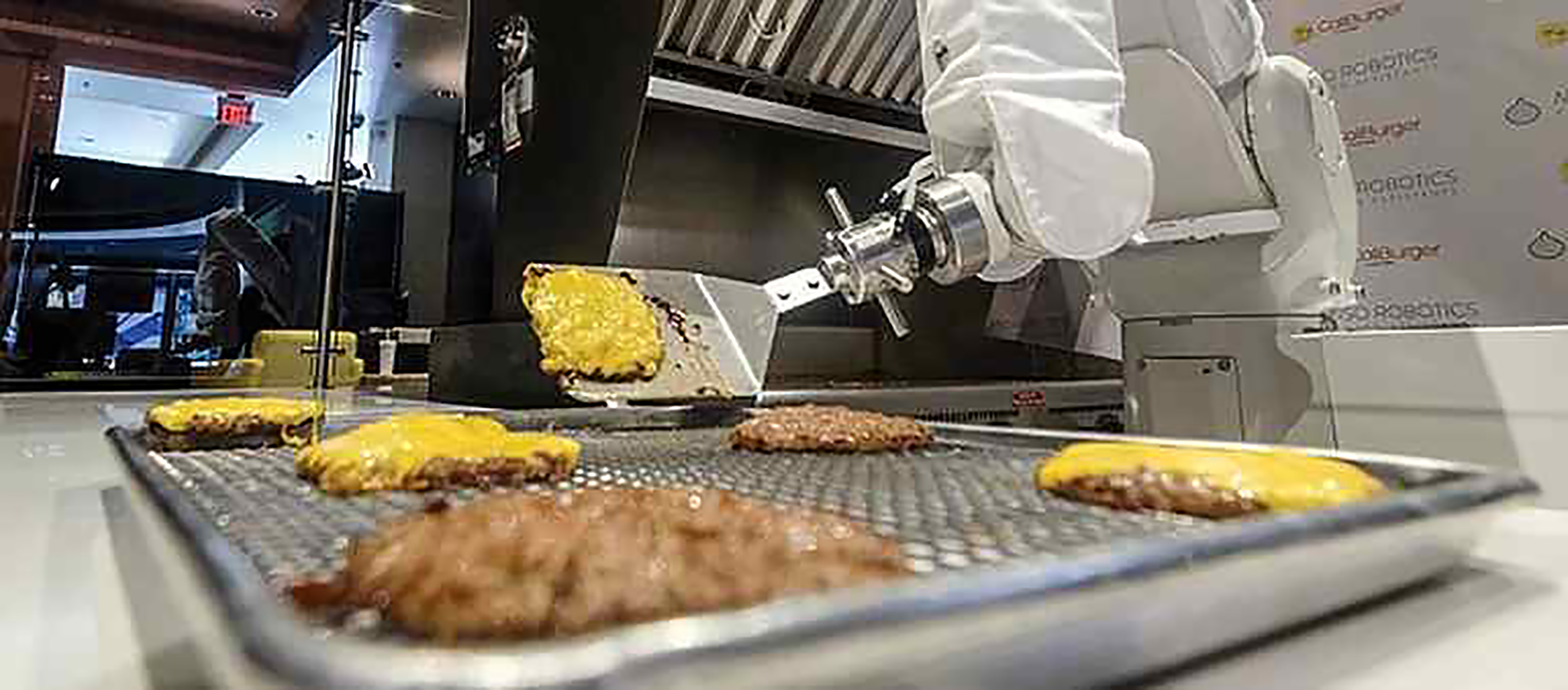
I recently saw film footage of a robot in California that can cook fried chicken, flip burgers and fry chips. The robot is leased to restaurants for a monthly fee and the robot can handle up to ten orders cooking at the same time. Food chains such as White Castle and Wimpy amongst others are already on board with this. The reality is that the robot is cooking the food, does it matter if we call it a chef or a cook? Of course not, the terminology is irrelevant.
At the moment this is how I feel about photography. I believe that it is in danger of eating itself whilst the world moves on. There is no doubt that photography as a creative and communicative medium faces many challenges over the coming years but those issues will be discussed, debated and resolved across a much broader spectrum than just that which affects photographers and photography.
Dr. Grant Scott is the founder/curator of United Nations of Photography, a Senior Lecturer and Subject Co-ordinator: Photography at Oxford Brookes University, Oxford, a working photographer, documentary filmmaker, BBC Radio contributor and the author of Professional Photography: The New Global Landscape Explained (Routledge 2014), The Essential Student Guide to Professional Photography (Routledge 2015), New Ways of Seeing: The Democratic Language of Photography (Routledge 2019). His film Do Not Bend: The Photographic Life of Bill Jay was first screened in 2018 www.donotbendfilm.com. He is the presenter of the A Photographic Life and In Search of Bill Jay podcasts.
Scott’s new book Conde Nast Has Left the Building: Six Decades of Vogue House will be published in the Spring of 2025 by Orphans Publishing.
© Grant Scott 2023



Leave a Reply to desopoCancel reply