
The title of this article is direct, confrontational and possibly inaccurate, but I think it is important. They are not my words. They are the words of an experienced academic teaching at a post-graduate level in an education department within a university. They are words that were said directly to me. I didn’t take offence.
I was standing in a queue waiting for breakfast and coffee to be served to me in a university cafe when the women standing next to me (whom I had never met or seen previously) mentioned that she would be teaching that day, which was a Saturday. I questioned her as to why she was having to teach at the weekend and she explained that it was the only time when her students were available to attend due to their additional responsibilities. This was interesting to me and the conversation developed as we took our breakfasts to a nearby table. We seemed to have shared experiences of teaching and the subjects that we were teaching. This focused on the teaching of digital literacy with specific relevance to AI. Our conversation evolved as conversations do, and I explained my area of knowledge and experience when it comes to the impact of AI on the world of photography and visual communication, which she was interested in. It was a serendipitous meeting as we seemed to agree about the importance of photography to our everyday lives. We agreed that it wasn’t being seen as the global visual language it now is, thanks to the smart phone and online commercial environment. Then she hit me with the words that hit hard!
The problem is she said that, “everyone thinks photographs are art, but they are not proper art!” How do you respond to such a comment from someone you have only just met, when you spend your life engaged with photography? From a fellow academic? From someone teaching students to teach others? Now, I have my own issues with the use of the word art when talking about photography, but even so, this was a bullet from nowhere. Initally I was taken back, I didn’t know how to respond, so I agreed, because she was right. Her opinion is a generally held opinion. It is what many people think. Now, I could have spent time explaining why she was wrong and how photography as an art form is as valid as any other, but there was no point. That was not the basis of our conversation.
I am sure that I am not alone in my experience, I am sure that many photographers have been met with the same harsh belief. However, this was the first time that I had had this put to me so bluntly. The conversation ended as we both had places to go, but we left on amicable terms.
So, what is the point of me sharing the details of this encounter with you? Well, firstly, I think it’s important to listen to those outside of the photography ‘bubble’ to see the mistakes photography is making. And I believe it’s making a lot. Primarily by failing to accept that it has an image problem and I don’t mean a photographic image. To many photography today is easy, and therefore of little value. It is disposable and simple to replicate. This is largely due to the ‘professional’ functionality of smart phones, and the way in which they are promoted and sold. But, it is also due to the willingness of many to accept images that are box ‘fillers’ and ‘tickers’ rather than creative visual solutions that may challenge or provoke. The promotion of contemporary art practice to a populace not interested in conceptual solutions to conceptual problems, supported by conceptual text is also an issue. The mastery of technical ability is often a judgement of creative success to the masses and when a smart phone gives that mastery to all, photography is in trouble if it wants to be seen as a valid art form. Photography today is inclusive, not exclusive. The women in the breakfast queue was not wrong, just uninformed. Who will inform others like her? Well, that is a good question. My suggestion is those engaged with photography, but to do that they will possibly have to reframe their own understanding of the medium to ensure that they can explain it as being relevant to this year and the next. Not to fellow photographers, but to people they may meet waiting for a coffee.
Dr.Grant Scott
After fifteen years art directing photography books and magazines such as Elle and Tatler, Scott began to work as a photographer for a number of advertising and editorial clients in 2000. Alongside his photographic career Scott has art directed numerous advertising campaigns, worked as a creative director at Sotheby’s, art directed foto8 magazine, founded his own photographic gallery, edited Professional Photographer magazine and launched his own title for photographers and filmmakers Hungry Eye. He founded the United Nations of Photography in 2012, and is now a Senior Lecturer and Subject Co-ordinator: Photography at Oxford Brookes University, Oxford, and a BBC Radio contributor. Scott is the author of Professional Photography: The New Global Landscape Explained (Routledge 2014), The Essential Student Guide to Professional Photography (Routledge 2015), New Ways of Seeing: The Democratic Language of Photography (Routledge 2019), What Does Photography Mean To You? (Bluecoat Press 2020) and Inside Vogue House: One building, seven magazines, sixty years of stories, (Orphans Publishing 2024). His photography has been published in At Home With The Makers of Style (Thames & Hudson 2006) and Crash Happy: A Night at The Bangers (Cafe Royal Books 2012). His film Do Not Bend: The Photographic Life of Bill Jay was premiered in 2018.
© Grant Scott 2026
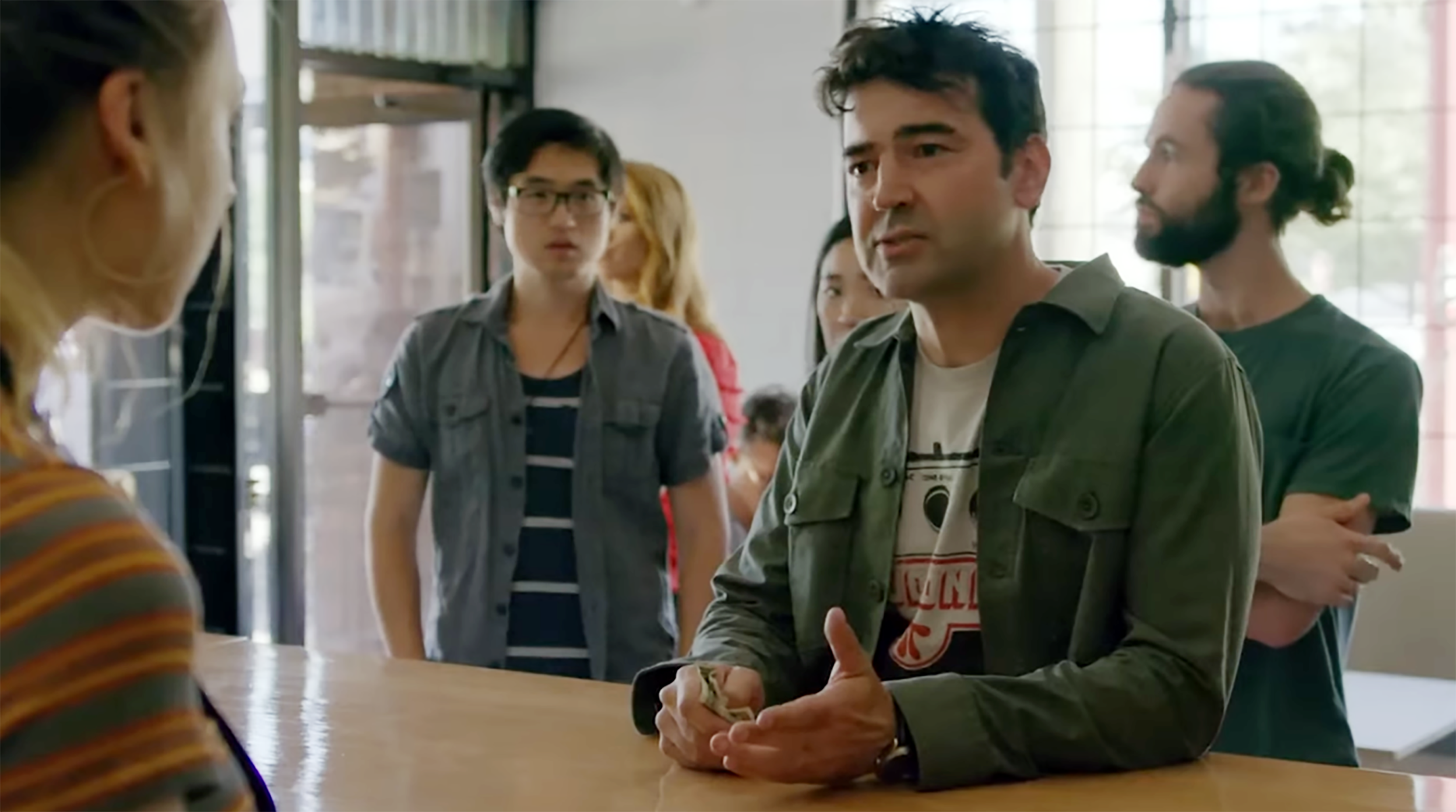
Image: A still from the US series Loudermilk
Leave a Reply