
For many months we asked photographers to send us a piece of audio no longer than five minutes in length to include on our A Photographic Life podcast. These became a book which is now out of print but remain in audio form within the podcast archive, available wherever you get your podcasts . However, we are responding to listener requests and offering transcriptions of some of our favourite contributions. Enjoy!
Sebastian Meyer is an award-winning photographer and filmmaker, and a recipient of multiple grants from The Pulitzer Center on crisis reporting. His editorial photographs have been published in TIME, Fortune,The Sunday Times Magazine, The FT Magazine, The Wall Street Journal, The Washington Post, and The New York Times, among many others. Meyer has made films for National Geographic, PBS Newshour, Channel 4 News, CNN, VOA, and HBO. He produces still and video content for NGOs and charities such as UNICEF, WHO, UNFPA, and
Mercy Corps. In 2009 Meyer co-founded Metrography, the first Iraqi photo agency. His first book, Under Every Yard of Sky was published in 2019.
“When I started, photography was a way for me to see the world. I never went anywhere without my camera and I was really influenced by the classic old school street photographers. I was caught up in that vagabond romanticism. I wanted to create those beautifully composed, layered black and white images. I started my career at the Manchester Evening News, which was classic local British journalism and a great, steep learning curve for me. Three, four, five, six jobs a day, sometimes driving around a city I didn’t initially know very well. I had to move very quickly and get the images on a deadline. But it was far from what I had fallen in love with, so on my days off I would roam around the city, with my Leica M6 and rolls of Tri-X stuffed in my pockets. I wanted to do good journalism but I would be lying if I said that I also didn’t want an adventure and my camera was a way to do that. It allowed me to scratch that curiosity itch.
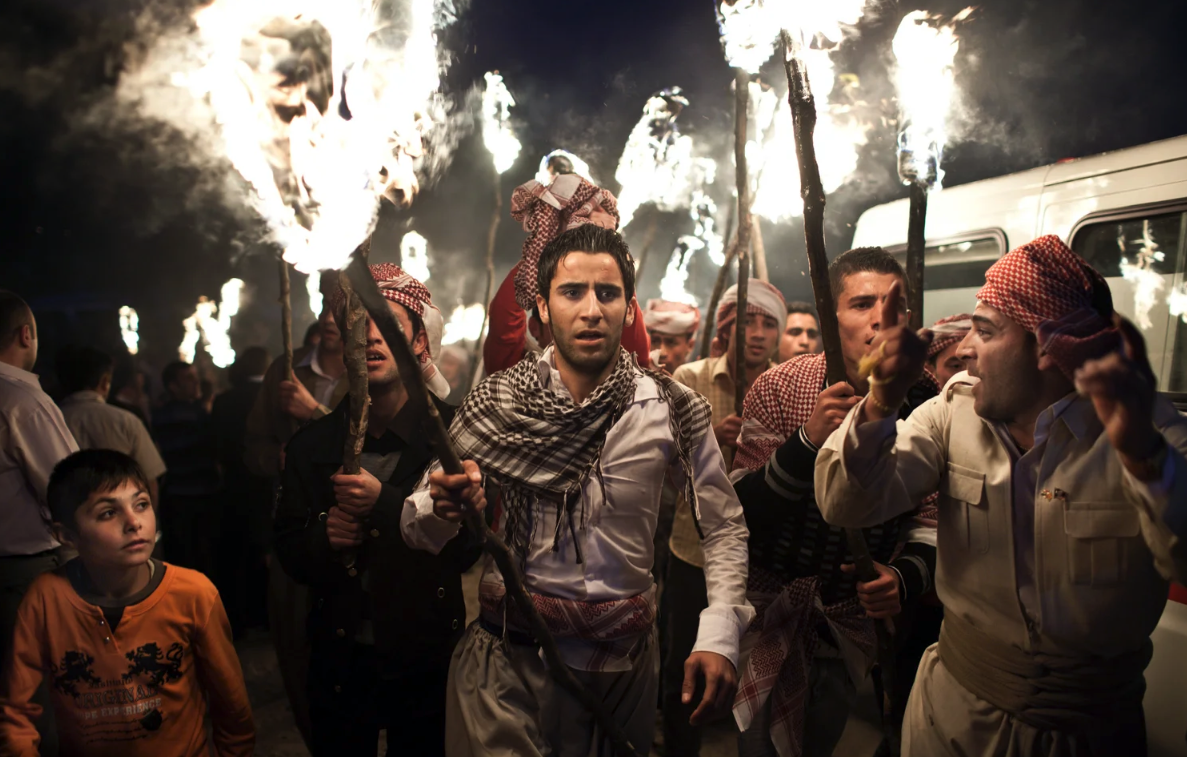
Looking back, I can see that my ego began to creep in – photography started to be about me. I was framing up three-dimensional people into two dimensional characters. That is something that stuck with me for a while, not the realisation of that, but the actuality of that. Then, in 2008, I got a long assignment to go to the Kurdish region of Iraq to create portraits of the survivors of Anfel, Saddam’s genocide against the Kurds. There I met an Iraqi photojournalist, Kamaran Najm, and I realised that up until that point, all the photos I had seen of Iraq were taken by non-Iraqi photographers. So we set up a photo agency to train Iraqi photojournalists and then represent them to the international press. We worked on it for many years and it did very well. I realised that photography had changed, it wasn’t about me and my world view, it was about seeing the world through many perspectives. It was no longer this European, American gaze that I had become so accustomed to. The technology changed. Digital made it easier for photographers to learn and take the pictures. As the internet became stronger it became a way to disseminate their images quickly.
In 2014 Kamaran was tragically kidnapped while covering the frontline fighting Isis. After years fighting the wars in Iraq, Syria, Libya and Afghanistan and taking so many photographs of people grieving over their dead or their missing, now I was one of those people and it changed my perspective on photography. I still love taking pictures but photography is no longer about creating perfectly composed images. I strive for that, I want to create layered, visually engaging images but photography for me is about the human side of the photograph. It is about the people in the picture, it is their lives, their joy, their pain. It is their story not mine.”
© Grant Scott 2026

Leave a Reply