

Everything is good for you in moderation. Well, nearly everything. I can think of a few exceptions, but what I do know is that portrait work is good for you as a photographer. It encourages communication, conversation, empathy, learning and interaction. As humans these are all good for us, so why should it be any different for a photographer?
For me a successful portrait shows more than what someone was wearing on one day or where they were. It tells us more. It gives an insight into both people involved in the collaboration of making a photograph. In this sense the photographer acts as a bridge for the telling of stories. I know some of you will disagree with me on this, but hear me out. There has been a ‘fashion/trend/style’ call it what you wish over the past few years to make portraits in one way and one way only. That is to place somebody in front of the camera, frame them full-length and have them place their arms straight by their sides, whilst staring without emotion directly into the camera lens. Or to create a three-quarter composition in which there is little if any emotion or connection with the photographer, invariably with the person looking off-camera.
I have no problem with either of these approaches if they are adopted as a direct response to and from the person being photographed, but I do when it is used as a template aesthetic by photographers who are unable or unwilling to connect with the person in front of them. Some are okay, but too many is boring.
I am not attacking any one photographer or specific photograph here, merely sharing an observation. An observation that you could share by looking at the work chosen for this year’s Portrait of Britain, an annual competition instigated by The British Journal of Photography https://www.1854.photography/2025/01/portrait-of-britain-100-stories-light-up-the-nation/. It was looking at this year’s selection that reminded me of how every year alongside some strong work this Dusseldorf School approach remains dominant. I guess I shouldn’t be surprised. The cold hand of Hilla and Bernd Becher remains strong in academic photography circles and therefore within the portfolios taught on those courses. These photographers then enter competitions promoted within academia as being ‘important’. The judging panel this year included an artist and writer, an author and photographer, three curator/directors, two representatives from the BJP and one photographer. Not one commissioner of portrait photography from the editorial or advertising environment, no recognised, or any successful portrait photographer from either of those areas. In my opinion, the images chosen fulfil a pre-determined outcome. A contemporary art practice aesthetic that is informed by the judges. Therefore, the work chosen is largely predictable and repetitive.
This may not be a popular opinion amongst those chosen and those involved in the competition, but remember that this is being described as a portrait of the country. A democratic, broad sweep of a title that promises much, which I feel it fails to deliver. The tag line is this “Portrait of Britain is a celebration of identity; an opportunity to rejoice in the diversity of a changing nation“. Those photographed demonstrate this, but does the photography show more than a group of people looking sad, miserable and lifeless. Is it a portrait of photography today across the country? You can decide for yourself. Does it show the richness of potential within the creation and understanding of what constitutes a portrait photograph? Does it encourage others to see this possibility? Interestingly, the Taylor Wessing Portrait Awards this year does seem to have embraced this need for experimentation in its selection. You may agree or disagree, https://www.npg.org.uk/whatson/exhibitions/2025/taylor-wessing-photo-portrait-prize/peoples-pick
To enter for ‘free’ you have to subscribe to the BJP and that will cost a minimum of £37.00 per quarter (although this seems to be discounted at the time of writing to £24.75). I couldn’t find out how much it would cost without a subscription, however I could give them my data information to pre-register for next years competition. I didn’t.
I am not a fan of ‘pay-to-play’ competitions. They are only giving awards and publicity to those who can pay. They are a business, plain and simple. They are not promoting the best most varied work that is being made only the work that will win on the basis of the judges and the basis of entry. We all know this, don’t we?
The issue I have is that by promoting and praising one prominent aesthetic all else is dismissed, derided and forgotten. This is not good for photography or photographers, as the medium becomes one of repetition and imitation lacking ambition or creativity. There should be no rules in photography, but this approach seems to think there is. Rules that define an image as being ‘serious’ of ‘importance’ of ‘worth’. Judges can only judge what is put in front of them and it is true that some competitions develop a reputation for awarding images that have the same aesthetic and approach, year after year. However, that can easily be changed by the selection of a different jury and therefore a more varied selection of winners.
My suggestion would be to look at the winners of this competition and then turn to the history of the medium to explore the photographic potential the portrait offers and recognise that templates are for mass production, not creativity. To experiment with where and how you approach a portrait. To work with the person you are photographing. To reject all preconceived ideas of how the portrait should look before you make it. In brief look to portray the person in front of you as they are not as how you want them to be.
Dr.Grant Scott
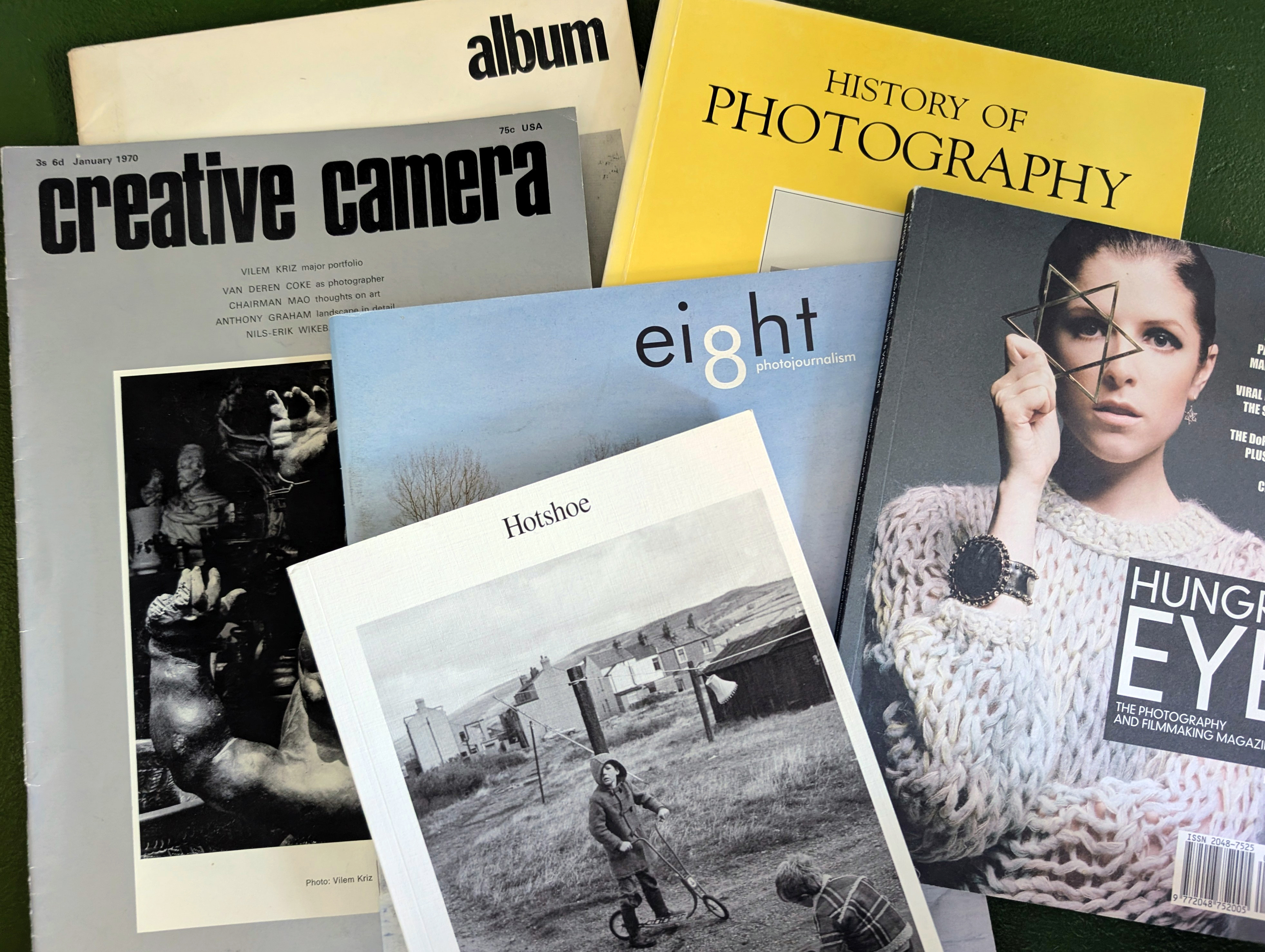
After fifteen years art directing photography books and magazines such as Elle and Tatler, Scott began to work as a photographer for a number of advertising and editorial clients in 2000. Alongside his photographic career Scott has art directed numerous advertising campaigns, worked as a creative director at Sotheby’s, art directed foto8magazine, founded his own photographic gallery, edited Professional Photographer magazine and launched his own title for photographers and filmmakers Hungry Eye. He founded the United Nations of Photography in 2012, and is now a Senior Lecturer and Subject Co-ordinator: Photography at Oxford Brookes University, Oxford, and a BBC Radio contributor. Scott is the author of Professional Photography: The New Global Landscape Explained (Routledge 2014), The Essential Student Guide to Professional Photography (Routledge 2015), New Ways of Seeing: The Democratic Language of Photography (Routledge 2019), What Does Photography Mean To You? (Bluecoat Press 2020) and Inside Vogue House: One building, seven magazines, sixty years of stories, (Orphans Publishing 2024). His photography has been published in At Home With The Makers of Style (Thames & Hudson 2006) and Crash Happy: A Night at The Bangers (Cafe Royal Books 2012). His film Do Not Bend: The Photographic Life of Bill Jay was premiered in 2018.
Further Reading
https://unitednationsofphotography.com/2025/12/09/portraits-anxiety-and-eye-contact/
https://unitednationsofphotography.com/2025/11/05/portrait-fear/
https://unitednationsofphotography.com/2022/09/11/what-is-the-central-obstacle-to-being-a-portrait-photographer/
https://unitednationsofphotography.com/2022/11/25/books-for-portrait-photographers/
https://unitednationsofphotography.com/2021/06/06/the-secret-to-portrait-photography-talking/
https://unitednationsofphotography.com/2022/04/19/portraiture-and-the-invisible-line/
© Grant Scott 2026
Leave a Reply