
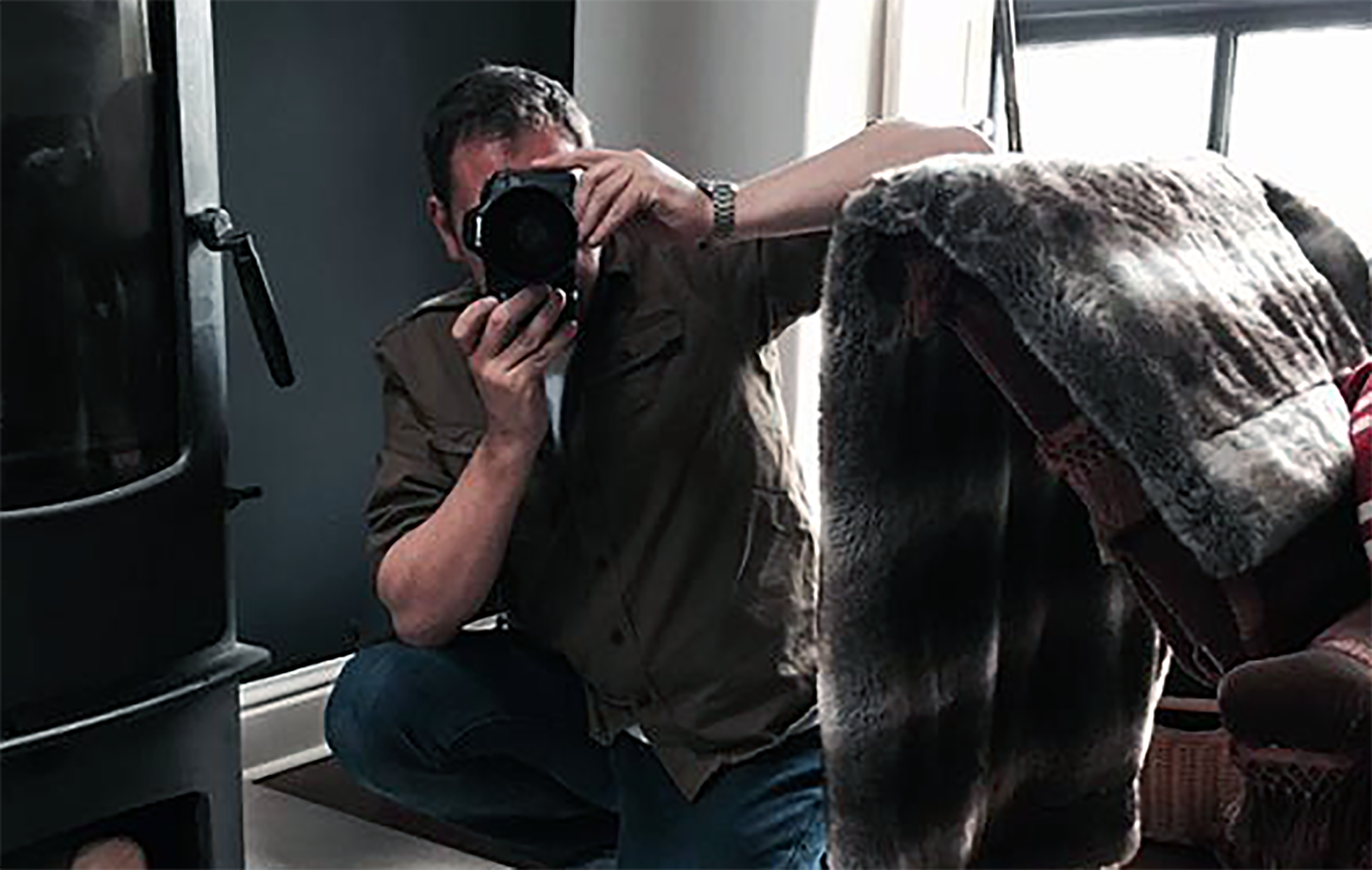
The portrait is the foundation of photography in my opinion. It is the core of photographic collaboration. It can take many forms, we do not have to be too regimented in what constitutes a portrait but the documentation of a person or people goes back to the birth of the medium. In short it’s important. Important to photography and important to master.
And here lies a problem for many. A problem that seems to be growing. That problem is confidence based. A lack of confidence aligned with a rise in anxiety. Perhaps the COVID years are to blame. Maybe the rise of social media, or both or something else. What I do know is that issues related to anxiety are at an all time high. This anxiety impacts directly on social engagement and portrait photography cannot be made without it.
Portrait photography requires a conversation to take place before, during and after the act has been completed. It requires a sense of collaboration to be established. In my opinion a successful portrait is visual proof that these things have taken place. However, for some such engagement fills them with a crippling fear that seems impossible to overcome.
I always use the metaphor of an invisible line between the photographer and the person being photographed to explain portrait photography. In a sense this can be seen as a line of social acceptance. One which may seem socially inappropriate to cross but it needs to be crossed. Crossing this line takes you into someone’s personal space. Not in an aggressive or abusive way but to make a mutually respectful connection. I can see this action in the most successful portraits that reveal more about the person photographed than just what they are wearing in the moment of photographic capture.
The rise of street photography may be connected to this issue with social engagement. In a sense it is the urban relation to landscape photography both much loved by the enthusiast looking to make photographs through observation rather than connection. Anyone can go out with a camera and photograph what they see but portrait photography requires the photographer to take control of a situation. To ask someone if they can photograph them. To set up a portrait session. To potentially direct that person. Challenges that present the possibility of rejection. The fuel of anxiety.
We all know that we cannot go out and buy anxiety. We can’t get it online or in a local store. We can’t keep it in the fridge or a cupboard. Anxiety is self-made and cultivated by an internal dialogue. It can be overcome. That dialogue can be stopped and the production of anxiety stopped .
In my twenty-five-years as a portrait photographer I have never had anyone be unpleasant to me when making their portrait. Some have been more difficult than others but no one has been rude to me. Even people famous for their rudeness! The fear of portraiture is a fear based on an unknown future not a controllable present. We cannot control the future so why worry about it? I know this may be difficult for many but it is possible. It is achievable.
My suggestion therefore is to accept that challenge. Embrace portraiture as part of your practice and begin to use it to overcome your anxiety. Use it as a reason for social engagement and a process of confidence building. The portrait photographers whose work you admire will all have had to overcome their own anxieties you just won’t know it. Now it’s your time to do the same. Good luck!
Dr.Grant Scott
After fifteen years art directing photography books and magazines such as Elle and Tatler, Scott began to work as a photographer for a number of advertising and editorial clients in 2000. Alongside his photographic career Scott has art directed numerous advertising campaigns, worked as a creative director at Sotheby’s, art directed foto8 magazine, founded his own photographic gallery, edited Professional Photographer magazine and launched his own title for photographers and filmmakers Hungry Eye. He founded the United Nations of Photography in 2012, and is now a Senior Lecturer and Subject Co-ordinator: Photography at Oxford Brookes University, Oxford, and a BBC Radio contributor. Scott is the author of Professional Photography: The New Global Landscape Explained (Routledge 2014), The Essential Student Guide to Professional Photography (Routledge 2015), New Ways of Seeing: The Democratic Language of Photography (Routledge 2019), and What Does Photography Mean To You? (Bluecoat Press 2020). His photography has been published in At Home With The Makers of Style (Thames & Hudson 2006) and Crash Happy: A Night at The Bangers (Cafe Royal Books 2012). His film Do Not Bend: The Photographic Life of Bill Jay was premiered in 2018.
Scott’s next book is Inside Vogue House: One building, seven magazines, sixty years of stories, Orphans Publishing, is on sale now wherever you buy your books.
©Grant Scott 2025


Leave a Reply