
That is a slightly aggresive and confrontational heading. I know! It’s meant to be. Why? Because I think that there is a simple reality of where photography is today that needs to be addressed. Addressed by people my age and perhaps a little younger. Those who grew up with analogue photography, a passion for photography based on the masters and a respect for photography as a stand alone medium.
What I feel I need to stay is stop! Stop judging the medium today on your personal past experience. Stop judging photography today on the basis of how it was ‘back in the day’. Stop complaining about what it is today and stop expecting young people to learn the medium the way you did. Instead my suggestion is to listen and look without judgement.
We are now into the second generation of digital natives, those who grew up with the internet as a constant companion and the smartphone as an addictive friend. That is something that we need to take on board but I started working on an Apple Mac in 1990. I had my first mobile phone in 1998. I helped launch an online newspaper in 1999. I started working with a digital camera in 2006. None of this is new! And yet the constant referencing of the past amongst photographers of a certain age as a ‘golden age’ to be replicated today is I believe naive at best. Am I being fearless in making these statements? I don’t think so, but then I guess I wouldn’t. Others may have a different opinion.
Current major exhibitions in London include the work of Lee Miller who died in 1977 (The Tate Modern) and Cecil Beaton who died in 1980 (The National Portrait Gallery). Meanwhile The Tate is showing Josef Koudelka’s work from the 1960s and 70s. I have nothing against their work. I enjoy their work. I know its important to be aware of the past but do we really need yet another Cecil Beaton exhibition? or a Lee Miller retrospective on this scale? I don’t think so. Do we need to constantly fill these major venues with photographic history lessons? The Beaton exhibition at the NPG staged by Sir Roy Strong in 1968 was hugely influential (it was the first retrospective of the work of a living photographer in a British national museum) but we are now fifty-seven years on. Times have changed and yet the work being put on the walls has not it seems. I know that people will enjoy these shows but I think that they are a problem if we are hoping to engage potential young photographers with photography as innovators and not imitators. Based on their experience of photography today not during the previous century before and during the Second World War! Maureen Paley is currently showing new work by Wolfgang Tillmans but he is 57! An age close to mine and I would certainly not describe myself as being part of the new generation of photographers.
At the same time The Photographers Gallery, London, is showing work by Zofia Rydet who died in 1997, Boris Mikhailov who was born in 1938 and Lisa Barnard who is 58 years of age.
Many of the responses (and I thank you for all of them) to a recent conversation I had with Bill Shapiro concerning photography education on the A Photographic Life podcast were focused on my belief that analogue photography was no longer relevant in teaching the medium. Many suggested that I was wrong, but I noticed that all had studied photography in the last century. Photography of then, not now. They are not having the conversations I am having with young photographers that inform my viewpoints on this issue. Let me share some of the facts attached to those conversations.
When speaking with the head of photography of a Further Education college he revealed to me that many of his students took photography as an easy option when needing to choose three A Levels. His first year contained 73 students, his second year 78. However, only 7-8 decided to continue with photography after studying the subject. Why? Because it was harder than they thought it would be. In addition when I speak with young photographers about their favourite photographers few know any names or claim that they cannot remember any. They do not visit exhibitions unless it is a school trip and if they do they can rarely remember what they saw. Facts that suggest a disconnection and lack of interest in the work being shown, combined with a lack of impact on them of what they have seen. Of course there are always exceptions that prove the rule but they are few and far between. Their understanding of photography is not what ours was at the same age and that is what it is. We may not agree with it but we have to evolve with it.
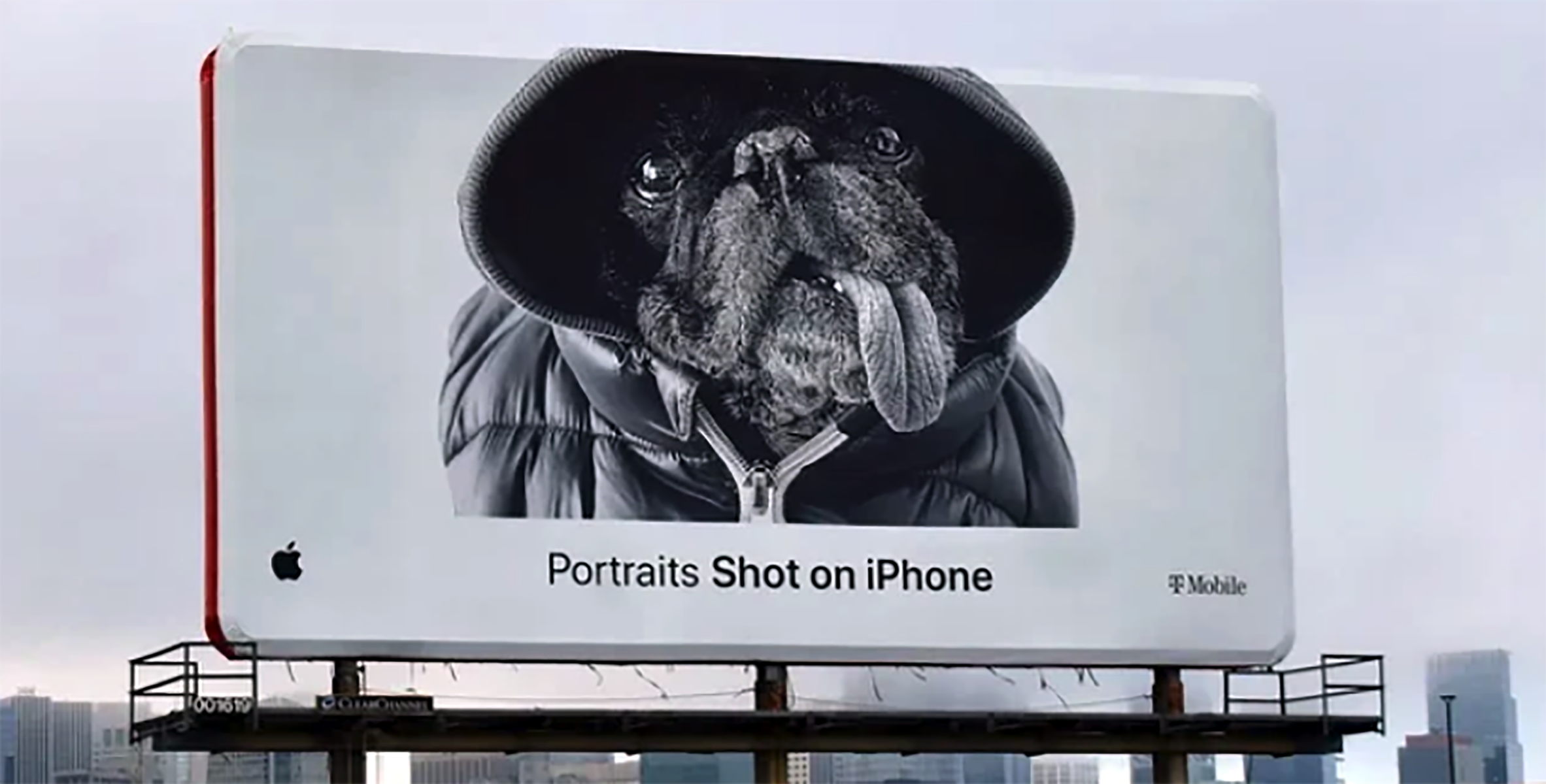
Photography today is phone based. Every phone manufacturer spends millions of pounds with every phone launch to persuade us to upgrade. Their focus is always on the quality of the camera and the post production functionality to alter images to make them look perfect and ‘professional’. Not the quality of the ring tone! I know there is a renewed interest in analogue amongst some but cost, time and technical requirement are barriers for more people than the darkroom benefits some suggest. Analogue is not the future. Is AI? Well, maybe but perhaps not as photography but as a need for transferable skills for visual storytellers as creative prompt writing develops. Could this be the future for photographers? I think diversification is. I can pre-empt the negative response to this suggestion. That’s not photography! I agree but as I am suggesting photography is evolving. That doesn’t mean that old ways will cease to exist but they may not dominate the medium. AI is now in capture and post-production whether we like it or not, it exists!
I’m not giving any answers here. I dont have any, but I do think that constantly harking back to the past is detrimental to creative relevancy. I welcome all photography old, new and what is to come but if the medium is to have a future it needs to make its self relevant to the young. Not by recreating the past and living in a world of romantic notions but by understanding that the past has past and that doesn’t have to be a bad thing.
Dr.Grant Scott
After fifteen years art directing photography books and magazines such as Elle and Tatler, Scott began to work as a photographer for a number of advertising and editorial clients in 2000. Alongside his photographic career Scott has art directed numerous advertising campaigns, worked as a creative director at Sotheby’s, art directed foto8 magazine, founded his own photographic gallery, edited Professional Photographer magazine and launched his own title for photographers and filmmakers Hungry Eye. He founded the United Nations of Photography in 2012, and is now a Senior Lecturer and Subject Co-ordinator: Photography at Oxford Brookes University, Oxford, and a BBC Radio contributor. Scott is the author of Professional Photography: The New Global Landscape Explained (Routledge 2014), The Essential Student Guide to Professional Photography (Routledge 2015), New Ways of Seeing: The Democratic Language of Photography (Routledge 2019), and What Does Photography Mean To You? (Bluecoat Press 2020). His photography has been published in At Home With The Makers of Style (Thames & Hudson 2006) and Crash Happy: A Night at The Bangers (Cafe Royal Books 2012). His film Do Not Bend: The Photographic Life of Bill Jay was premiered in 2018.
Scott’s book Inside Vogue House: One building, seven magazines, sixty years of stories, Orphans Publishing, is now on sale.
© Grant Scott 2025



Leave a Reply to gscott2012Cancel reply