
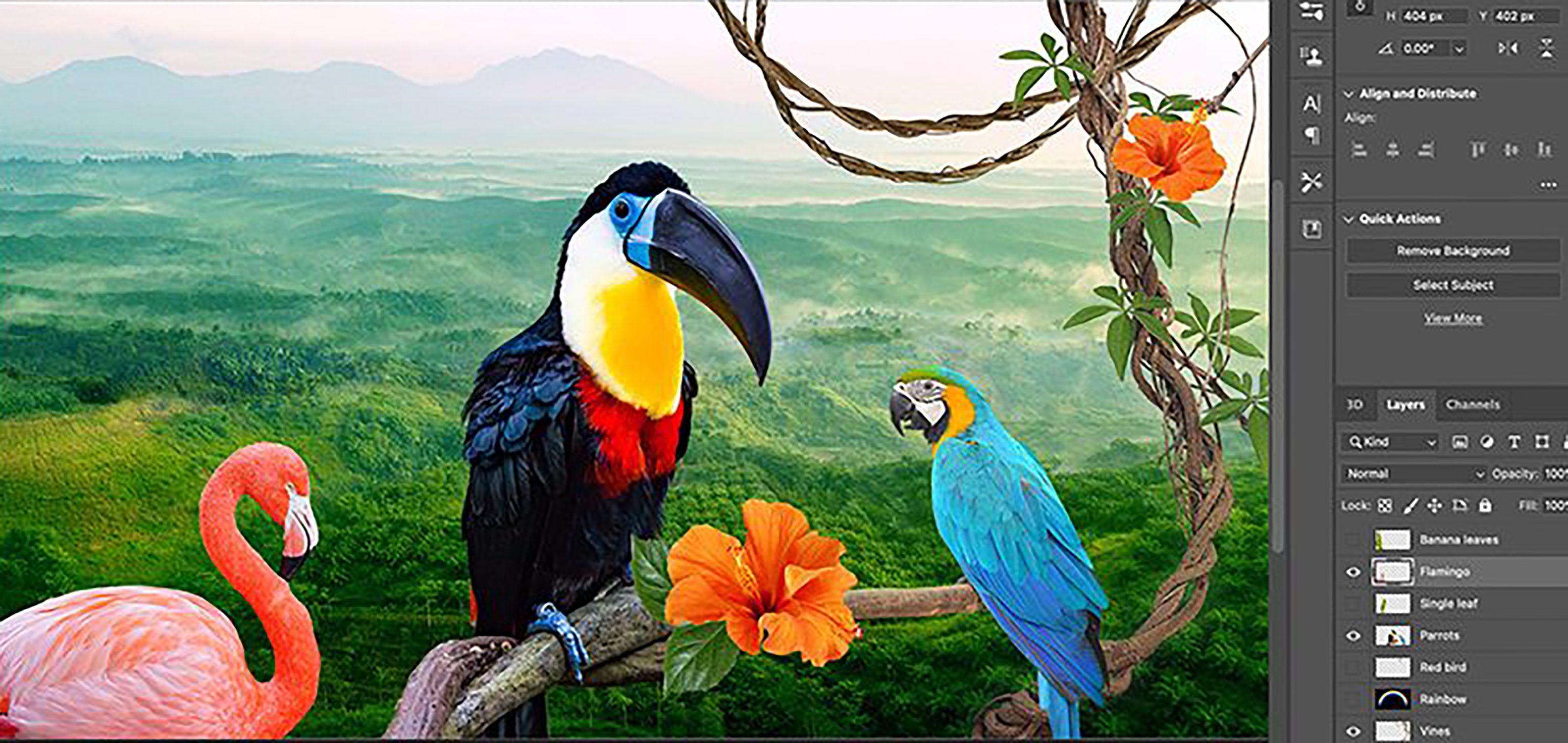
I recently saw a news item announcing the winners of a local camera club competition. The images were very accomplished, a little ‘twee’ in their concepts and obvious in their subject matter with children, dogs and birds featuring amongst the winners. However, they were very well done. The issue for me was not the quality of the photographs but the fact that they had little to do with ‘real life’ and everything to do with ‘fake life’. Post-production life.
The post-production was so extreme that the aesthetic of the photographs was similar to that seen in AI images. I commented that this was a shame and I was met with one comment stating that AI was against the club rules, completely missing the point of what I had said, and a further comment by one of the photographers challenging me to do better and to visit them and explain how to do better. I had obviously ruffled some digital feathers. I commented that I did have a little ‘skin in the game’ and was told that in that case I should know better.
It is just a fact that many camera club members are advanced in age and often retired. They have the funds to invest in expensive kit and spend many hours learning and polishing their post production skills. Sadly, the result of this often results in technically polished images that lack passion, emotion or originality. These are then entered into club competitions and revered.
The problemfor me is that too often the final image has little or nothing to do with the original capture. Photoshop consumes whatever was photographed replacing imperfections with surface perfection and honesty with fiction.
This is not my approach to what constitutes successful photography, but that doesn’t matter. What does matter is when this work is awarded prizes it sets a marker for future work. It sets a judging agenda that encourages the replication of the approach. For me that is the problem. Such work fills the pages of the amateur photo magazines (at least those that survive) and at one time much of Flickr. You can also find it on Instagram. It is all around us, but its sense of falcity opens the door for an acceptance of AI imagery the ultimate destination for manipulated imagery.
With so many photographers speaking out against AI and with camera clubs constructing rules to prevent its use it seems strange to me that they appear to be so open to its aesthetic and eager to defend that aesthetic even though it has little if anything to do with photography.
Dr.Grant Scott
After fifteen years art directing photography books and magazines such as Elle and Tatler, Scott began to work as a photographer for a number of advertising and editorial clients in 2000. Alongside his photographic career Scott has art directed numerous advertising campaigns, worked as a creative director at Sotheby’s, art directed foto8magazine, founded his own photographic gallery, edited Professional Photographer magazine and launched his own title for photographers and filmmakers Hungry Eye. He founded the United Nations of Photography in 2012, and is now a Senior Lecturer and Subject Co-ordinator: Photography at Oxford Brookes University, Oxford, and a BBC Radio contributor. Scott is the author of Professional Photography: The New Global Landscape Explained (Routledge 2014), The Essential Student Guide to Professional Photography (Routledge 2015), New Ways of Seeing: The Democratic Language of Photography (Routledge 2019), and What Does Photography Mean To You? (Bluecoat Press 2020). His photography has been published in At Home With The Makers of Style (Thames & Hudson 2006) and Crash Happy: A Night at The Bangers (Cafe Royal Books 2012). His film Do Not Bend: The Photographic Life of Bill Jay was premiered in 2018.
Scott’s next book Inside Vogue House: One building, seven magazines, sixty years of stories, Orphans Publishing, is now on pre-sale.
© Grant Scott 2024



Leave a Reply to John KennyCancel reply