
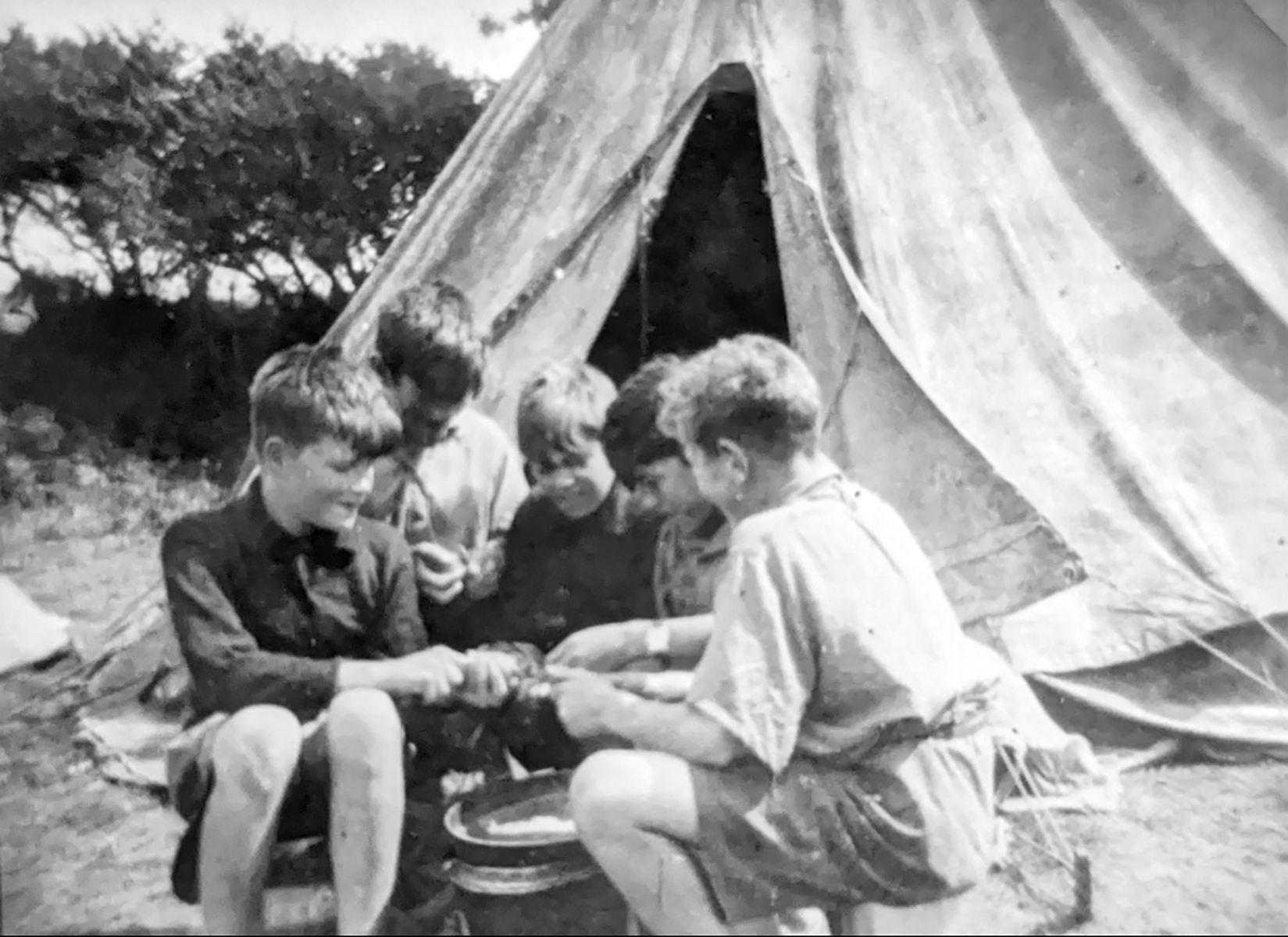
I have one son-in-law and he is the son of a well known person. There is no need to say who, however suffice to say that they were influential and respected within the field of serious culture in the UK. The reason I mention this is because at a recent family lunch he mentioned how lucky my eldest daughter, his wife, is that she grew up with a photographer in the family to document her life. Not me, but my father! My son-in-law has no such record of his life growing up. Perhaps because life outside of and inside his family was more exciting than the mundane experiences inside mine and his wife’s. Perhaps there was no camera in his household. I don’t know. I will ask him.
In our family the mundane was considered important by my father. He photographed everything and kept everything. He is in that sense our family’s archivist.
I have to admit that despite working as a photographer for the past twenty-five-years I have not been as diligent as him. I have made portraits of my wife and daughters, but these have been considered moments and rare. They are images which I am pleased I made and they do exist as documents of place and time, but they are different from those made by my father. I should say at this point that my father is not a professional photographer, he is and has always been a bricklayer. He has never studied photography, bought a photo magazine or a ‘how to’ photography related book.
And this is my point. His photographs document our family over five decades without any desire to do anything more than that. He is not influenced by any photographer, he just likes making photographs and putting them in albums. This may be connected to his childhood in an orphanage disconnected from his family. His memories of that time are contained with a handful of photographs given to him in an envelope when he left the home aged 14. He still has those photographs and the envelope.
Family photographs ground us in our personal past. They are physical triggers for memory. Memory of place, people and feelings. As such they are essential to our inner selves. Who we truly are, the person only we know.
Those memories may not always be positive. They may trigger memories we do not wish to revisit, but they do show us how we were made emotionally. Age reveals this reality. The benefit of reflection and hindsight re-centre images that we may have previously dismissed as being nothing more than a visit to a beach, the zoo, a lunch, a party, a conversation at Christmas or on a birthday.
To live a life without such visual documentation prevents that opportunity for introspection, for reflection. Snap shots of our past are more than squares of chemical covered, thick paper, they are keys to our history. As such making them becomes a serious responsibility that we undertake on behalf of our family and friends. Not making them could be considered a dereliction of duty.
I am going to work harder in future to meet that responsibility to document my family and to ensure that the images I make will exist as physical artefacts for future generations. My son in law, in his brief comment, opened my ears to the importance of this task. After all, I have no excuse, I am a photographer!
Dr.Grant Scott
After fifteen years art directing photography books and magazines such as Elle and Tatler, Scott began to work as a photographer for a number of advertising and editorial clients in 2000. Alongside his photographic career Scott has art directed numerous advertising campaigns, worked as a creative director at Sotheby’s, art directed foto8 magazine, founded his own photographic gallery, edited Professional Photographer magazine and launched his own title for photographers and filmmakers Hungry Eye. He founded the United Nations of Photography in 2012, and is now a Senior Lecturer and Subject Co-ordinator: Photography at Oxford Brookes University, Oxford, and a BBC Radio contributor. Scott is the author of Professional Photography: The New Global Landscape Explained (Routledge 2014), The Essential Student Guide to Professional Photography (Routledge 2015), New Ways of Seeing: The Democratic Language of Photography (Routledge 2019), What Does Photography Mean To You? (Bluecoat Press 2020) and Inside Vogue House: One building, seven magazines, sixty years of stories, (Orphans Publishing 2024). His photography has been published in At Home With The Makers of Style (Thames & Hudson 2006) and Crash Happy: A Night at The Bangers (Cafe Royal Books 2012). His film Do Not Bend: The Photographic Life of Bill Jay was premiered in 2018.
© Grant Scott 2026
Leave a Reply