
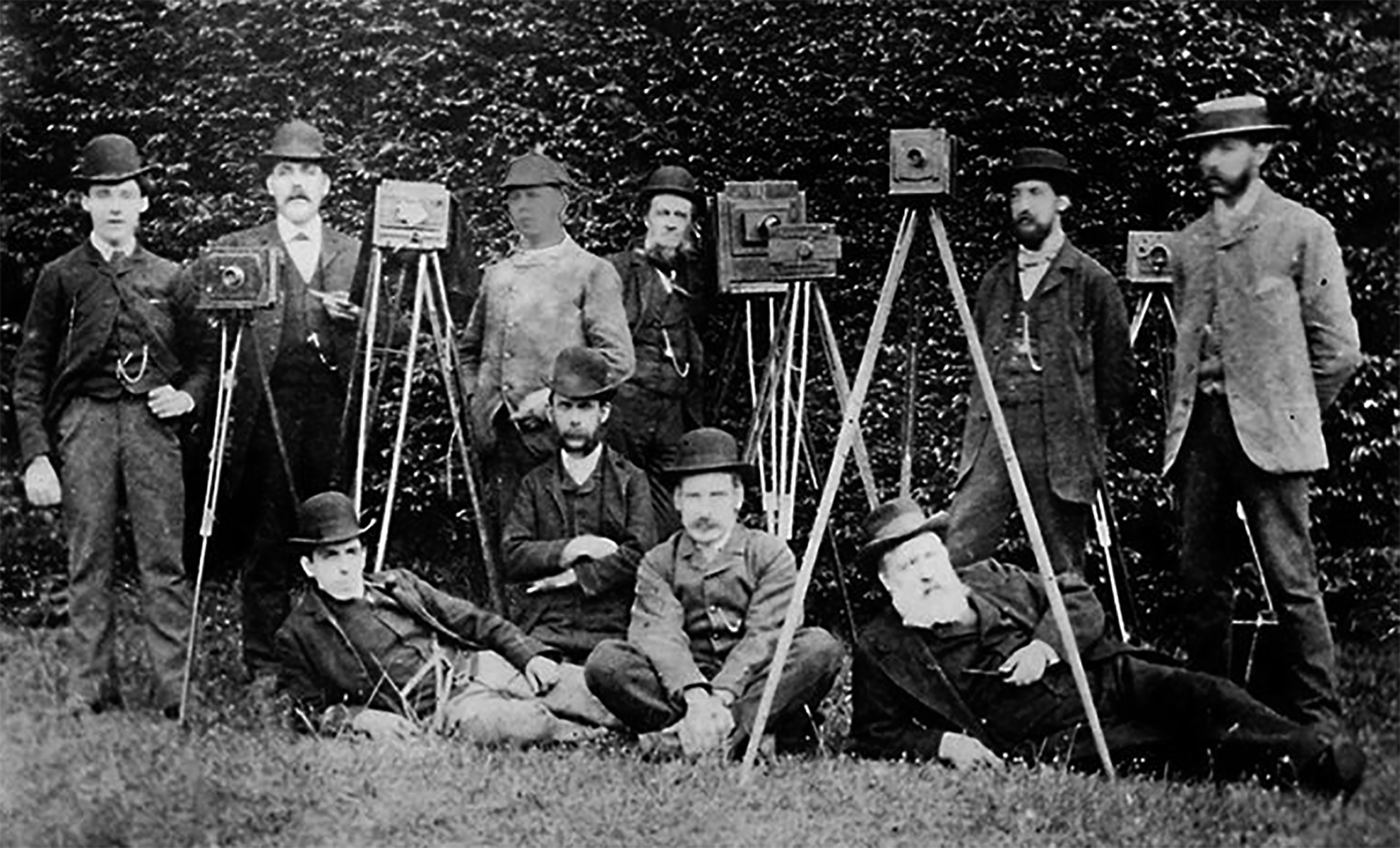
For many years when I was art directing magazines and commissioning photographers I banned the use of tripods. This may seem like a strange authoritarian action to take, but it was based in what seemed to me to be common sense based on the images I was regularly sent. These were invariably portraits, shot on film and presented as contact sheets upon which I would see frame after frame, looking almost identical with only the slightest differance in facial gesture. A pointless process that gave me very little choice to work with or sense of who the person being photographed was. In a way they offered nothing more than a Photo Booth without the sense of fun. Sheets and sheets of the same face looking at me was boring and frustrating as it seemed to me to be a photographic opportunity wasted.
These images were created by photographers using tripods to frame the image, and set up their static lights, but in doing so becoming restricted and contained by the three legged beast their camera was attached to. My plan was to set the photographer free and in doing so encourage experimentation, resulting in more varied and exciting contact sheets. Understandably, some photographers resented my suggestion, seeing no reason for the art director to tell them how they should make photographs. They knew best. Others embraced the suggestion and their work came to life in new ways (I only recognised this fully recently, when the photographer Jake Chessum https://jakechessum.com explained how my dictate and explanation completly changed his way of working with the subsequent positive impact on his career). As time passed the photographers who came to see me and whom I commissioned did not need the ban to be implemented as they didn’t make portrait work that was as rigid as others did at the time.
Then after fifteen years art directing the photographer Terry O’Neill suggested that I should start making my own portrait images. He lent me a Hasselblad and taught me how to load it. That was all the instruction I have ever had in photography. Everything else has been self-taught through reading and observing. I liked Terry’s reportage approach to portraiture, but not his tripod led stylised images that have not faired well with the passage of time. However, I really liked Terry and the camera. The Hasselblad lent itself to being hand-held, I worked with fast film and soon started to win awards and commissions. This was twenty-five years ago and such progression was possible.
In 2006 I left analogue behind and embraced digital with the last body of work I completed also all being hand-held. The book At Home With The Makers of Style was published by Thames and Hudson(https://www.publishersweekly.com/9780500512340) and printed in a square format to make the most of the Hasselblad images, and demonstrate that every image was uncropped. What was printed in every frame was exactly what I saw. I didn’t need a tripod for any of the portraits, still-lives or interior images, despite varied lighting situations. It was also all shot using only natural light. Then I began working digitally and my work process continued as it had done with analogue, except when I was working on advertising campaigns when the full composition needed to be confirmed and agreed upon by clients on set.
I own one tripod, it’s a good one with a detachable head and spirit level, its not super light or super tough its just a solid tripod that I take on all commissions as a ‘just in case’ addition to my kit bag. I also have a set of cut tennis balls I put on its feet to protect easily scartched or marked floors. I’ve owned that tripod for ten years and it has never let me down, but the bigger question is why would I use it? I think this is where the reasons fall into two distinct camps. The first is to ensure the success of a composition, the second is to ensure the correct positioning of artificial lighting. I can see why landscape or wildlife photographers may stand outside of these camps as they set up and wait for something to happen, either weather conditions or animal/bird action, but I’m talking here about environments that the photographer can control.
In these situations the tripod can be both your friend and enemy. Friend in that it can give you time to control the composition with and without whoever you are photographing. Enemy because it can restrict you creativly. So what is the answer as to when, how and if you should use a tripod? Well, I would definitely start working without one and explore composition seeing it as the foundation of any photographic practice. Then I would reflect upon and analise every image I made purely on the basis of composition. What works, what doesn’t, how well are you seeing the details in the frame. Are you rushing? Or are you putting equal importance on what you are not including in the frame as what you are excluding. The understanding of composition is the central building block of all image-making and photography is no different. A tripod maybe a useful tool in helping you with this, but the moment you find it restricting your ability to engage with risk-taking creativity then make sure that you free yourself and your camera.
Dr.Grant Scott
After fifteen years art directing photography books and magazines such as Elle and Tatler, Scott began to work as a photographer for a number of advertising and editorial clients in 2000. Alongside his photographic career Scott has art directed numerous advertising campaigns, worked as a creative director at Sotheby’s, art directed foto8 magazine, founded his own photographic gallery, edited Professional Photographer magazine and launched his own title for photographers and filmmakers Hungry Eye. He founded the United Nations of Photography in 2012, and is now a Senior Lecturer and Subject Co-ordinator: Photography at Oxford Brookes University, Oxford, and a BBC Radio contributor. Scott is the author of Professional Photography: The New Global Landscape Explained (Routledge 2014), The Essential Student Guide to Professional Photography (Routledge 2015), New Ways of Seeing: The Democratic Language of Photography (Routledge 2019), What Does Photography Mean To You? (Bluecoat Press 2020) and Inside Vogue House: One building, seven magazines, sixty years of stories, (Orphans Publishing 2024). His photography has been published in At Home With The Makers of Style (Thames & Hudson 2006) and Crash Happy: A Night at The Bangers (Cafe Royal Books 2012). His film Do Not Bend: The Photographic Life of Bill Jay was premiered in 2018.
© Grant Scott 2026
Leave a Reply