
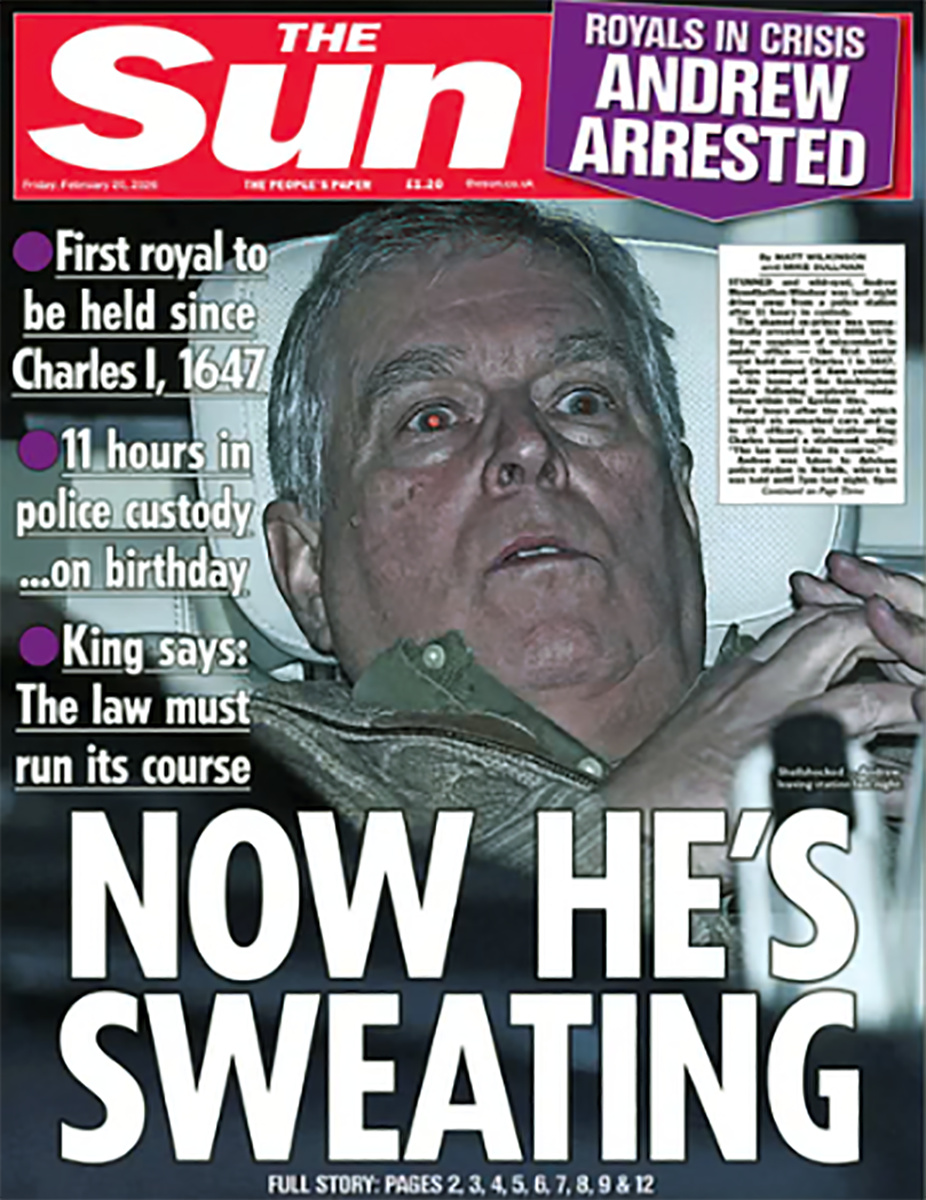
There are two images of the royal family that are stuck in my mind. The first is from 1980 and was made by Arthur Edwards. The second is from yesterday and was made by Phil Noble. Edwards captured a young lady working at a children’s nursery in black and white. He had just become the royal photographer for the British tabloid newspaper The Sun when he went searching for the new girlfriend of one of the world’s most eligible bachelors at the time, Prince Charles. He knew she worked at a pre-school in London’s West End so began knocking on doors until he found the right one. With permission from the school’s owner, Edwards brought the former Lady Diana Spencer to a nearby park, along with two children she had with her. “She posed and I did half a dozen pictures,” he said. Soon, other photographers converged on the scene and started taking pictures of their own. Then nature stepped in. “Everybody doesn’t believe this, but it is the gospel truth — halfway through, the sun came out and revealed those beautiful legs,” he commented later. In all, the encounter that captured lasted just two or three minutes. Newspapers splashed the photo across their front pages, horrifying the young Diana, who was only nineteen at the time. She reportedly declared to Prince Charles, “I don’t want to be known as the girlfriend who had no petticoat.” As we know the memory she left was far more tragic.

Slumped in the back seat of a Range Rover, attempting not to be seen or photographed, the ‘Playboy Prince’ or ‘Randy Andy’ or ‘The Duke of Golf’ as he was known by the tabloid newspapers. Nostrils flared, finger-tips pressed together almost in prayer, his eyes wide and marked by the redeye that camera flash and reflections can cause, as he leaves police custody at the remote Aylsham police station in Norfolk, England. An image for our time captured by Reuters photographer Phil Noble. When news that Mountbatten-Windsor had been arrested broke early on Thursday morning, Manchester-based Noble began the six-hour drive cross-country to Norfolk. Journalists knew that the former prince had been arrested in Norfolk but there were twenty or more police stations where he could have been held. Following a tip, Noble headed to a police station in the market town of Aylsham, over an hour’s drive from Mountbatten-Windsor’s new cottage home.
When he arrived it was quiet, but there were a few other members of the media there, including his colleague, the Reuters video journalist Marissa Davison. Six or seven hours passed with nothing happening before darkness fell. The two Reuters journalists decided to book rooms at a local hotel and Noble packed-up his cameras and started heading down the road towards the hotel. Minutes later, he received a call from Davison telling him that Mountbatten-Windsor’s cars had arrived. He raced back, just in time to see the two vehicles leaving, at high speed. The front car contained two police officers, so Noble aimed his camera and flash at the car behind. In total he made six frames. Two of which showed the police in the car, two were blank, and one was out of focus, but one captured a once senior royal. Noble said “You can plan and use your experience and know roughly what you need to do, but still everything needs to align…When you’re doing car shots it’s more luck than judgement…It was a proper old school news day, a guy being arrested, tracking him down.”
Two examples of news images created from luck, tenacity and an awareness of the moment. Two images that evidence the power of photography to shape a global conversation and remain as artefacts of history. They just happen to feature two of the most controversial members of the royal family for many years and appeared in a Murdoch owned tabloid newspaper, of course amongst many others. True photojournalism at its best.
Dr.Grant Scott
After fifteen years art directing photography books and magazines such as Elle and Tatler, Scott began to work as a photographer for a number of advertising and editorial clients in 2000. Alongside his photographic career Scott has art directed numerous advertising campaigns, worked as a creative director at Sotheby’s, art directed foto8 magazine, founded his own photographic gallery, edited Professional Photographer magazine and launched his own title for photographers and filmmakers Hungry Eye. He founded the United Nations of Photography in 2012, and is now a Senior Lecturer and Subject Co-ordinator: Photography at Oxford Brookes University, Oxford, and a BBC Radio contributor. Scott is the author of Professional Photography: The New Global Landscape Explained (Routledge 2014), The Essential Student Guide to Professional Photography (Routledge 2015), New Ways of Seeing: The Democratic Language of Photography (Routledge 2019), What Does Photography Mean To You? (Bluecoat Press 2020) and Inside Vogue House: One building, seven magazines, sixty years of stories, (Orphans Publishing 2024). His photography has been published in At Home With The Makers of Style (Thames & Hudson 2006) and Crash Happy: A Night at The Bangers (Cafe Royal Books 2012). His film Do Not Bend: The Photographic Life of Bill Jay was premiered in 2018.
© Grant Scott 2026
Leave a Reply