
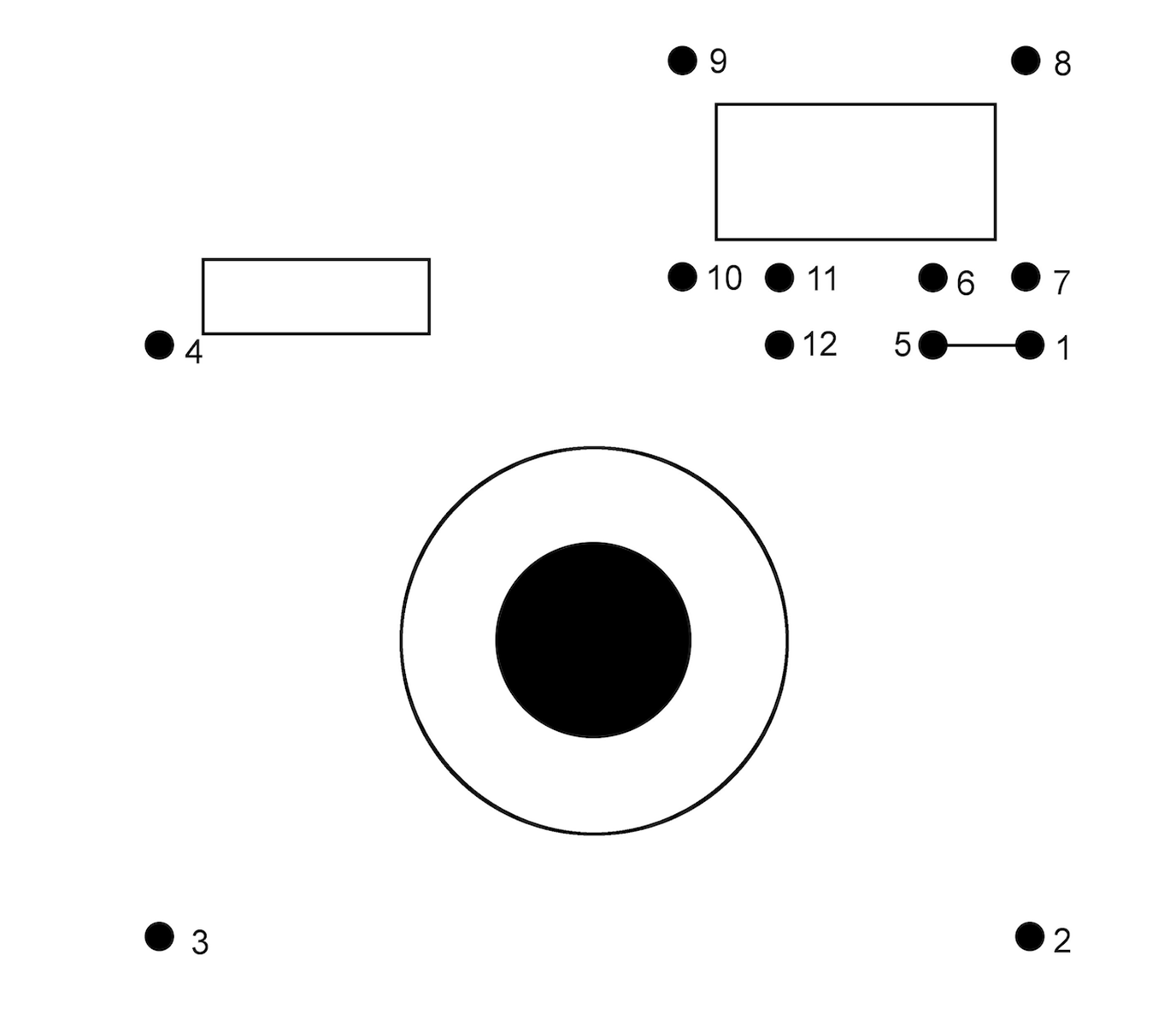
Let’s get something clear from the start. A photographic practice is an accurate description of the process’s and responsibilities a working professional photographer needs to consider and implement in 2026. It may evolve in 2027, 28 and onwards, but this is where we are today. However, beware, if you believe that I am only going to discuss making photographs then you may be disappointed, but hopefully informed and possibly surprised.
Dot 1: The foundation of any photographic practice is obviously the work. That’s a given, but that work has to have a reason to exist and a potential defined audience for that work to be considered as being part of a practice, rather than a collection of disparate images. The basis of this is easy. Your audience or client base will be defined by the work they are already engaged with and commissioning. It will be your responsibility to identify if your work meets their expectations. To find them and connect with them. They will rarely if ever come to you, you will have to go to them.
Dot 2: That leads me to the world of networking. Not just the use of social media, but both online and in-person. It is not enough to have an Instagram account and expect that you will get work (you will also need a website, but more on that later). For some reading this article my comment will seem obvious, for for others it may be read as heresy! But let’s continue. I often hear from photographers that in-person networking is beyond them for a number of different reasons. Unfortunately, that is not an option for a working photographer today. Book launches, exhibition private views, festivals and talks are all useful opportunities to network with fellow photographers, but they are not the only live events a photographer should consider attending. It has never been more important in a digital world to recognise the importance of the physical artefact in creating networks and instigating in-person meetings; another form of live event.
Dot 3: When I say ‘physical artefact’ I mean books, postcards and posters, promotional material from the past, but which are more important today within a digital world than they ever where. Why? Because where as they were once used by every photographer today they are used by few and therefore stand out more than thy used to. I mentioned this on a recent podcast and someone decried my advice as being outdated and ignorant. It is neither. As someone who knows and works with many art buyers, directors, editors and commissioners I can confirm that physical artefacts are kept, pinned near desks and remembered. Whereas digital media is too easily lost in the visual soup that takes hours of doom scrolling to unpick. Time that commissioners do not have to waste.
Dot 4: Social Media can be useful, but it is not the answer on its own. It shouldn’t take over your life and you shouldn’t put too much store in its powers to do anything for you or your practice. It can be a useful tool in keeping you informed, but it cannot be relied upon as a platform for marketing you or your work. Likes and follows are not commissions.
Dot 5: Whilst we are talking about social media let’s address the importance of writing. Today an ability to craft well-written text is an essential ability for any photographer. It may not be something you find easy or enjoy, but it needs to be conquered.
Dot 6: That leads me to your website. Or at least it should. A website is essential if you want to be taken seriously. It’s a shop window for your work that you control and a central hub for your practice. If you are only using Instagram you’re making a mistake and showing no empathy for your potential clients. It is also naive if you think that the owners of Instagram will keep it as you won’t it be. It will change and possibly disappear, just remember what happened to Twitter, Napster, Flickr etc etc. Or you could find more here https://en.wikipedia.org/wiki/List_of_defunct_social_networking_services. A website is needed to provide context for your work and for you as a photographer. It needs to be easy to use, contain informative, clear, simple, well-written text and feature large images with captions. Your website should consider the viewer and not be a vanity project.
Dot 7: Vanity leads me to the personal projects that every photographic practice and photographer today needs. Of course they should not be based on vanity, they need to have a reason to exist just as all of your work requires. They can connect to your main body of work or complement it, they should not contradict it. They can be emotional, inquisitive, or fictional but they should always seek to inform and connect. Over the past few years there has been a predominance of personal, introspective bodies of personal work made, published and exhibited. If this is where you are with your work, beaware of two things. One that there is a saturation of this work at present and therefore a desire amongst many for something different. Two, if you make this work make sure you are aware that it has an audience and not an audience of one, you!
Dot 1: And we return to the beginning. All of the dots, if joined, should create a satisfying image. One that makes sense and which has come together through a series of logical connections. That is my reason for using this metaphor to explain something that many people find confusing, when it isn’t. I hope you found it useful.
Further Reading
https://unitednationsofphotography.com/2026/01/07/photographers-and-writing-a-contentious-issue/
https://unitednationsofphotography.com/2023/01/09/what-makes-a-successful-photo-portfolio/
https://unitednationsofphotography.com/2025/10/18/make-money-from-photography/
https://unitednationsofphotography.com/2023/11/13/instagram-is-photography-but-it-is-not-all-photography/
https://unitednationsofphotography.com/2023/01/07/how-to-edit-your-photographs-the-simple-5-step-way/
https://unitednationsofphotography.com/2020/09/04/what-does-it-take-to-be-a-professional-photographer/
https://unitednationsofphotography.com/2018/05/13/websites-are-shop-windows-not-vanity-projects-how-to-set-up-a-personal-photography-website/
Dr.Grant Scott
After fifteen years art directing photography books and magazines such as Elle and Tatler, Scott began to work as a photographer for a number of advertising and editorial clients in 2000. Alongside his photographic career Scott has art directed numerous advertising campaigns, worked as a creative director at Sotheby’s, art directed foto8 magazine, founded his own photographic gallery, edited Professional Photographer magazine and launched his own title for photographers and filmmakers Hungry Eye. He founded the United Nations of Photography in 2012, and is now a Senior Lecturer and Subject Co-ordinator: Photography at Oxford Brookes University, Oxford, and a BBC Radio contributor. Scott is the author of Professional Photography: The New Global Landscape Explained (Routledge 2014), The Essential Student Guide to Professional Photography (Routledge 2015), New Ways of Seeing: The Democratic Language of Photography (Routledge 2019), What Does Photography Mean To You? (Bluecoat Press 2020) and Inside Vogue House: One building, seven magazines, sixty years of stories, (Orphans Publishing 2024). His photography has been published in At Home With The Makers of Style (Thames & Hudson 2006) and Crash Happy: A Night at The Bangers (Cafe Royal Books 2012). His film Do Not Bend: The Photographic Life of Bill Jay was premiered in 2018.
© Grant Scott 2026
Leave a Reply