
This is a question that I never thought I would have to answer, but the circumstances under which I find myself having to are not as unusual as you may think.
Before I answer the question and explain the circumstances I have a confession to make. It is this. I have a problem saying ‘no’. Particularly when it comes to magazines and books. When I hear of libraries clearing their shelves and threatening to bin the books and magazines that once filled them I am regularly seen reversing my car up to the building and filling it with volumes I don’t need and have no place for. I have the same policy when people ask me if I want books or magazines that are destined for the skip. I just can’t accept that they will end their lives as land-fill so I adopt them all!
There seems to be two main reasons why these come to me. The first is the fact that libraries no longer have room for new books alongside old ones and therefore regular culls begin with the least used and requested. Inevitably books and magazines related to photography seem to fall into this category. They are considered to be of no value or interest, irrelevant, too specialist to keep. The second is just as sad. Families inheriting estates filled with books which they have no interest in face the problem of disposing of them as houses are cleared and that’s where I seem to come in. There is only so much that you can pass on to charity shops and when it comes to life time collections family members often feel a responsibility to the deceased to respect what their collections meant to them. To pass them on to someone who cares. Me.
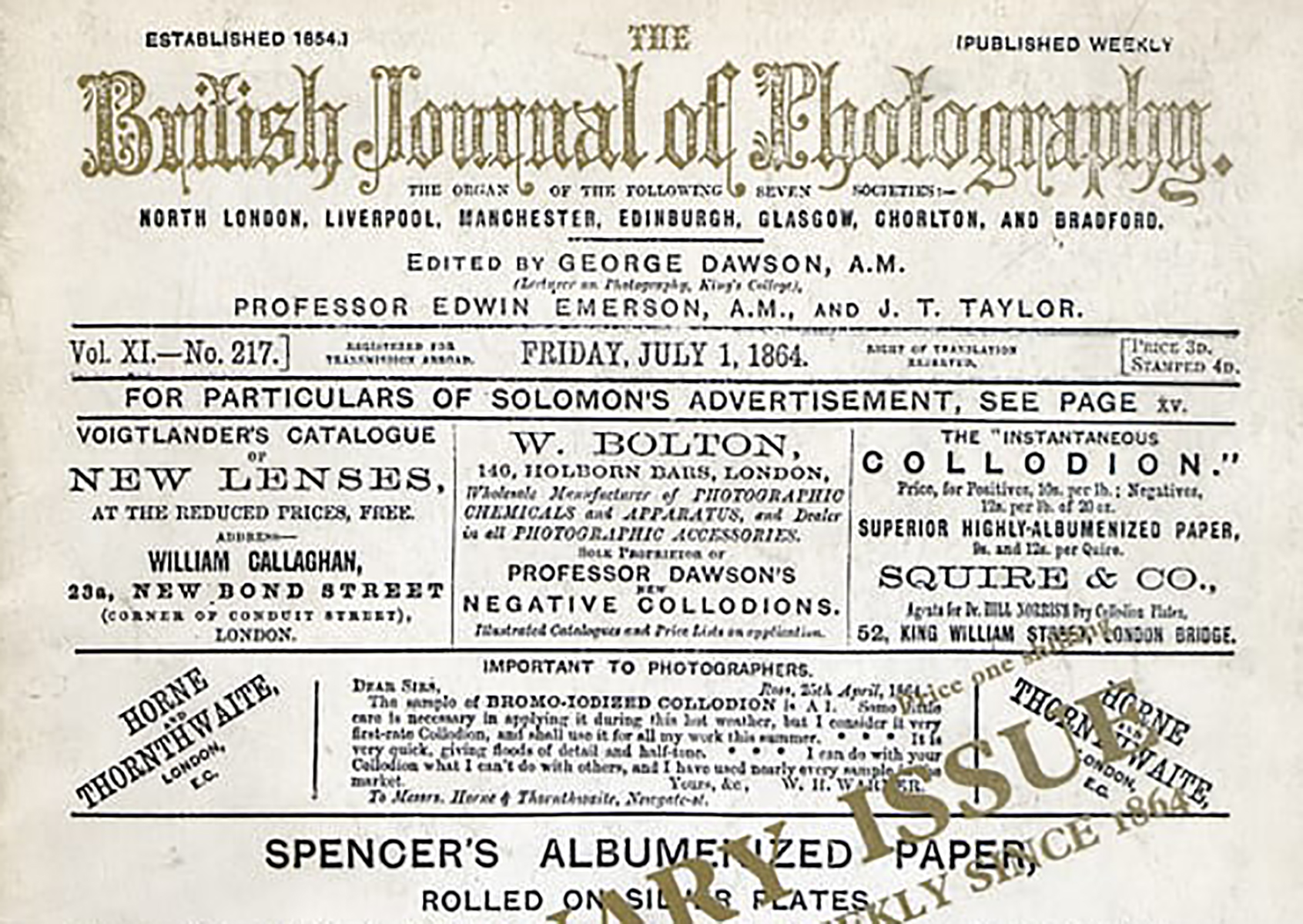
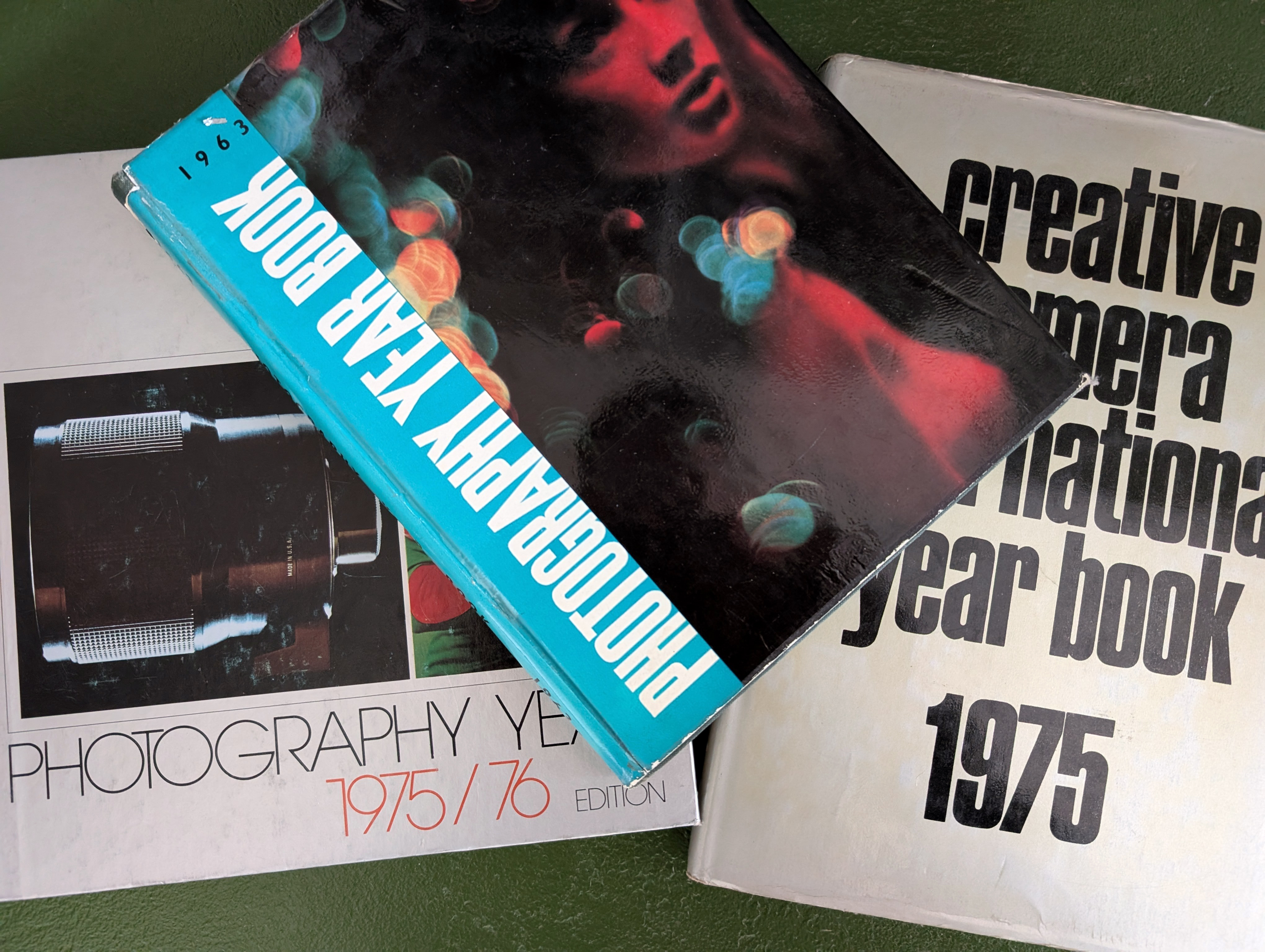
The first situation has seen me recently accept thirty years of French and Italian Vogue, a decade of bound Camera magazines, and more individual issues of photography magazines than I can count. The books are another problem! The second has seen me recently say ‘yes’ to six packing cases of one hundred years of leather bound copies ofThe British Journal of Photography.
My inability to say ‘no’ presents several challenges. The first is where to keep everything. My house is not large enough to include a library room and the combined weight of my book collection requires a solid floor. The second is when to look at them all. I’m a busy man and I am not blessed with many free hours to spend casually flicking through their pages, let alone actually reading the text. So, why do I have them?
In a sense I am like a donkey sanctuary for the forgotten and unwanted photography tomes threatened with extinction. A home for the poorly treated, unloved and dismissed.
After over one hundred years of photography related publishing it is not surprising that mountains of unwanted literature have accumulated. I myself have repeatedly sold large sections of my book collection at auction in the past to try and keep some kind of control over my collecting. In a digital world I told myself that I could find whatever I needed to look at online. Of course that is not true and I still find myself looking for a book I no longer own.
My university office is currently an additional home for my most recent waifs and strays including the BJPs. The floor, my desk and shelves are filled. There is no room for anymore.
I will of course continue to say ‘yes’ despite this storage conundrum. I’m sure you would too. I can’t do anything about libraries closing or releasing their dusty stock but I think I can make a suggestion concerning inheritance. If you have a collection of books or magazines that has meant something to you make sure that you itemize them in your will. Ensure that you leave it to the people who will appreciate it (that may not be your immediate family) and have space to keep it. Better still discuss it with those people whilst you can, before it is too late.
Our collections are personal reflections of our interests and passions. They define who we are and they are important, just as the books and magazines they contain are important historical artifacts. I’m not sure what I will do with one hundred years of the BJP but I know that I will do my best to keep them safe for future generations in the hope that like minded souls will feel the same as me and see some value in their fragile pages.
Further Reading/Listening
https://unitednationsofphotography.com/2025/10/12/is-the-photo-book-dead/
https://unitednationsofphotography.com/2022/09/22/photo-books-and-the-economic-crisis/
https://unitednationsofphotography.com/2024/01/07/its-not-a-zine-its-a-book/
https://unitednationsofphotography.com/2022/06/18/alphabetical-subject-photographer-or-size-how-do-you-organise-your-photo-book-shelf/
https://unitednationsofphotography.com/2023/07/12/podcast-a-photographic-life-episode-special-conversation-with-mary-virginia-swanson-and-darius-himes/
https://unitednationsofphotography.com/2022/07/27/podcast-a-photographic-life-episode-summer-photo-book-special-part-1/
https://unitednationsofphotography.com/2022/08/03/podcast-a-photographic-life-episode-224-summer-photo-book-special-part-2/
Dr.Grant Scott
After fifteen years art directing photography books and magazines such as Elle and Tatler, Scott began to work as a photographer for a number of advertising and editorial clients in 2000. Alongside his photographic career Scott has art directed numerous advertising campaigns, worked as a creative director at Sotheby’s, art directed foto8 magazine, founded his own photographic gallery, edited Professional Photographer magazine and launched his own title for photographers and filmmakers Hungry Eye. He founded the United Nations of Photography in 2012, and is now a Senior Lecturer and Subject Co-ordinator: Photography at Oxford Brookes University, Oxford, and a BBC Radio contributor. Scott is the author of Professional Photography: The New Global Landscape Explained (Routledge 2014), The Essential Student Guide to Professional Photography (Routledge 2015), New Ways of Seeing: The Democratic Language of Photography (Routledge 2019), What Does Photography Mean To You? (Bluecoat Press 2020) and Inside Vogue House: One building, seven magazines, sixty years of stories, (Orphans Publishing 2024). His photography has been published in At Home With The Makers of Style (Thames & Hudson 2006) and Crash Happy: A Night at The Bangers (Cafe Royal Books 2012). His film Do Not Bend: The Photographic Life of Bill Jay was premiered in 2018.
© Grant Scott 2026

Leave a Reply