
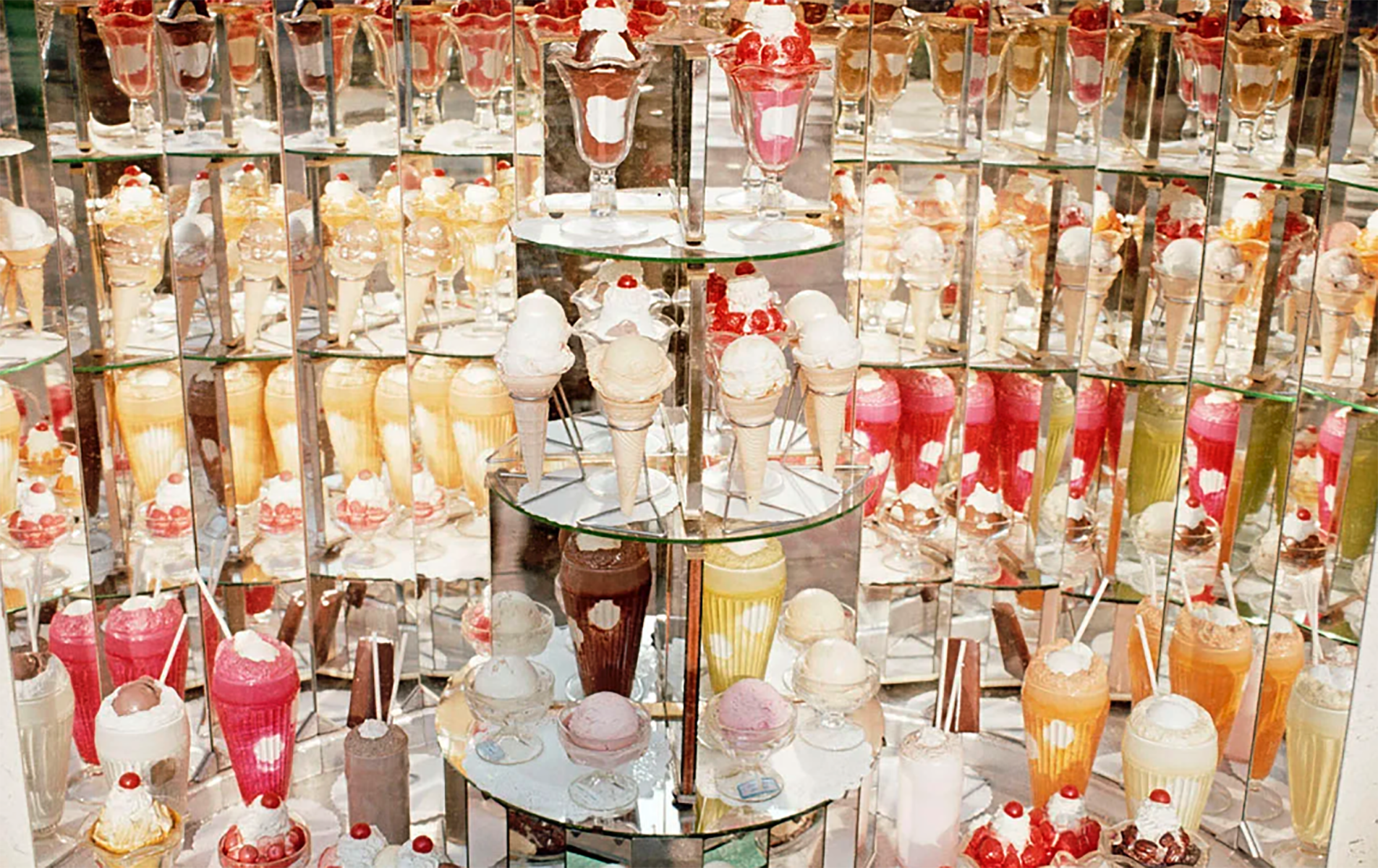
This will not take long for you to read or for me to write. The book is by Joel Meyerowitz and it’s title is Where I Find Myself. However, let me go into a little more detail than that. For many years my ‘go-to’ all encompassing book of photographic inspiration, education and aspiration was Irving Penn’s Passage. Published in 1991 I bought it when it came out and it has remained firmly on my shelf as other photo books have come and gone. A signed copy could cost you anything up to £650.00 but an unsigned copy could be yours for around the £80.00 mark. The book consists of 300 beutifully printed pages that provide a major chronological overview of Penn’s career across half a century structured as a visual memoir. Following an introduction by the great Conde Nast art director and photographer Alexander Liberman, who knew and worked with Penn for decades, the book presents a selection of photographs from each year, interspersed with commentary by Penn. This structure highlights the remarkable range of work that Penn pursued simultaneously which he described as a “balanced diet”. The book also features a chronological index to his portrait subjects compiled by Alexandra Arrowsmith. In short it is a great book that I highly recommend and will keep on my shelf.
I have spent some time thinking about buying the Joel Meyerowitz book but having owned a few of his books over the years I didn’t feel fully compelled to hand over the £45.00 it costs. I am constantly trying to reduce the number of books I have and therefore fight the urge to buy on a daily basis. I will admit that it has become easier recently as I see few that I feel need to be in my life. However, over Christmas I found myself in the position of taking back an unwanted book to a local book shop and with £25 to spend. Suddenly, the Meyerowitz book at only £20.00 seemed a more reasonable proposition. They had it in stock and the transaction was made.
Where I Find Myself is the first major single book retrospective of his work and as the title indicates, it is organized in inverse chronological order, the opposite to the Penn book, and spans Meyerowitz’s whole career to date. It covers all of his major projects: his work inspired by the artist Morandi, his work on trees, his coverage of Ground Zero, his trips in the footsteps of Robert Frank across the US, his experiments comparing colour and black and white pictures, and of course his iconic street photography work. The text is all by Meyerowitz himself.
The genius of this book is not only the photography, that’s a given, it’s the honesty, personal reflection, and clarity of thought that Meyerowitz brings to the text. Perhaps the reverse chronology of its structure helps with this. Writing with the benefit of hindsight Meyerowitz brings context and understanding not only to his thought process at the time but also in the progression of his photographic practice. Exploring street photography, conceptual work, landscapes, portraits and still life he shows how each progression is shaped by his life and willingness to be challenged technically and creatively.
The book starts with the personal assertion that “The element of chance – which, to me, is photography’s greatest asset – has once again spun me around while slipping a fresh question into my mind” and continues to evidence how this belief informs all of his projects and images. An assertion that aligns perfectly with my relationship with the medium.
I’m not going to tell you anymore about the book because I want you to go out and find a copy to reach your own conclusion concerning its value but I will say that I cannot think of anyone interested in photography that will not benefit from owning it. Save your money that you may have spent on workshops or portfolio reviews, you will learn everything you need to know from the pages of this book.
I’ll just leave you with one final comment by Meyerowitz concerning his street work completed between 1962-1964 “I played third base, I knew about the kind of movement that puts you in the right spot at the right time. It was energy in the service of the moment, a moment that was unrepeatable and evanescent, and to me this new idea was called Photography!”
Further Reading
https://unitednationsofphotography.com/2020/08/15/its-not-the-weight-of-the-book-but-the-weight-of-the-work-that-counts/
https://unitednationsofphotography.com/2018/11/13/the-why-where-what-and-how-of-photobooks-and-what-is-the-truth/
https://unitednationsofphotography.com/2013/11/18/audio-martin-parr-and-gerry-badger-the-photobook-history-volume-iii-paris-photo-2013/
Image: © Joel Meyerowitz
Dr.Grant Scott
After fifteen years art directing photography books and magazines such as Elle and Tatler, Scott began to work as a photographer for a number of advertising and editorial clients in 2000. Alongside his photographic career Scott has art directed numerous advertising campaigns, worked as a creative director at Sotheby’s, art directed foto8magazine, founded his own photographic gallery, edited Professional Photographer magazine and launched his own title for photographers and filmmakers Hungry Eye. He founded the United Nations of Photography in 2012, and is now a Senior Lecturer and Subject Co-ordinator: Photography at Oxford Brookes University, Oxford, and a BBC Radio contributor. Scott is the author of Professional Photography: The New Global Landscape Explained (Routledge 2014), The Essential Student Guide to Professional Photography (Routledge 2015), New Ways of Seeing: The Democratic Language of Photography (Routledge 2019), What Does Photography Mean To You? (Bluecoat Press 2020) and Inside Vogue House: One building, seven magazines, sixty years of stories, (Orphans Publishing 2024). His photography has been published in At Home With The Makers of Style (Thames & Hudson 2006) and Crash Happy: A Night at The Bangers (Cafe Royal Books 2012). His film Do Not Bend: The Photographic Life of Bill Jay was premiered in 2018.
© Grant Scott 2026

Leave a Reply