
If you were engaged with playing music would it be a reasonable expectation to have heard of these music icons that came to prominence in the 1960s? I think we would all agree that it is. Not to like them necessarily but to be aware of their names, their cultural importance and relevance to the history of popular music.
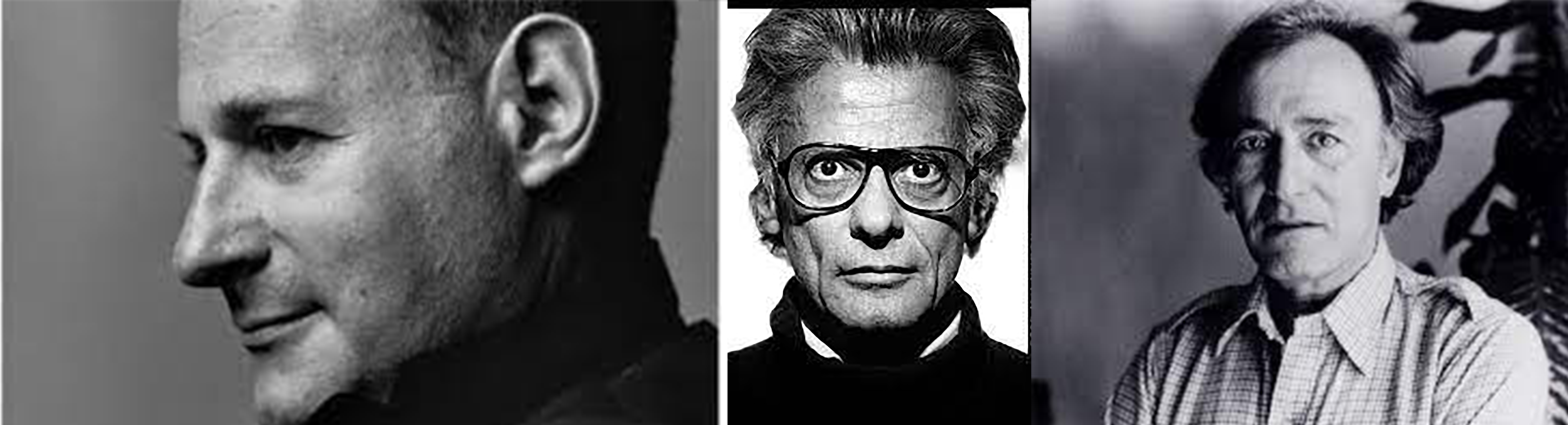
So, is it a reasonable expectation of a photographer to similarly be aware of the photographers I have mentioned in the title of this article? Again, I think, and hope we would agree that it would be. Of course I could have mentioned many other musicians and songwriters or photographers, but these six seem to me to have similarities of creative approach that links them. They established ways of working in similar periods of time and are all easy identifiable by their images and music. The musicians are all still regularly referenced to day, whilst their music is still popular, as are the photographers images.
And yet I repeatedly come across photographers of all ages who have never heard of Avedon, Penn and Klein.
I do see photographers calling out on social media for inspiration. Looking for others to give them the secret key to success. Others respond to this call either by recommending themselves or other social media warriors. They rarely if ever return to the pantheon of greats that the history of photography provides. The issue with this is of course that an aesthetic of repetition becomes dominant with the result that everything looks the same. Shallow, vacuous and meaningless.
I have written about this before. I’m not saying anything new here, but I seem to be seeing the internalisation of social media photography more and more these days. Avedon, Klein and Penn are not big on social media and yet they were three of the pioneers of the medium.
The problem is of course that if you only look at social media photography for inspiration you will be influenced only by those who shout the loudest and are promoted by the algorithms the most. You will not see the best work, the greatest photographers, the most challenging approaches or understand the ‘why’ behind any work. You will see one image and take it at face value. Like it or not. Then move on. Just like buying a burger from a drive-in.
I am not saying that there is not great work being created and shared on social media platforms, there is but these platforms must not be the defining space for inspiration in any creative practice.
If I only listened to one radio channel I would only hear the music chosen for one demographic. I would be catered for but not challenged. I would be kept within a comfortable bubble that provided no inspiration, no new ideas or possibilities.
For a musician to not know of the greats of the past would be ignorant of the importance of those that came before. For a photographer to allow themselves to be in the same position would be a dereliction of duty.
Dr. Grant Scott is the founder/curator of United Nations of Photography, a Senior Lecturer and Subject Co-ordinator: Photography at Oxford Brookes University, Oxford, a working photographer, documentary filmmaker, BBC Radio contributor and the author of Professional Photography: The New Global Landscape Explained (Routledge 2014), The Essential Student Guide to Professional Photography (Routledge 2015), New Ways of Seeing: The Democratic Language of Photography (Routledge 2019). His film Do Not Bend: The Photographic Life of Bill Jay was first screened in 2018 www.donotbendfilm.com. He is the presenter of the A Photographic Life and In Search of Bill Jay podcasts.
Scott’s next book is Inside Vogue House: One building, seven magazines, sixty years of stories, Orphans Publishing, is on sale February 2024.
© Grant Scott 2023



Leave a Reply