
Hands up! I accept the charge. I may have lured you here under false pretences. I am going to talk about film, but not film in a camera. Not analogue photography. Enough has been written and said about that since 1824, when Nicéphore Niépce put lithographic stones, coated with bitumen, at the back of a camera obscura and obtained the first time ever fixed image. There is no more to be said, in my opinion.
Instead, I am going to talk about the importance of film on, not as, photography. Going to the flix, pictures, movies, cinema, whatever words you want to use to describe watching a piece of celluiod or digital moving image in a large darkened room. I am not talking about streaming here, I am talking about a shared experience with people you do not know and will never speak with. I do not do this often enough and I am aware of this, primarily because my local cinemas rarely show what I want to see. I enjoy small budget films and what are often called ‘art house films’. I enjoy foreign language films. I have no time for horror, Marvel, blockbusters or ‘romcoms’. I am not being deliberately elitist here, just honest. I like to be challenged, both visually and narratively and seeing an approach to storytelling that is not linear for the price of a ticket.
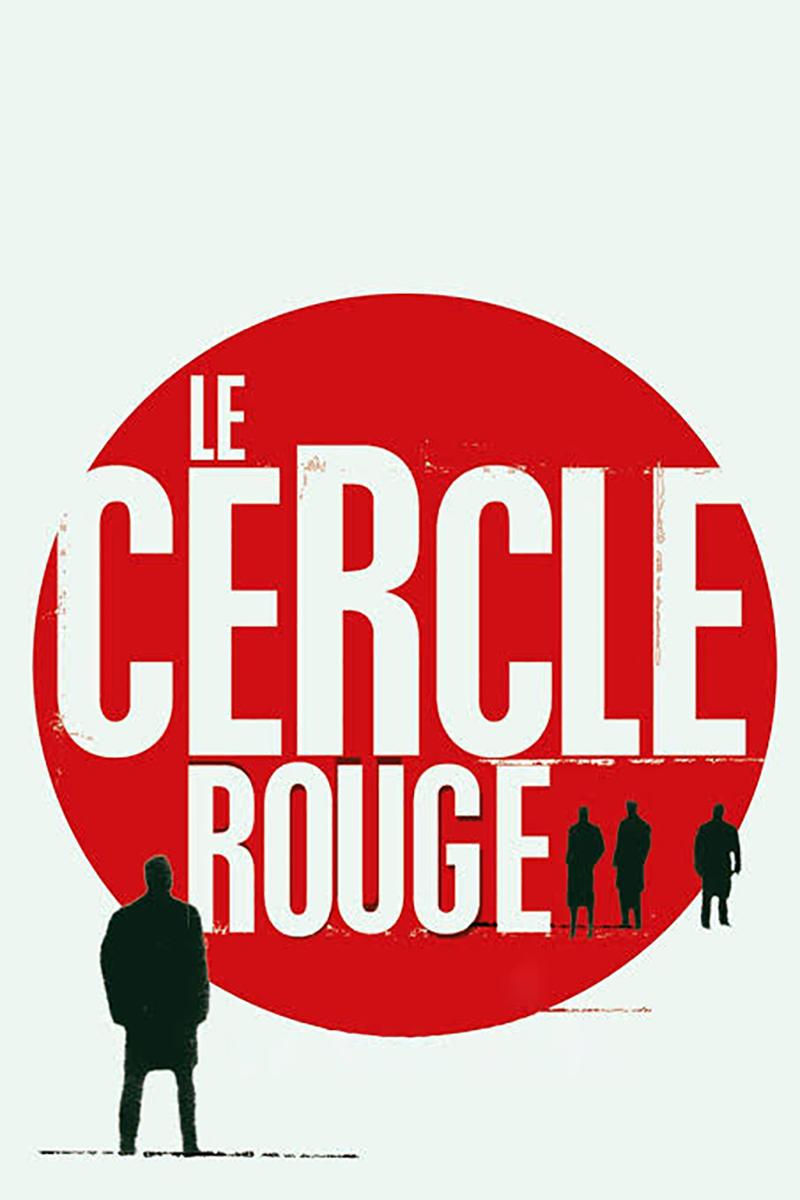
To this end, I recently went to see Le Cercle Rouge (The Red Circle), a 1970 French crime film written and directed by Jean-Pierre Melville. It stars Alain Delon, Gian Maria Volonté, François Périer and Yves Montand and is best known for its climactic heist sequence, which is approximately half-an-hour in length and has almost no dialogue. It has much more than that however. Incredible cinematography that reminded me of the work of photographer Raymond Depardon, a subdued colour pallette that reminded me of the photography of Stephen Shore and Alec Soth. The filmmkaing reminded me of Anton Corbijn’s brilliant The American. It also presents, more questions than answers, more meaningful looks, than dialogue and even includes a not so subtle referance to Nicéphore Niépce and the village where he discovered photography.
In short, it is a photographers film in disguise. As so many films are. But l don’t need to explain the importance of film to photographers when it comes to inspiration and aspirations. It was the experience of watching Le Cercle Rouge, a fifty-six year old film, in a foreign language, on a Wednesday night, in a converted swimming pool theatre space, that made me realise a new importance for photographers learning from the experience of film. There were approximately fifty people in the room, and throughout the screening, they could be heard to respond to the visual and narrative aspects of the film that they admired and were surprised by. Not loudly by shouting or commenting, but with barely audible affirmations.
The idea of the informed, engaged audience responding to a piece of visual work, is something that all photographers need and hopefully desire. This is what putting work into a social environment gives you. The challenge, of course, is to be able to accept the response you receive, both positive and negative. It could easily be argued that many of the films that exist within the indpendent film industry are only made for small audiences and that Hollywood blockbusters are the mass people pleasers of the film industry. The facts related to audience figures would confirm this, and yet Le Cercle Rouge was the fifth most popular film of the year in France, in 1970. It found an audience, despite its challenging approach. I think we could argue that in France it contained two of its most famous personalities in Delon and Montand. That French films invariably do well in France and that film was taken far more seriously by the wider population in 1970. However, challenging is not always uncommercial. Just look at the recent critical and commercial success of Hamnet for proof of that.
The issue for photography today is that it is exhibited and published in a ‘feedback free zone’. We look at it on our screens alone and rarely seek multiple opinions. As a result work appears based on the decisions, opinions, tastes and considerations of just one person, without consideration of its potential audience. This insular approach to the medium has been encouraged by our relationship with the screen and the proliferation of work that has adopted the same approach over the past few years. What I think we can learn from film is the importance of that audience in responding to work, by seeing it away from the digital screen. For the photographs being experienced and discussed, and most importantly to listen to that discussion.
Dr.Grant Scott
After fifteen years art directing photography books and magazines such as Elle and Tatler, Scott began to work as a photographer for a number of advertising and editorial clients in 2000. Alongside his photographic career Scott has art directed numerous advertising campaigns, worked as a creative director at Sotheby’s, art directed foto8magazine, founded his own photographic gallery, edited Professional Photographer magazine and launched his own title for photographers and filmmakers Hungry Eye. He founded the United Nations of Photography in 2012, and is now a Senior Lecturer and Subject Co-ordinator: Photography at Oxford Brookes University, Oxford, and a BBC Radio contributor. Scott is the author of Professional Photography: The New Global Landscape Explained (Routledge 2014), The Essential Student Guide to Professional Photography (Routledge 2015), New Ways of Seeing: The Democratic Language of Photography (Routledge 2019), and What Does Photography Mean To You? (Bluecoat Press 2020). His photography has been published in At Home With The Makers of Style (Thames & Hudson 2006) and Crash Happy: A Night at The Bangers (Cafe Royal Books 2012). His film Do Not Bend: The Photographic Life of Bill Jay was premiered in 2018. Scott continues to work as a photographer, writer and filmmaker and is the Subject Coordinator for both undergraduate and post graduate study of photography at Oxford Brookes University, Oxford, England.
Scott’s book Inside Vogue House: One building, seven magazines, sixty years of stories, Orphans Publishing, is now on sale.
© Grant Scott 2026


Leave a Reply