
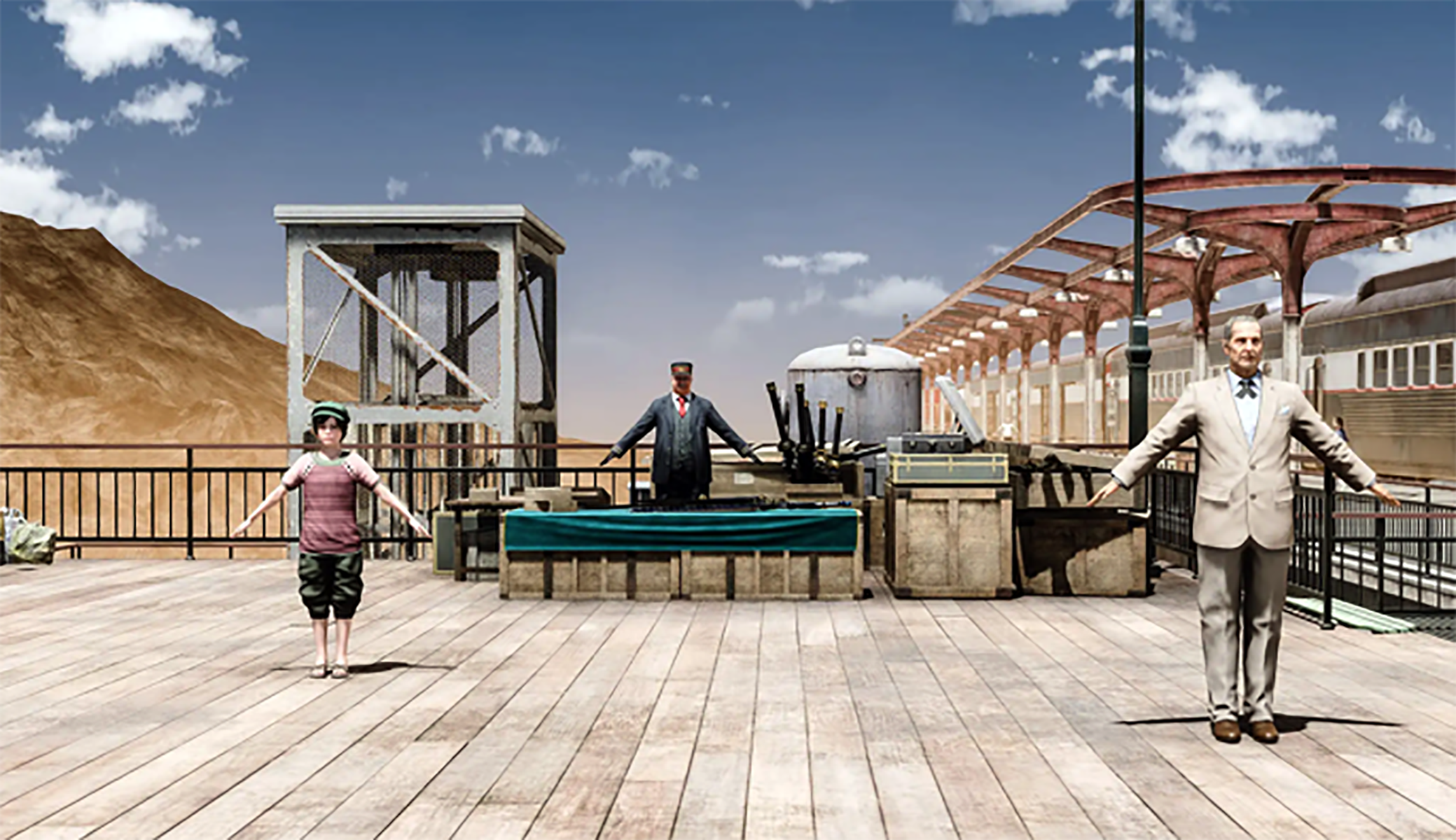
A recent article in Huck online focused on the rise in video game photography. I saw the headline and was intrigued. I have no interest in video games and have never played one. I have also never seen Star Wars, so it is perhaps not surprising that I have never played a video game. I do remember Pong, but I was not allowed to play it as my father said that plugging the game into the back of the family television (which you had to do) ruined the television. So, the world of gaming and gamers is not mine. Despite this I have long been interested in the developing visual sophistication of games, with the cross over with photography being an inevitable outcome to me.
I had never heard of video game photography, have you? According to the article, “Ignored for years by the mainstream, video game photography is finally coming into its own – fuelled by quality graphics, dedicated photo modes put in by eager developers, and a rapidly expanding industry.” Evidently, there are celebrity fans of this genre of the medium of image capture. The article tells us that, “Actor Jack Quaid regularly posts images from his favourite games to his 2 million followers, from titles such as Spider-Man 2, Tony Hawk’s Pro Skater and Ghost of Yotei. Most recently, his photos of dolphins caught mid-leap, dramatic powder-keg explosions and men wielding flintlock pistols, courtesy of Assassin’s Creed Black Flag, even prompted a response from developer Ubisoft. “Amazing pics Captain Quaid… We’re glad you’re enjoying sailing in the Caribbean!”” Of course not one of the images were created by anyone out at sea. I have never heard of Jack Quaid.
This maybe new to you and me, but this is an area that people have been exploring for other a decade. Video games have been around for years, with the first-ever home console being released in 1972. However, the industry was working with basic rudimentary software, a situation that changed around 2000, with the advent of online gaming, 128-bit graphics and better processing power. The first game to include a ‘photo mode’ is the subject of debate, evidently. Metal Gear Solid: Integral, which was released in 1999, featured a setting where players could take pictures of the game’s characters. But, it was 2004’s Gran Turismo 4 that first introduced an exportable photo mode, letting players download and share images beyond the game’s confines.
The question of course for photographers is, are we describing a screenshot as a photograph and should we? After all, what is the process of the video game photographer? Their passion has to be for gaming, otherwise they would not be able to access their subject matter. In a sense this is no different from any other photographer. Subject matter comes from passions and interests and we use photographic capture to tell stories that are informed by these. The photographer choose’s when to press the button to capture what they have seen. They decide the compostion and the moment. Video game photographers are doing the same. But to me there is one very important difference and it is one that aligns with the same issues that surround AI created images. One of copyright.
The video game photographers are making images of work that has been created, designed and distributed by developers who own the copyright of the titles they produce. The copyright of these brands is closely guarded, to ensure that every marketing and merchandising opportunity available reaches maximum revenue. And yet the images I have seen created by the VGPs ( I will use this acronym from now on) proudly proclaims that the image is theirs, as if the decision of when to click and how to crop instantly makes it theirs. This has to raise some series ownership issues.
Subject matter for the VGPs seems to rely upon the genre of game they enjoy and play. These include Alan Wake 2, Assassin’s Creed Valhalla, Death Stranding, Horizon Zero Dawn, Red Dead Redemption 2, Kingdom Come Deliverance 2, Blood of the Dawnwalker, The Witcher 3: Wild Hunt and Battlefield One. None of this means anything to me, but it does suggest that the VGP is dictated by the art of another, literally. They are creating nothing more than an edit of someone else’s aesthetic. They may be choosing the aesthtic, but it is nothing to do with them.
These days, AAA games (video games produced or distributed by a mid-sized or major publisher) all feature photorealistic graphics, and over the last decade, photo modes have evolved from an eccentric add-on to the norm on many games, including Assassin’s Creed Odyssey, Resident Evil Village, and Legend of Zelda: Breath of the Wild. I’m told that the launch of the mega-game, Grand Theft Auto 6, will almost certainly feature a photo mode (though no details have yet been announced), and titles like Ghost of Yotei feature sophisticated settings that include a 12 – 300 mm focal range, 24‑hour time-of-day tools, weather controls, colour grading, and even tracking shots. It’s almost as if the developers want to encourage VGPs without any concern for the copyright of their brands.
One of the founders of the virtual photography forum gg frame (https://ggframe.games) has commented that “Photo modes now offer much more control over cameras, lighting, depth of field, poses and even time of day, so people can create an image rather than simply capture a screenshot.” The relationship between the VCG and the developers is complicated, but obvious. The developers see the community as creating free marketing for their games, others within the community are working as consultants on how to improve photo modes. As VGP Ludovic Helme says in the Huck article, “It’s definitely a different thing we are doing. We are not playing the game anymore. We are playing our game.” I would suggest that it is a very dangerous game, one filled with ethical minefields, and one that is definitely not photography.
Dr.Grant Scott
After fifteen years art directing photography books and magazines such as Elle and Tatler, Scott began to work as a photographer for a number of advertising and editorial clients in 2000. Alongside his photographic career Scott has art directed numerous advertising campaigns, worked as a creative director at Sotheby’s, art directed foto8magazine, founded his own photographic gallery, edited Professional Photographer magazine and launched his own title for photographers and filmmakers Hungry Eye. He founded the United Nations of Photography in 2012, and is now a Senior Lecturer and Subject Co-ordinator: Photography at Oxford Brookes University, Oxford, and a BBC Radio contributor. Scott is the author of Professional Photography: The New Global Landscape Explained(Routledge 2014), The Essential Student Guide to Professional Photography (Routledge 2015), New Ways of Seeing: The Democratic Language of Photography (Routledge 2019), and What Does Photography Mean To You? (Bluecoat Press 2020). His photography has been published in At Home With The Makers of Style(Thames & Hudson 2006) and Crash Happy: A Night at The Bangers(Cafe Royal Books 2012). His film Do Not Bend: The Photographic Life of Bill Jay was premiered in 2018.
© Grant Scott 2026
Leave a Reply