
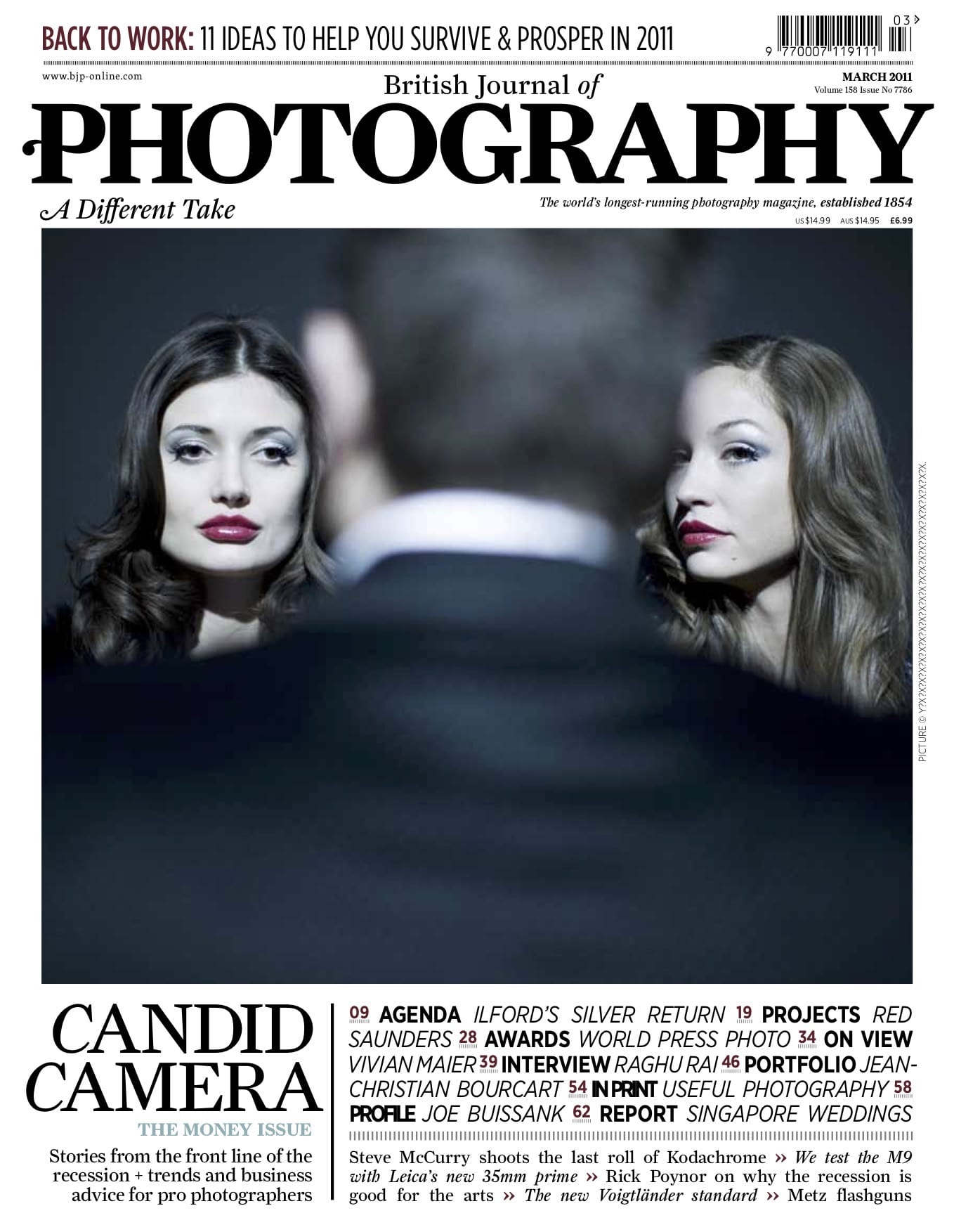
It has just been announced that the British Journal of Photography will no longer exist as a printed physical artefact. There is no printed copy visible to purchase from their website. It will now be a digital magazine only, available for £34 per quarter. This is a story that anyone interested in the slow decline of magazine publishing, like me, will recognise. Publisher closes magazine, promises digital future and within a few months that disappears also. We shall see if the BJP bucks this trend. I am personally not confident.
This is sad. The BJP first hit the news stand in 1854 and has continued publishing through two wars and across three centuries. It documented every technological advancement, a fair few photographers, books, exhibitions and through its classifieds found many people jobs. It was the essential weekly ‘rag’ for anyone interested in the medium from student to professional, from enthusiast to retailer. Available in every darkroom for casual flicking through, just like Country Life in a dentist’s waiting room. It hung around. The BJP delivered. Poorly printed on cheap paper and staple bound it was an industry favourite that made no attempt to be well designed. It preferred to focus on its writing and at times it was very good.

Then it changed. In 2010. The editor at the time wanted it to return to its monthly format (it had been monthly from 1854 to 1857) and to adopt a new look for a new audience. No longer was it to appeal to the trade, now it was to be perfect-bound, on expensive matt paper, with a classic restrained design. The photographers featured were more likely to be working within contemporary art practice and the type of advertising it once relied upon disappeared.

At the time I was editing Professional Photographer magazine and I took a similarly bold step in changing its focus and audience. Sales dropped dramatically on my title, but advertising revenue rocketed, as camera brands bought into the new professional audience I was delivering. After I left the new editor didn’t understand my editorial logic and advertising revenue dropped. Within the year the magazine closed. The title was bought and a digital offering was promised, but didn’t last.
When I first started in magazines in 1985, I was told by a wise old hand that the cover price pays the salaries and the advertising pays for everything else. It also dictates if the magazine makes a profit and survives.
In 2013 the BJP‘s business to business based publisher, Incisive Media sold it to the magazine’s Publishing Director, Marc Hartog. Hartog founded Aptitude Media and the BJP continued in its new format, with little advertising evident within its pages. Competitions became a new revenue stream under the magazine’s brand, as did books based on the competitions. The magazine followed the same path as many publishers at the time, offering digital editions of the magazine for reduced price subscriptions. The problem was that these sales could never compete with those of the printed page, but printed sales were also dropping across the sector.
In 2017 Aptitude was rebranded as 1854 Media playing on the title’s extensive history and in 2022 Hartog left, amongst a flurry of ‘discussion’ concerning shares and NFTs. It was then that the magazine’s creative director took over as CEO. Now, four years later the printed magazine has closed.
That’s the sad history of the second longest surviving photography magazine in the world, over the last sixteen years. A tale, in my opinion, that shows a lack of publishing realism. Why? Because, if you create a niche magazine, for a niche audience, and that is what it had become, you will get a niche profit at best and that is not enough to sustain a magazine. To pay staff, contributors, printers and distributors.
Many people who remember the BJP of the past will I am sure, like me, be sad to see its passing. However, I do not expect many to be surprised. The readers of the past whom I have seen commenting online about it’s demise, long felt excluded from the magazine. It wasn’t speaking to them in their language, so they didn’t buy it and now it won’t be speaking to anyone outside of a digital shop.
A publisher friend once told me that magazines must always be inclusive. A club you wanted to join. Never exclusive. No one wants to join a club that looks down on those who might want to apply. A ‘snearing’ club that makes you feel that you are not smart enough to enter it’s doors. Unfortunately, that second club is how many felt about the British Journal of Photography in recent years. It alienated its old audience and advertisers for a new one that didn’t really exist.
This is evidenced by a visit to companies house online, which reveals the true state of the publisher’s submitted accounts. These show the size of the problem they are facing and the background to their decision to cease printing. As such, we should not be surprised. None of this brings me any pleasure and I truly hope that someone comes up with an editorial plan and business model to reignite the successful magazine it once was. I sit in my office writing this article with one hundred years of leather bound copies sitting on my library shelves that prove what a resilient title it was. Can it come back from the dead? Can the digital edition survive? I don’t think so, based on over forty years of publishing experience, but I am always happy to be proved wrong. I don’t want to write RIP BJP, but I fear that I may have to sooner rather than later.
Dr.Grant Scott
After fifteen years art directing photography books and magazines such as Elle and Tatler, Scott began to work as a photographer for a number of advertising and editorial clients in 2000. Alongside his photographic career Scott has art directed numerous advertising campaigns, worked as a creative director at Sotheby’s, art directed foto8 magazine, founded his own photographic gallery, edited Professional Photographer magazine and launched his own title for photographers and filmmakers Hungry Eye. He founded the United Nations of Photography in 2012, and is now a Senior Lecturer and Subject Co-ordinator: Photography at Oxford Brookes University, Oxford, and a BBC Radio contributor. Scott is the author of Professional Photography: The New Global Landscape Explained (Routledge 2014), The Essential Student Guide to Professional Photography (Routledge 2015), New Ways of Seeing: The Democratic Language of Photography (Routledge 2019), What Does Photography Mean To You? (Bluecoat Press 2020) and Inside Vogue House: One building, seven magazines, sixty years of stories, (Orphans Publishing 2024). His photography has been published in At Home With The Makers of Style (Thames & Hudson 2006) and Crash Happy: A Night at The Bangers (Cafe Royal Books 2012). His film Do Not Bend: The Photographic Life of Bill Jay was premiered in 2018.
© Grant Scott 2026
Leave a Reply