
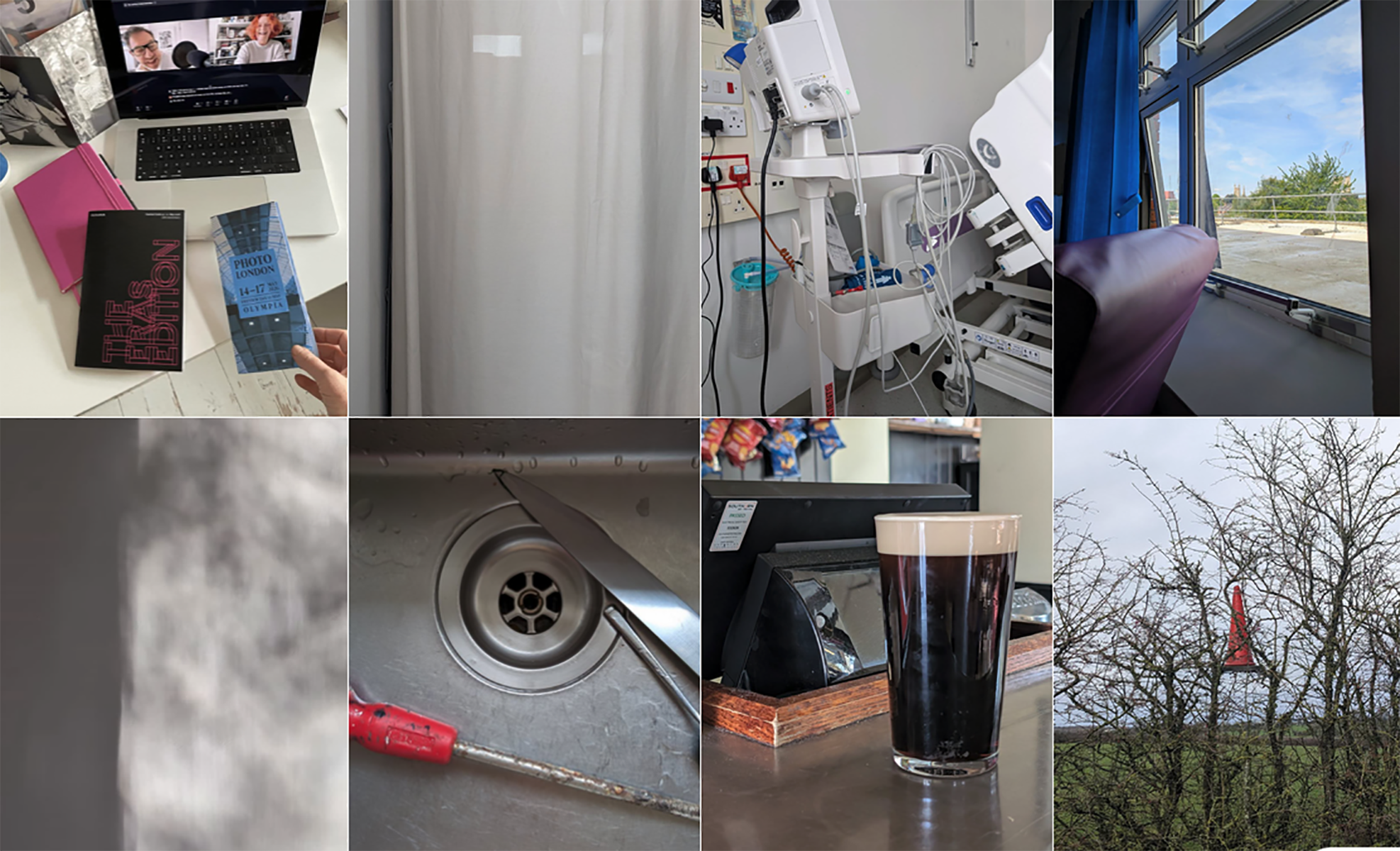
Have you ever stopped and asked yourself this question? I don’t think I did, but recently I have been considering it, in some detail. Such reflection, does not necessarily provide one simple answer, but it does provide some perhaps unpalatable and interesting truths.
Let’s explore some of the tasks a photograph takes on. Not photography, but the photograph. I want to address this by placing the photograph into two distinct categories, the personal and the universal. I’ll deal with the personal first, as it is in many ways the simplest to deal with. In essence, the personal photograph is an act of selfishness. The creation of an image for personal satisfaction. It may be to tell a story, document a moment or to create an aesthetically pleasing image. The personal photograph is one person’s veiwpoint, and if using an analogue camera, just ‘one-eye’s’ capture. What happens to that photograph once it has been made, depends upon the intentions of the photographer making it. Professional photographers make personal work, just as enthusiasts do, but it is the intention behind the work that defines its future life.
For the professional it may be to secure future commissions, feature in an exhibition, or publish in a book. The enthusiast may wish to enter a competition, show friends at a club, in a forum or just show to family and friends. However, both may also choose to put their photographs on social media and then the purpose of the photograph changes. Its reason for existance at this point is as ‘content’ for an algorythm controlled by a company such as Meta. The photograph has now become a potential training material for AI and a revenue stream for someone other than the person who made it. It is in this context that the point of the photograph is to build wealth.
This may not be the intention of the photographer posting the image and there are nuances to the understanding of why anyone posts on social media, but whatever explanation is given, the core reality is as I have outlined. Like it or not, the personal photograph can be currency.
In a sense, this is the personal becoming universal. If we accept that images, not created from a purely personal perspective, have been commissioned, controlled, informed and paid for by a third party, then it is reasonable to accept that they are created for a universal audience from the point of capture. This is the photographer meeting the needs and demands of an entity other than themselves. In short, professional photography. I never use the term ‘commercial’ to describe commissioned work, as it is too generic and inaccurate a description, in my opinion. As I have just explained all photography that is shared is involved in a commercial transaction, and that includes selling prints and books created as part of a personal project.
In this context the photograph is a means to create revenue, for the creator, and solve a visual problem to aid the commissioner in making money. Once again the photograph is currency.
I often say that photography is memory made history and I believe that to be true. However, the photograph is not just a historical document, or a form of currency. It is also evidence of work completed by a plumber or electrician, or a delivery driver. It’s used as part of a diagnosis by doctors. By scientists to document new plants, study animals and planets. It is proof of who we are in our passports. It is our only visual experience of everything we buy online. It allows us to enter countries and buildings on lanyard hanging passes. It allows us to drive a car and identifies our age when buying a drink. In some countries we need it to vote. It is also proof of a crime or a misdemeanour and subsequently used and formally described as evidence. I’m sure that you could add your own examples.
In summary, the point of the photograph today is multi-dimensional. It is no longer confined by an album or frame, or created only by photographers. To think so is to misunderstand the importance of the photograph today and be blind to its ubiquitous role in our lives.
Dr.Grant Scott
After fifteen years art directing photography books and magazines such as Elle and Tatler, Scott began to work as a photographer for a number of advertising and editorial clients in 2000. Alongside his photographic career Scott has art directed numerous advertising campaigns, worked as a creative director at Sotheby’s, art directed foto8 magazine, founded his own photographic gallery, edited Professional Photographer magazine and launched his own title for photographers and filmmakers Hungry Eye. He founded the United Nations of Photography in 2012, and is now a Senior Lecturer and Subject Co-ordinator: Photography at Oxford Brookes University, Oxford, and a BBC Radio contributor. Scott is the author of Professional Photography: The New Global Landscape Explained (Routledge 2014), The Essential Student Guide to Professional Photography (Routledge 2015), New Ways of Seeing: The Democratic Language of Photography (Routledge 2019), What Does Photography Mean To You? (Bluecoat Press 2020) and Inside Vogue House: One building, seven magazines, sixty years of stories, (Orphans Publishing 2024). His photography has been published in At Home With The Makers of Style (Thames & Hudson 2006) and Crash Happy: A Night at The Bangers (Cafe Royal Books 2012). His film Do Not Bend: The Photographic Life of Bill Jay was premiered in 2018.
© Grant Scott 2026
Leave a Reply