
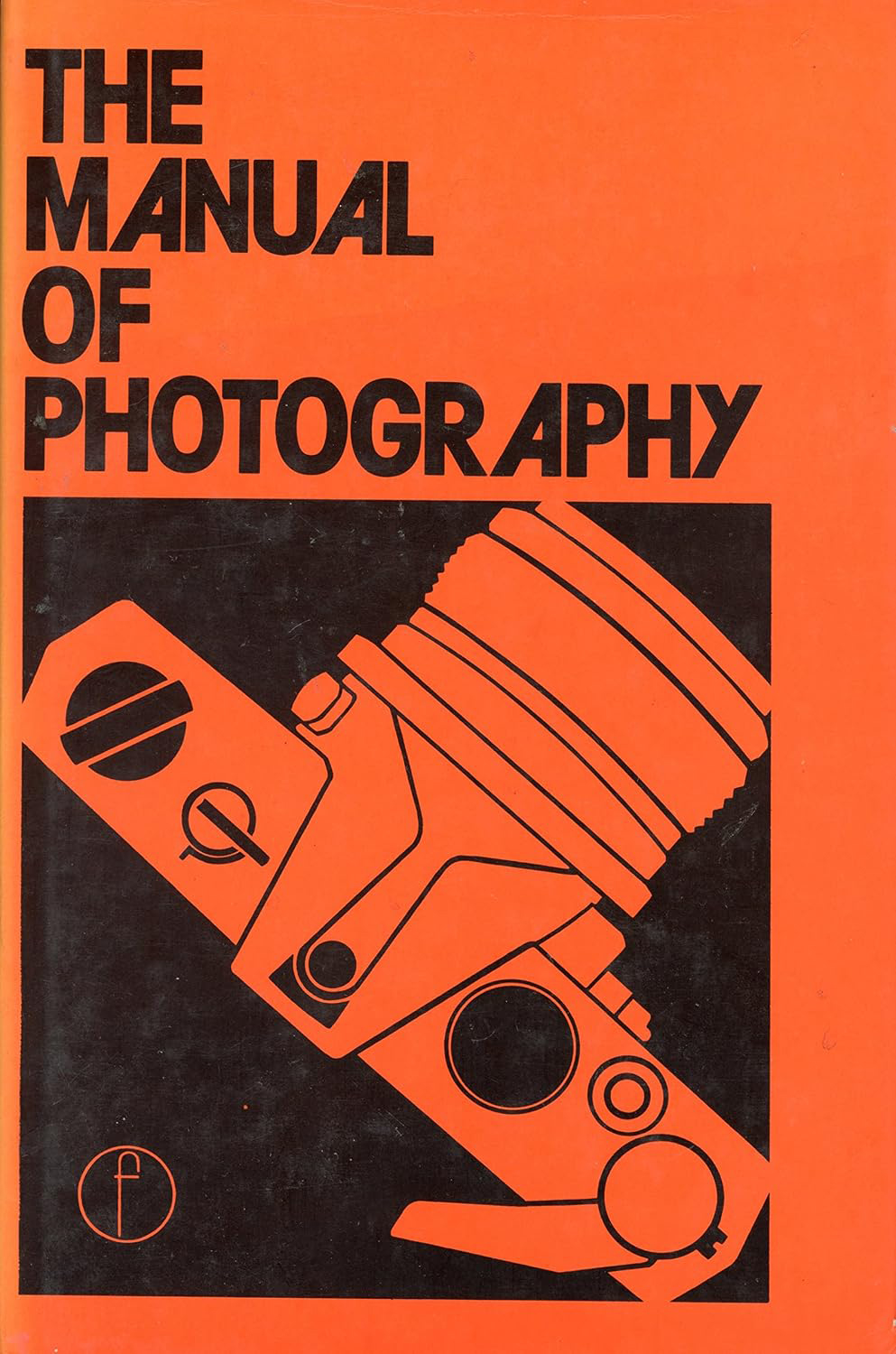
Is this a fair and accurate way of dividing the world? Maybe, it is when it comes to the world of photography, I think. Hands up! I am firmly in the second camp. I often start a manual with good intentions, but rarely if ever get past the first page. Thank goodness for Ikea’s four line drawing explanations! I am therefore defined as a visual learner, someone who learns through trying and doing, rather than following the rules.
Such an approach, is often aligned with a creative approach to life, but we all need to think creatively in our daily lives. Creative problem solving is a challenge we all face, at home and at work. Due to its importance, psychology and neuroscience researchers have started to identify thinking processes and brain regions involved with creativity. Evidence suggests, that creativity involves a complex interplay, between spontaneous and controlled thinking. In simple terms, the ability to both spontaneously brainstorm ideas and deliberately evaluate them, to determine whether they’ll actually work.
Despite this progress, the key question has to be, what makes some people more creative than others? In a 2018 study with the catchy title, Robust prediction of individual creative ability from brain functional connectivity, 163 participants were asked to complete a classic test of divergent thinking, called the ‘alternate uses task’, in which people are asked to think of new and unusual uses for objects. The results of the study showed that people who did better in the task, also tended to have more creative hobbies. In the study’s summary, it found that the brain regions within the ‘high-creative’ network belonged to three specific brain systems: the default, salience and executive networks.
The default network is a set of brain regions that activate when people are engaged in spontaneous thinking, such as mind-wandering, daydreaming and imagining. This network may play a key role in idea generation or brainstorming, such as thinking of several possible solutions to a problem. The executive control network, which is a set of regions that activate when people need to focus or control their thought processes. This network may play a key role in idea evaluation, or determining whether brainstormed ideas will actually work, then modifying them to fit the creative goal. Finally, the salience network is defined by a set of regions that act as a switching mechanism, between the default and executive networks. This network may play a key role in alternating between idea generation and idea evaluation.
That’s the science, but what does this mean for photographers? Well, as creatives I think it’s useful to be aware of how our brain works and how we come to the decisions we make. Why don’t we read the manuals? Why don’t we want to follow photographic rules? Where do our ideas come from and why do we choose one idea over another? All of these questions, and more, define a photographer’s approach to making photographs.
This may make sense to you, and you may recognise yourself in these definitions, but what if you don’t? What if you do read the manual and follow the rules? You may then feel that I, or science, is dismissing your creativity. That is not the case, but it may mean that you are not a natural creative, someone to whom those traits come naturally. You may need to go against your natural inclinations, to fully release your creativive potential. This is not easy to do on your own, but it is something I have seen happen repeatedly, over a period of studying photography with a good teacher or mentor. When different ways of thinking, are suggested and evidenced.
I often speak with photographers who have got too ‘tight’ with their image making, that have lost their inspiration, hit a wall, become confused and fallen out of love with the medium. Invariably they have overloaded on instructions, that are not important, and which have restricted their creativity. In a sense, they have read too many pages of the photography manual and taken them too seriously. Of course, those such as myself, who do not read the manual often make mistakes, because they dont know what they are doing. For some this is an anathema, for others it is the most exciting part of the creative process. As the Irish novelist James Joyce stated, “mistakes are the portals of discovery.” As a non-manual reader I can confirm that mistakes may have to become your photographic friends, but I can also confirm that they will become the best friends you could have.
Dr.Grant Scott
After fifteen years art directing photography books and magazines such as Elle and Tatler, Scott began to work as a photographer for a number of advertising and editorial clients in 2000. Alongside his photographic career Scott has art directed numerous advertising campaigns, worked as a creative director at Sotheby’s, art directed foto8 magazine, founded his own photographic gallery, edited Professional Photographer magazine and launched his own title for photographers and filmmakers Hungry Eye. He founded the United Nations of Photography in 2012, and is now a Senior Lecturer and Subject Co-ordinator: Photography at Oxford Brookes University, Oxford, and a BBC Radio contributor. Scott is the author of Professional Photography: The New Global Landscape Explained (Routledge 2014), The Essential Student Guide to Professional Photography (Routledge 2015), New Ways of Seeing: The Democratic Language of Photography (Routledge 2019), What Does Photography Mean To You? (Bluecoat Press 2020) and Inside Vogue House: One building, seven magazines, sixty years of stories, (Orphans Publishing 2024). His photography has been published in At Home With The Makers of Style (Thames & Hudson 2006) and Crash Happy: A Night at The Bangers (Cafe Royal Books 2012). His film Do Not Bend: The Photographic Life of Bill Jay was premiered in 2018.
© Grant Scott 2026


Leave a Reply