
I recently saw a television advertisement for a new perfume called L’heure Bleu. The perfume is by Geurlain and comes in an ornate glass bottle, that has a sense of the ‘genie’ about it. I don’t know what it smells like. At over £80, I hope it smells good, but whatever it smells like, I was confused by it’s name. Not that the naming of perfumes is something that anyone I have ever met understands.
However, it made me wonder what the name referred to. Then, whilst showing my daughter Joel Meyerowitz’s brilliant book Seeing Things: A kid’s guide to looking at photographs, I saw that he also used the term ‘blue hour’. Now, you may be reading this and be aware of the term and its relationship with photography. I was not. Maybe, it’s something Meyerowitz made up I thought, but it was a coincidence that both he and a perfume brand had travelled the same road.
I hit Google and discovered that the ‘blue hour ‘was a thing for landscape and street photographers. A period of time that occurs twice a day, just before sunrise and just after sunset. A moment when the sun dips below the horizon, creating cool, cold light.
As a commissioned photographer choosing the time of day I make images is a luxury, that has rarely been afforded to me, therefore the golden hour and blue hour have little relevance. However, for those choosing when they want to hit the streets or fields to make photographs, I can see why such decisions can become an aspect of their creativity. Despite my forty-two years working with photography, I was unaware of the multitude of books, workshops and tutorials concerning the blue hour. Further proof that every day is a learning opportunity.
Meyerowitz in his book chooses a blue hued photograph by photographer Jonathan Smith (http://jonathansmithphotography.com) to provide his explanation of this particular form of photographic making. The image is from Smith’s The Bridge Project and Meyerowitz says this about it “The picture is incredibly simple: the massive forms of the bridge foundation, a few lines of lace work in the tower, and then the nearby buildings. The sky and snow-covered street are nearly the same luminous blue, and the two electric lights are the only accents.” The image is a composition of blue hues, just as an Yves Klein painting could be, if he had expanded from the one tone. It feels like a Rothko painting, or a James Turrell installation. It is a meditation on colour, as much as it is on light. Meyeorwitz simply states, “This photograph is a poem.”
That use of colour is a simple series of post-production processes to some, but to see such an outcome as being purely aesthetic is to misunderstand photography at the point of capture. Again, Meyerowitz nails this when he says that, “We may not have the night vision of an owl or a wolf, but there is still still plenty for us to see in the dusky hours of evening. At twilight, the world is reinvented for a brief time. Details grow hazy; forms combine to make new shapes. Subtle tones of colour are there to be discovered.” I think that the important word in his comment is ‘discovered’ and not ‘made’. In a sense, it would seem to me that the ‘blue hour’ leads to the kind of images many photographers have forgotten about, or now deride. Low light inevitably leads to hazy focus, soft edges and grain. Painterly qualities similar to that of the Impressionists paintings, particularly those of the River Thames by Monet or even Turner’s more abstract sea paintings. The ‘blue hour’ seems to work best when its cold, or when there is water present. Elements that can be abstracted and left to the interpretation of the veiwer. The diametric opposite to the crisp digital image or AI confection.
The articles I have found on ‘blue hour’ photography seem to focus on cameras, tripods, camera settings and post processing. That is a shame. I found none that placed it within a context of inspiration and historical relevance. Perhaps I should not be surprised, as I said at the beginning of this article, it seems to be the preserve of the enthusiast landscape and street photographer and those can be there key priorities when making photographs. I think it is time to reclaim the blue hour from the ‘tech cats’ and the perfume manufacturers; to see it as a useful approach for the disrupters to adopt. A time of the day when the idea of what constitutes a ‘perfect’ photograph gets redefined by nature. A reaction against digital hyper-reality. Perhaps, the Guerlain people understood this and that’s why they chose to give a smell in a bottle that name…
Dr.Grant Scott
After fifteen years art directing photography books and magazines such as Elle and Tatler, Scott began to work as a photographer for a number of advertising and editorial clients in 2000. Alongside his photographic career Scott has art directed numerous advertising campaigns, worked as a creative director at Sotheby’s, art directed foto8 magazine, founded his own photographic gallery, edited Professional Photographer magazine and launched his own title for photographers and filmmakers Hungry Eye. He founded the United Nations of Photography in 2012, and is now a Senior Lecturer and Subject Co-ordinator: Photography at Oxford Brookes University, Oxford, and a BBC Radio contributor. Scott is the author of Professional Photography: The New Global Landscape Explained (Routledge 2014), The Essential Student Guide to Professional Photography (Routledge 2015), New Ways of Seeing: The Democratic Language of Photography (Routledge 2019), What Does Photography Mean To You? (Bluecoat Press 2020) and Inside Vogue House: One building, seven magazines, sixty years of stories, (Orphans Publishing 2024). His photography has been published in At Home With The Makers of Style (Thames & Hudson 2006) and Crash Happy: A Night at The Bangers (Cafe Royal Books 2012). His film Do Not Bend: The Photographic Life of Bill Jay was premiered in 2018.
© Grant Scott 2026
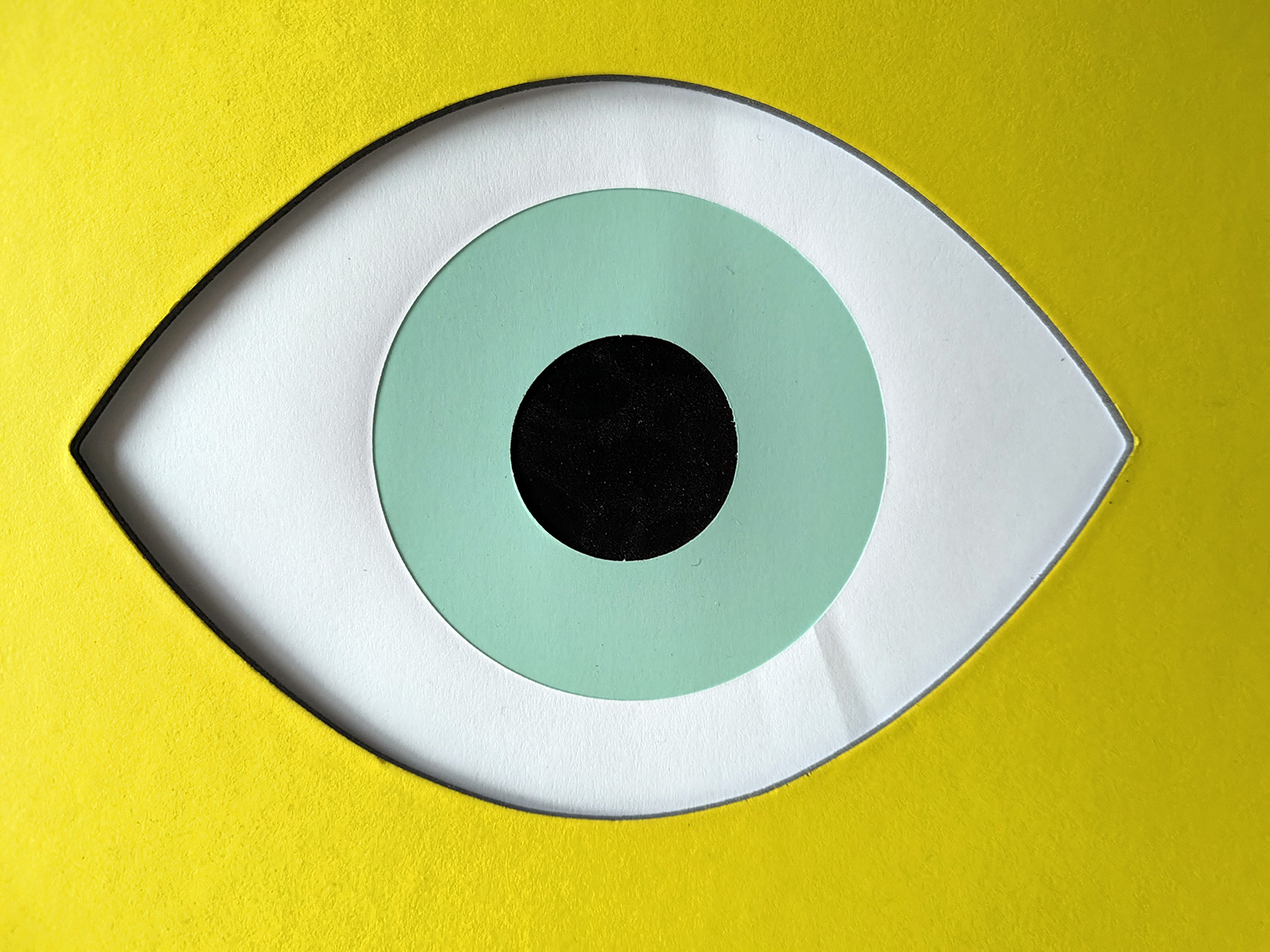
Image: The cover image of Seeing Things: A kid’s guide to looking at photographs

Leave a Reply