
This article is written from the perspective of being a middle-aged male photographer, who has spent his career working within female dominated environments and as a father of three daughters. This is not written from a female perspective, I cannot do that for obvious reasons. I also wish to state that not all male photographers act in the way I am about to describe. Those with respect for gender, empathy and a sense of ethical responsibility do not. However, some do.
There has been a lot of discussion over the last few months concerning the Ray Ban Meta AI Glasses. The reasons for owning them are definitely open to being questioned and the description of these devices as ‘pervert glasses’ has not helped their image. Neither has the amount of wearers posting footage of women and girls, on TikTok and Instagram. Footage created and posted without permission. However, this is not the only photographic material being created of women on the streets that is concerning to me and others today.
My algorithms on Facebook, Threads and Instagram regularly feed me ‘short reels’ of ‘street portrait’ encounters. They invariably feature a male photographer, whom we rarely see. Although we hear their commentary, approaching a woman usually in their late teens to mid-twenties, whom they view to be ‘photogenic’. This judgement seems to take multiple forms, but clothing seems to be a favourite, either tight-fitting, unusual or minimal. Physique is also a dominant deciding factor. The women photographed always seem to be flattered by the attention, but of course we have no idea of the amount who have said no and walked on. By showing only those who say yes, we are given the idea that the photograph is fun for both parties, consential and a creative collaboration. Nothing bad to see here! I am willing to believe that this may be the case for a few, after all the street portrait is an important part of photographic history.
However, I am not willing to accept that this is the case with the majority of these interactions. Titles such as ‘Take a picture Russian lady’ and ‘Asking a nervous girl if I could take her photograph’ do not suggest a process of collaboration. This leads to an inevitable conclusion of photographic voyerism, by men with cameras, not serious photographers.
There is no shortage of content online, and workshops, giving advice on how to approach people on the street. Explaining etiquette and boosting confidence. However, everything I could find was presented by men. It seems to be a male dominated pastime. There were no women giving advice on how to approach women, that I could find. An obvious conclusion is that they don’t want to be approached, or give advice on street portraits of women. Perhaps this is something men photographing young women on the street, they don’t know, may like to consider. Perhaps they do not want to be approached by a stranger.
One of the explanations given by these men, at least the younger ones, is that they are ‘fashion photographers’. They seem to believe that such a self-proclaimed label gives them permission to comment on how the woman looks and what she is wearing. Of course, such comments are always highly flattering, but let’s be clear, they are not fashion photographers and this is not fashion photography. It is not the fashion based documentary of Bill Cunningham or the street fashion visual commentary ‘Vox Pop’ photography, that appeared within ID magazine for so many years. This is a chat-up-line, with a hoped for photograph attached.
A camera around the neck, does not give anyone permission to accost a stranger and engage them in conversation. I’m sorry, but that is a fact. Now, many of you reading this will state loudly that the history of photography is filled with the evidence of such meetings and you would be correct. However, I am not talking about mutually respectful documentation of interesting characters here. I am bringing attention to a ‘trend’, a ‘style’ a ‘moment’, that is manipulative and dishonest in my opinion. This is men with social media channels, creating content with the hope of making money based on what they believe to be attractive women. A trade as old as time. Men using women to make money, through the desire of other men to see them.
Am I being overly strident here in my feelings and opinions? If you think so, and you are a man, then may I suggest you put yourself in the position of someone living their life, walking along the road, waiting for a bus or train. Only, for someone to come up to you, say how beautiful you look, and ask if they could photograph you. You may say that you would be flattered, but you would also have been put into a difficult social situation. How would you feel? What would you do? How would you say no? What if that women was your colleague, mother, wife, partner or daughter?
Now, let’s add an additional issue with such behaviour. If you agree to be photographed, the photographer, as we know, owns that image. In an AI, and social media world that is no small risk. For me, this is a good enough reason for any woman to say no. But there is an answer to this problem. If you are a male photographer, photograph men on the street. I don’t see many women out there making this work, but if there are then leave them to photograph women. This may seem like an extreme suggestion, but it is one based on the world we live in, societal behaviour and experience.
Every photographer that exhibits predatory behaviour and/or unwanted interest towards a woman, creates an image of every male photographer to society. To confirm this, and explain how important an issue this is, the UK Home Office has recently issued a leaflet with the headline ‘Do Not Photograph or Film People in Public’ that states that, “In the UK, you should not take pictures or videos of someone without their permission. This includes taking pictures or videos in public spaces, like streets or parks, or in privates spaces, like at home. Sharing sexual pictures or videos of someone without their permission is a serious crime”. This is factually incorrect as it is not illegal in the UK to make photographs of someone in a public place without the person’s permission and you can with permission make images within a private space. However, legitimate photography is now being aligned with that of images made by those with ulterior motives, and the authorities are responding. If you intend to make portraits of people you do not know by wandering the streets, I believe that you have to have a good reason to do so; more than just making images to put on social media.
Any professional photographer will understand the importance of model, child and property releases. The physical documents that those photographed or who own properties need to sign, to confirm that permission has been given for a photograph to be taken. If you are not aware take a look at this link https://rps.org/resources/model-release-form. I suggest that if you are going to go out and make street portraits with good intention, you need to follow good practice. You need to have model release print-outs with you and you need to explain them to the people you want to photograph. Then have them sign one, before you make the portrait, keep one and give them another copy also signed by you both. You should then photograph them holding it as evidence that it exists and that you gave them one. You must be able to show someone a link to your website and have your ID with you, to confirm that you are the person who made the images you are showing. You need to prove to the person you are speaking with that you are a decent person. But most importanly, you must understand that the person you want to photograph is more important than a photograph you want to make and respect them as a human being, not merely as a subject to be captured.
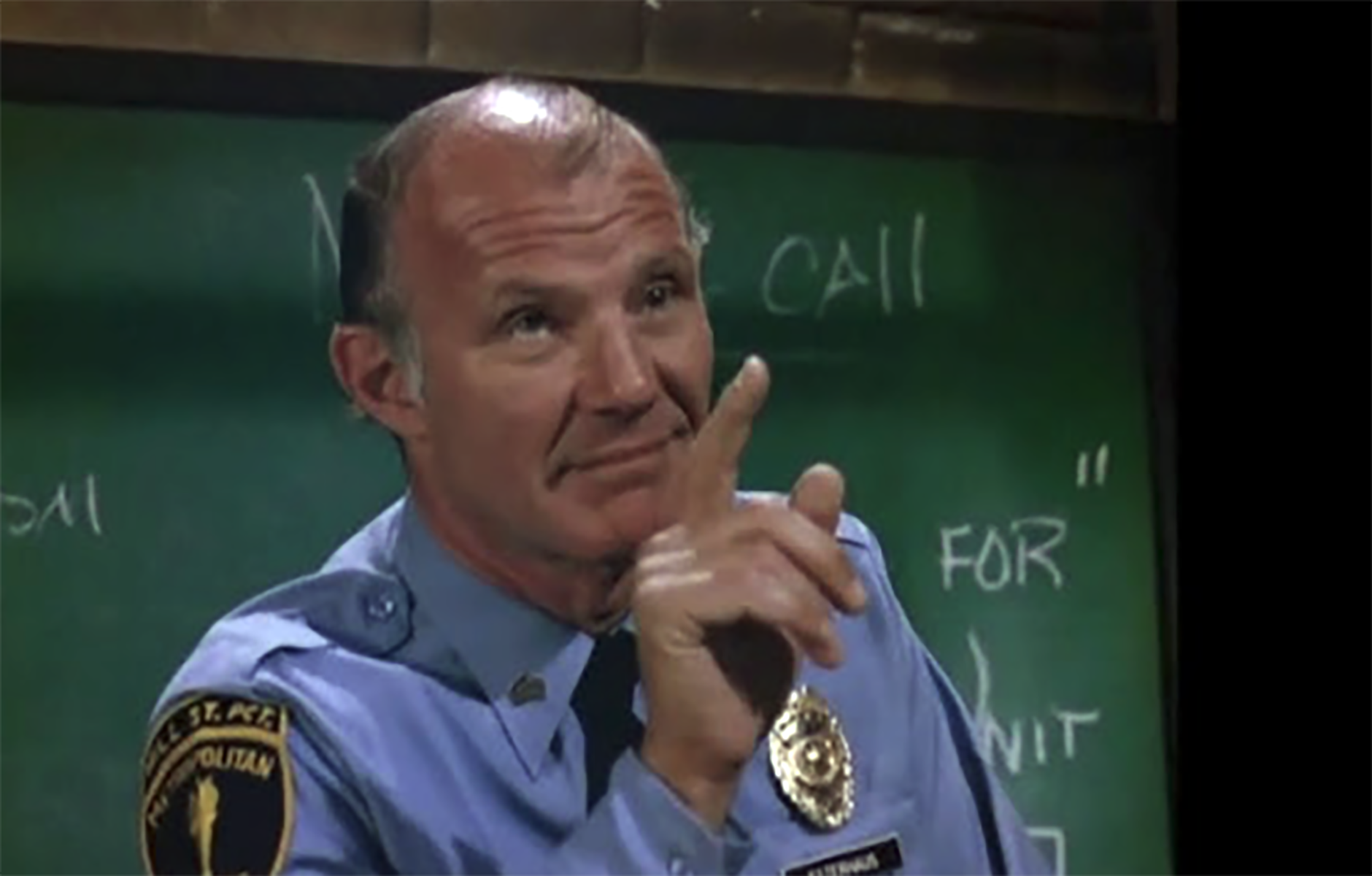
As the actor Michael Conrad, as Sgt. Philip Freemason ‘Phil’ Esterhaus, said in the televison programme Hill Street Blues during his daily roll call, “Let’s be careful out there.” That is advice for those ‘true’ photographers making the photographs and those who may be approached.
Dr.Grant Scott
After fifteen years art directing photography books and magazines such as Elle and Tatler, Scott began to work as a photographer for a number of advertising and editorial clients in 2000. Alongside his photographic career Scott has art directed numerous advertising campaigns, worked as a creative director at Sotheby’s, art directed foto8 magazine, founded his own photographic gallery, edited Professional Photographer magazine and launched his own title for photographers and filmmakers Hungry Eye. He founded the United Nations of Photography in 2012, and is now a Senior Lecturer and Subject Co-ordinator: Photography at Oxford Brookes University, Oxford, and a BBC Radio contributor. Scott is the author of Professional Photography: The New Global Landscape Explained (Routledge 2014), The Essential Student Guide to Professional Photography (Routledge 2015), New Ways of Seeing: The Democratic Language of Photography (Routledge 2019), What Does Photography Mean To You? (Bluecoat Press 2020) and Inside Vogue House: One building, seven magazines, sixty years of stories, (Orphans Publishing 2024). His photography has been published in At Home With The Makers of Style (Thames & Hudson 2006) and Crash Happy: A Night at The Bangers (Cafe Royal Books 2012). His film Do Not Bend: The Photographic Life of Bill Jay was premiered in 2018.
© Grant Scott 2026


Leave a Reply