
I recently saw a YouTube video thumbnail, claiming that it contained no ‘BS’ advice, in eight minutes, to improve your photography. I clicked on to see what magic would be imparted. The first piece of wisdom was to buy a cheap, old camera. The second was to find out what to photograph. The answer was something, that means something to you. I know, I should have clicked off at this point, despite such insightful words of wisdom, but I didn’t. I stayed for tip 3, which was to look at other photographers work.
Now, I am not going to disagree with any of this advice, the problem for me is that it was presented in a manner that was of no help to anyone. Saying what to do without presenting a ‘how’ is not useful. However, it was the third tip that was the most ill-informed and possibly photographically dangerous. The presenter suggested that it didn’t matter what photography you looked at. It didn’t matter, he said if you look at someone on Instagram with a ‘dodgy’ handle or Vivian Maier.
To be fair, he did also suggest that a photo book was a different experience to looking at work online and therefore one to try out. He suggested going to a photo book store to do this to save money. Not a bad idea, but how many of us live near a photo book store or book shop with a comprehensive photography section? I would have suggested looking at a site such as https://photobookstore.co.uk who make great short films of the books they sell, but I digress.
One of the most common issues I find with photographers making generic, boring work is that they are copying people on Instagram with no knowledge of the history of photography. They can’t learn from the best, because they have no idea who they are. They have no knowledge of their work, their names, context for their work or the reasons for making the work they do and did. This is usually because they have never studied photography, either formally or informally. They just started making photographs because it looked easy, only to discover that it isn’t.
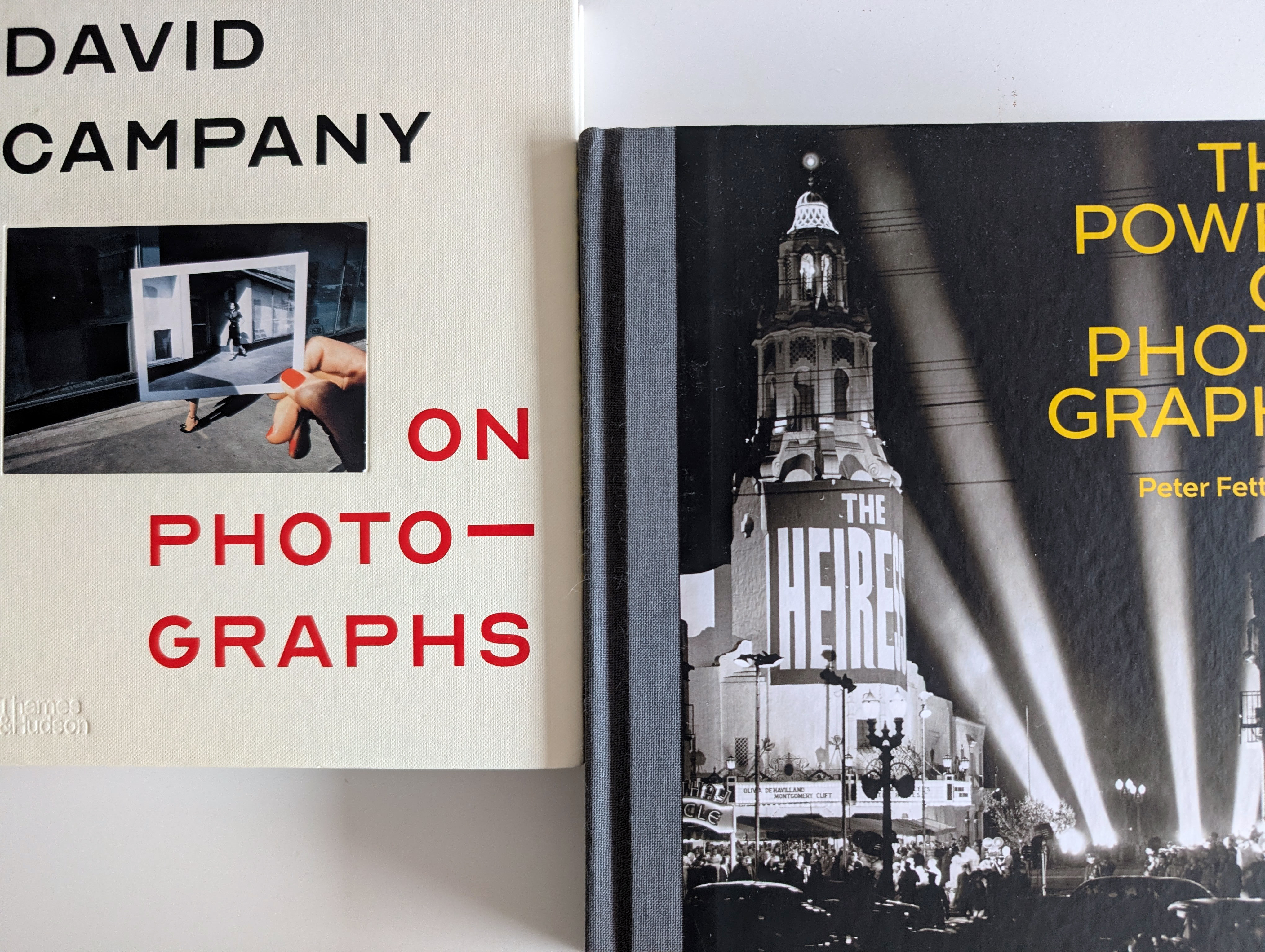
A much more useful suggestion would be to find a book featuring a collection of photographers from and through the history of the medium. Something like the Taschen published A History of Photography for less than £20, or Peter Fetterman’s The Power of Photography for just over £20. David Campany’s On Photographs is another excellent gateway to the work of photographers worth looking at and knowing about for just over £20. Paul Lowe’s A Chronology of Photography is also good and is even cheaper at £14.75. So, for approximately £80 you could have enough photographers introduced to you for a lifetime of research and learning. Photographers who will challenge, inspire and educate any photographer hoping to improve their image making.
I continued watching the YouTube video to learn that tip 4 was to learn how to use Photoshop, something you could do by signing up and paying for one of the presenter’s online workshops. It was at this point that I left.
The clickbait thumbnail had promised no ‘BS’. What it should have said was ‘minimal insight with minimal information’ from someone trying to sell you something. A description that could be applied to many YouTube videos and photo presenters. I know that I am not their target audience, but I do care about the importance of giving good information.
Therefore, here is some good advice, in one step with no ‘BS’ and no sales pitch. It does matter whose work you look at, so make sure you do your homework and avoid those on Instagram with tricksy names. No need to like and subscribe.
Dr.Grant Scott
After fifteen years art directing photography books and magazines such as Elle and Tatler, Scott began to work as a photographer for a number of advertising and editorial clients in 2000. Alongside his photographic career Scott has art directed numerous advertising campaigns, worked as a creative director at Sotheby’s, art directed foto8 magazine, founded his own photographic gallery, edited Professional Photographer magazine and launched his own title for photographers and filmmakers Hungry Eye. He founded the United Nations of Photography in 2012, and is now a Senior Lecturer and Subject Co-ordinator: Photography at Oxford Brookes University, Oxford, and a BBC Radio contributor. Scott is the author of Professional Photography: The New Global Landscape Explained (Routledge 2014), The Essential Student Guide to Professional Photography (Routledge 2015), New Ways of Seeing: The Democratic Language of Photography (Routledge 2019), What Does Photography Mean To You? (Bluecoat Press 2020) and Inside Vogue House: One building, seven magazines, sixty years of stories, (Orphans Publishing 2024). His photography has been published in At Home With The Makers of Style (Thames & Hudson 2006) and Crash Happy: A Night at The Bangers (Cafe Royal Books 2012). His film Do Not Bend: The Photographic Life of Bill Jay was premiered in 2018.
© Grant Scott 2026
Leave a Reply