
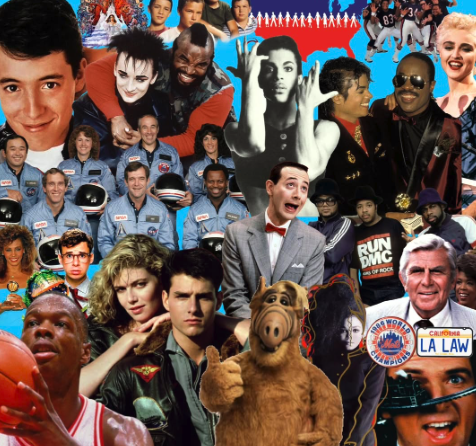
I started working with professional photography in 1985, on a work placement at the newly launched Elle magazine in London. Therefore, I have a clear understanding of the photography environment in 1986. I am aware how few photographers there were, how hard it was to buy a book of photography, how difficult it was to set up your own darkroom, how few people owned a decent quality camera, how photography was a respected trade and how it was taught as a trade and not an art form!
That is where we are returning to and I do not think that has to be a bad thing. Although we will not be going back to analogue, believe me, however many people talk of its return.
The reason for me writing this article is as a response to one on fstoppers.com proclaiming that photography is having an existential crisis in 2026. That photographers are burned out. The article, linked below, lists all of the reasons why they believe photographers are depressed by the medium and struggling to deal with the current economic climate. It focuses primarily on wedding photography as professional photography and the impact of AI. I’m sure that the points raised are based on reality for some, but if they are, it is a sad indictment of how photographers have lost their way. Misled by the ill-informed to see photography as a process of replication, to fit a template for success that was always snake-oil. You could call it the ‘social mediatisation’ of photography or a case of the photographically blind leading the very near sighted.
There is no doubt that photography is going through a period of seismic change, but to feel that it had been working well over the last decade or so, is naive at best, dishonest at worst. Self-interested parties have been promoting toxic nonsense, for a hungry crowd to feed on, for years and now that nonsense has been revealed. Here is the truth, there is not enough work for the amount of people with cameras who think there must be, should be or could be. It is that simple. The photographic crash that is with us, is nothing more than proof of a Ponzi scheme that has been building since the arrival of the affordable high-quality digital camera. The democratic nature of the medium is wonderful, if it does not contain the belief that a career comes with it. It is also wonderful if it does not promote the belief that everyone is an expert on photography process, practice, language and outcome. Sadly, both of these beliefs are the very issues that are at the heart of the problem.
Professional photography is in a state of reduction. It is shrinking and returning to a career for the few, not the many. A profession for the specialist, not the generalist. That is how professional photography was in 1986 and now forty years later it is returning to its analogue format within a digital world.
My youngest daughter often quotes a phrase, from one of the Nativity based episodes of the Gone Wrong Show. The character, Dennis, is always getting things wrong and at one point, as he is turning Mary and Joseph away from a hotel in Bethlehem, he is told to “Switch on! You’re an inn keeper now!” My daughter says it everytime she sees or hears someone not recognising the obvious and responding appropriately. It has become a family staple response. There are echoes in this suggestion to Dennis, in the advice I would give any photographer feeling let down by photography today. It is this, wake up, your role has changed. The role you thought you had may have never existed, the role you did have has evolved and the role you had may no longer exist. You are not burned out, you’ve just realised that professional photography doesn’t work the way you were told. Those of us around in 86 knew that all along. It’s just that too many people involved with photography thought they knew better.
Mentioned in this article:
https://fstoppers.com/opinion/why-so-many-photographers-are-burned-out-2025-702228
Dr.Grant Scott
After fifteen years art directing photography books and magazines such as Elle and Tatler, Scott began to work as a photographer for a number of advertising and editorial clients in 2000. Alongside his photographic career Scott has art directed numerous advertising campaigns, worked as a creative director at Sotheby’s, art directed foto8magazine, founded his own photographic gallery, edited Professional Photographer magazine and launched his own title for photographers and filmmakers Hungry Eye. He founded the United Nations of Photography in 2012, and is now a Senior Lecturer and Subject Co-ordinator: Photography at Oxford Brookes University, Oxford, and a BBC Radio contributor. Scott is the author of Professional Photography: The New Global Landscape Explained(Routledge 2014), The Essential Student Guide to Professional Photography (Routledge 2015), New Ways of Seeing: The Democratic Language of Photography (Routledge 2019), and What Does Photography Mean To You? (Bluecoat Press 2020). His photography has been published in At Home With The Makers of Style(Thames & Hudson 2006) and Crash Happy: A Night at The Bangers(Cafe Royal Books 2012). His film Do Not Bend: The Photographic Life of Bill Jay was premiered in 2018.
© Grant Scott 2026
Leave a Reply