
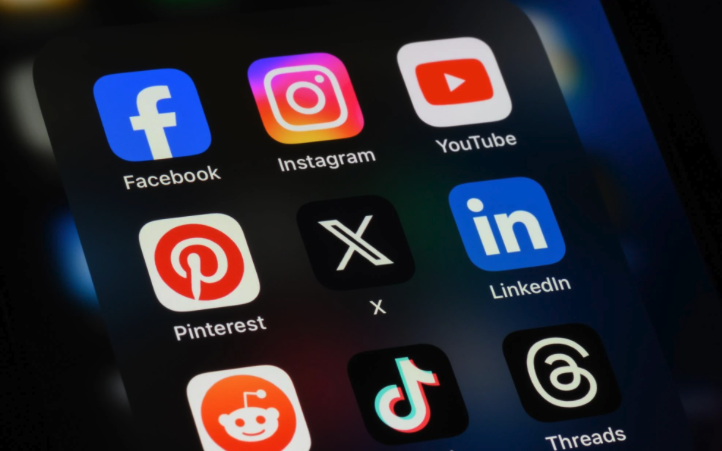
To answer this question and present my belief, we first need to agree what social media is, and it is a series of online platforms built from code, that rely on algorythms to manipulate usage. That is not an opinion, its just a fact. Without people engaging with it, it does not exist. Without real people engaging with it, the BOTS would have no reason to exist, as there would be no one to manipulate or influence. For photographers it has been a place for conversation, potential community, marketing opportunities and learning. It has been that for me. However, please notice that I have used the past tense in the last sentence.
It is easy to look back at the golden days of Twitter, at the beginning of the 2010s, to see how much we have lost. In many ways it was a nicer time, where being on social media really could be social. I made friends, shared thoughts, had conversations and saw the benefit of this new form of remote communication. It reminded me of a talk I gave in New York in 2000, where a photographer, in a room of photographers, asked if there was any way of tapping into my thoughts on the medium, any time of the day. It seemed a bizarre request and one that immediately felt that a restraining order request maybe needed. Twitter changed that. Twitter made that gentleman’s wish a reality.
I will admit to being slightly evangelistic about the platform. I couldn’t understand why fellow photographers were not using it. To my eyes not to be engaged, was to not be part of the conversation and that made no sense. I had never seen Facebook as being a useful tool, but Twitter was. I know that others feel the same about the early days of Instagram.
Twitter evolved into a different thing, with a distinctly bad smell and Instagram lost its sense of original purpose, with the addition of ads and films, audio and love hearts. Have no fear we were told, now we have new kids on the block, Mastodon, Blue Sky and Threads. These will meet your engagement expectations. They didn’t.
I am on every social media app, including platforms such as Substack, Medium and Tik Tok. I cover the social media ground. Therefore, I feel that I can given a reasonably informed overview of the state of social media today and it is this. As social platforms they are dead. The mutually respectful debate and conversation has gone, replaced with ill-informed angry dogma. The chance of making friends is almost non-existent, replaced with hungry ‘farmers’ of interaction and follower numbers. People are no longer looking to speak with each other, only to shout at them. In short, the social element has been lost.
I am of course working on the basis, that at least some of the accounts on the platforms are attached to living people. I say some, but it would be interesting to know what the actual breakdown of the living and the ‘never-lived’ actually is. Either way it is clear that these platforms are eating themselves.
I used to be a regular user of social media. It could be entertaining, informative and useful. Today, it has the possibility of being two out of those three, but without the entertainment it is no fun in trying to find the remaining two. The result is a mass exodus from all of the social media platforms. A fact evidenced by a 2026 Ofcom report that stated that just under half of adult social media users (49%) now post, share or comment, compared with 61% in 2024. In addition the same report found that about a third of adults say they have deleted an app because they spent too much time on it, or it was bad for their mental health, up from a quarter in 2025.
The death of social media is the fault of the creators, who never appreciated what it was, so absorbed were they/are they with what it could be. A classic example of those in charge, not listening to those they rely upon to have a business. Despite this I will continue to use it as a clarion call to bring people to this website. Making them aware of new articles and podcasts. However, I will no longer look at it for social interaction.
I will leave that for the real world, where I can look someone in the eye, shake their hand, engage in rigorous discussion and agree to agree or disagree with a smile. That is being social, social without the media.
Dr.Grant Scott
After fifteen years art directing photography books and magazines such as Elle and Tatler, Scott began to work as a photographer for a number of advertising and editorial clients in 2000. Alongside his photographic career Scott has art directed numerous advertising campaigns, worked as a creative director at Sotheby’s, art directed foto8magazine, founded his own photographic gallery, edited Professional Photographer magazine and launched his own title for photographers and filmmakers Hungry Eye. He founded the United Nations of Photography in 2012, and is now a Senior Lecturer and Subject Co-ordinator: Photography at Oxford Brookes University, Oxford, and a BBC Radio contributor. Scott is the author of Professional Photography: The New Global Landscape Explained(Routledge 2014), The Essential Student Guide to Professional Photography (Routledge 2015), New Ways of Seeing: The Democratic Language of Photography (Routledge 2019), and What Does Photography Mean To You? (Bluecoat Press 2020). His photography has been published in At Home With The Makers of Style(Thames & Hudson 2006) and Crash Happy: A Night at The Bangers(Cafe Royal Books 2012). His film Do Not Bend: The Photographic Life of Bill Jay was premiered in 2018.
© Grant Scott 2026


Leave a Reply