
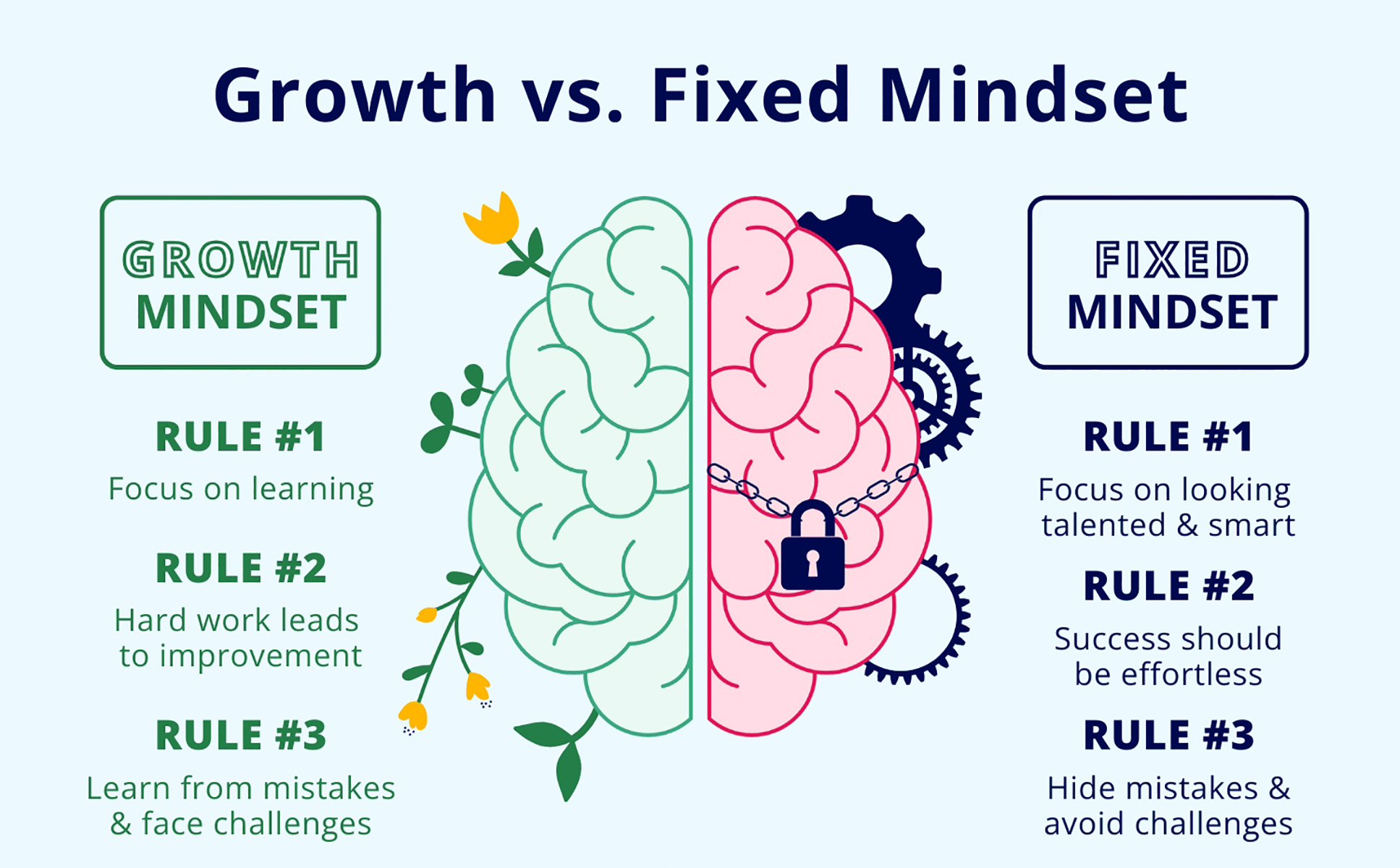
I have previously spoken about the theory of a growth and fixed mindset, but the turbulent environment photographers exist within today has led me to return to the most positive aspect of the theory. The growth mindset.
A theory defined by Carol Dweck, an American psychologist, growth and fixed mindset, was developed as part of her child psychology research, but her findings are not confined to children. In her work, she defines a growth mindset as the ability to reframe perceived failures as opportunities to learn and grow. Sounds interesting? I thought so!
There are many theories within photography that are taught to photographers and often clung to as if they had been carved into stone and bought down from the mountain. The importance of the ‘Golden Hour’, the rule of three-thirds, the ‘Golden Ratio’, centre dominant eye and not cropping the head in a portrait, are just a few. The majority relate to the composition of an image and therefore act as support mechanisms for a fixed mindset. A mindset that believes that talent and traits are fixed assets and is therefore risk averse. That believes that effort is for those not smart enough, and is seen in those being overly defensive to feedback.
These photography ‘rules’ do not support the growth mindset, the most important theory for all photographers to understand and live by, in my opinion. Let me explain why and define what a growth mindset is as simply as possible. There are a few basic rules in creating a growth mindset approach to life. They are to focus on learning. That hard work leads to improvement, that you need to learn from mistakes and face challenges head-on. Photography explained in three easy steps.
In a sense, a growth mindset should be easy for a photographer to adopt, especially a photographer over fifty-years old. Photographers who have already had to move from analogue to digital capture. The darkroom to the digital screen. Who have lived through the introduction of moving image functionality. However, today, photography faces the oncoming threat, or opportunity, depending on your mindset of AI.
A growth mindset response to all of these evolutions, would ensure that a photographer was able to adopt and adapt them into their creative practice. Not to dismiss anything, but to assess the creative opportunites such technological evolution offers. A growth mindset invites experimentation and encourages us to try, fail, and try again. Not to reject or dismiss, without consideration.
It could be argued that AI, is an experiment in growth mindset at this stage of its development. AI technology is in the growing phase, because the technology itself is failing and learning, but inevitably getting ‘better’ with each iteration.
It can be tempting to look at AI as an anti-growth mindset engine, when it comes to skills. After all, how much are you learning when technology provides the answers? The truth is that AI has some answers, but not all the answers, it still requires a human being to make sense of the information it provides. It get’s things wrong. The argument for AI is that the start it provides gives people an opportunity to refine their advanced thinking and skills to bring emotion, context, and insight into the finished outcome. Now you may argue that you don’t need an AI starting point, and I would not disagree with you, but that is not a reason to not find out what that input could give you creatively. Then accept or reject it.
The majority of photographers today are fiercly anti-AI. Seeing it as an evil force, here to destroy all photographers and photography. I remember a similar attitude towards the beginning of digital capture and post-production. In fact, there are still photographers out there who have never moved to digital and still stay faithfully true to the world of film and chemicals. Some even stay true to traditional processs, from over one hundred years ago. That’s okay, whatever works for you, is good for me. If I didn’t feel like that, I would be demonstrating a fixed mindset and I don’t want to do that. However, if you want me to accept the processs from the past, surely it would be fair for me to ask you to consider the processs of the future. That would be to demonstrate a mutual growth mindset.
Just as the dominance of digital photography was inevitable, the same can be said of AI, which is poised to restructure every aspect of our lives, outside of getting a haircut! It will define how work gets done, how information is shared, how innovation and creativity are defined, and how we all learn. This is seen as exciting within medicine, science, engineering and technology. But, have no fear, it can do none of this without human involvement. However, to maximise the potential of any process we have to have a growth mindset, don’t we? Photographers are no different to any other human being and all human beings are capable of improvement if they maintain a growth mindset.
The growth mindset is not only essential for a photographer to deal with AI. It is essential to all aspects of the medium, past, present and future. Is it taught to photographers? Not to my knowledge. Is it seen as important to photographers? Not to my knowledge. Hopefully this article will encourage you to seek out some information, to help you see the benefits of such an approach to your photography and to life itself. As I always say, photography is life and life is photography. Therefore, if you want to improve your photography, an informed approach to life and learning has to be a good place to start.
Further Viewing
https://www.youtube.com/watch?v=hiiEeMN7vbQ
Dr.Grant Scott
After fifteen years art directing photography books and magazines such as Elle and Tatler, Scott began to work as a photographer for a number of advertising and editorial clients in 2000. Alongside his photographic career Scott has art directed numerous advertising campaigns, worked as a creative director at Sotheby’s, art directed foto8 magazine, founded his own photographic gallery, edited Professional Photographer magazine and launched his own title for photographers and filmmakers Hungry Eye. He founded the United Nations of Photography in 2012, and is now a Senior Lecturer and Subject Co-ordinator: Photography at Oxford Brookes University, Oxford, and a BBC Radio contributor. Scott is the author of Professional Photography: The New Global Landscape Explained (Routledge 2014), The Essential Student Guide to Professional Photography (Routledge 2015), New Ways of Seeing: The Democratic Language of Photography (Routledge 2019), What Does Photography Mean To You? (Bluecoat Press 2020) and Inside Vogue House: One building, seven magazines, sixty years of stories, (Orphans Publishing 2024). His photography has been published in At Home With The Makers of Style (Thames & Hudson 2006) and Crash Happy: A Night at The Bangers (Cafe Royal Books 2012). His film Do Not Bend: The Photographic Life of Bill Jay was premiered in 2018.
© Grant Scott 2026


Leave a Reply