
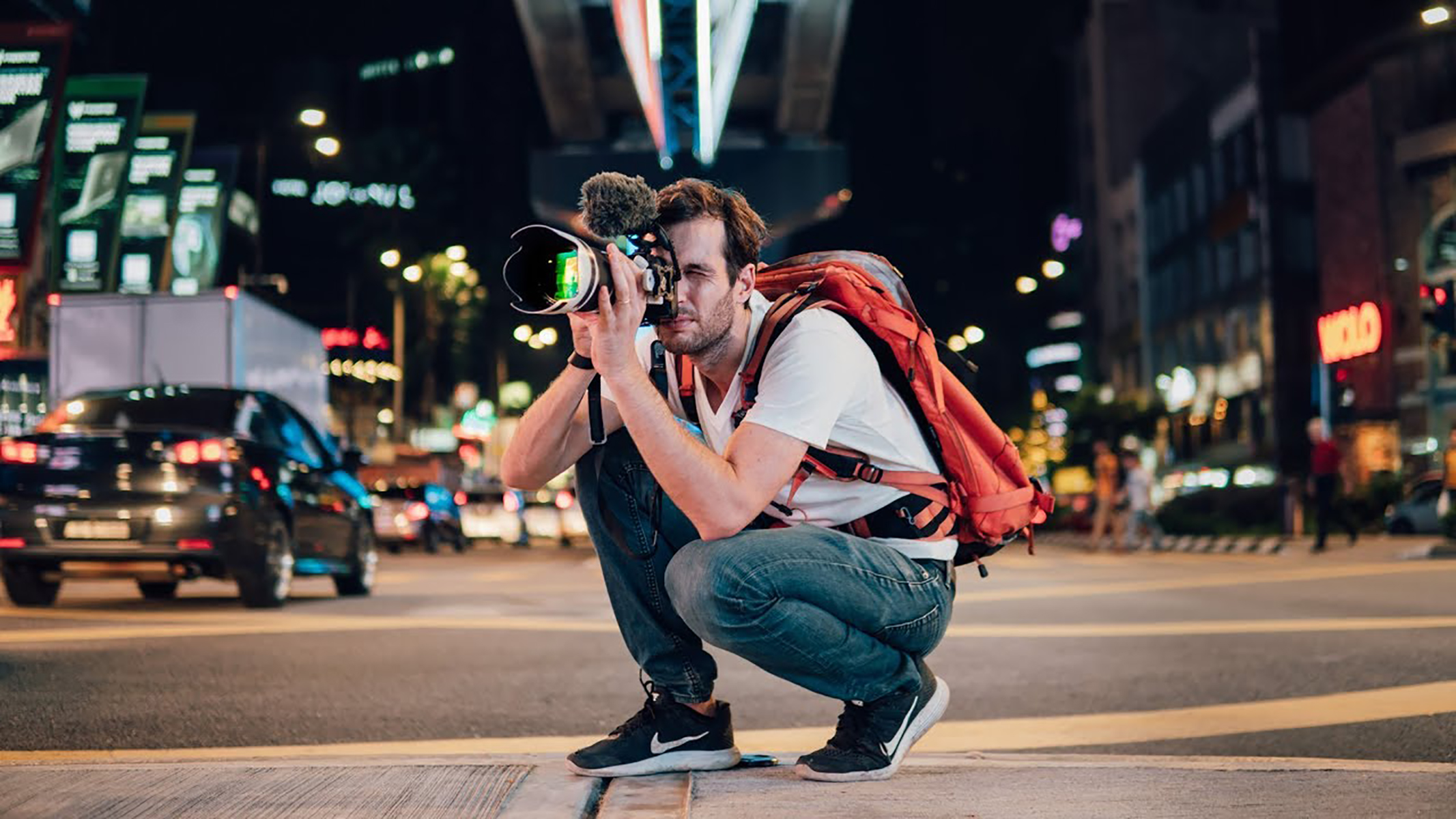
I recently saw someone make this statement. “I am giving up my full-time career to work everyday as a street photographer”. I have to say that, I immediately felt for the young man who had made this decision.
My first reaction was to reach out to him and stage an intervention. To encourage him to think again. To reconsider. The reason for this response is that I know the reality of working as a photographer. There is a particularly dark joke that goes like this. What is the difference between a 12″ deep pan pizza and a photographer? The pizza can feed a family of four. As always in a good joke, this one has more than an element of truth.
I understand how to make money as a photographer having worked as an art director and as a photographer over the last forty years. Through the good times and the bad. I know that it is possible, but it is not easy. It requires strong work, a nuanced understanding of how commisioning works, resilience, good networking skills and a focused portfolio.
There is work for photographers within editorial and advertising markets. For magazines, brands, design groups and marketing agencies. There is a need for photographers to document sport, fashion, interiors, food, architecture, celebrities, jewellery, gardens, weddings and events etc. etc. Fees and budgets are not what they were, but they do exist. All of this work is commissioned to sell a product or a message. To document an event. None of it is based on a photographer going out on the street to make pictures of whatever they want, however they want and whenever they want. To show the world how they see it!
If you have an independent income by all means devote your life to street photography, but if you have financial commitments I wouldn’t recommend it.
The person who gave up his day job, may think that he will make enough money to live by selling prints. He won’t. He may feel that brands will find him and buy his work from him. They won’t. He may think that magazines will pay to publish his photographs. They won’t. He may feel that he will support his lifestyle by syndicating his images. He won’t.
The truth is that non- commissioned photography is reliant on aspects that take years to establish. Audience, distribution networks, marketing process, profile building articles, publication in books, exhibitions in galleries and most importantly an archive of work that has a sense of authorship.
Inevitably, such photographers also make portrait and news based work to supply an actual income to support any street photography they make. Let’s take Martin Parr as an example. A man who made images on the streets, all of his life. He did everything I have just outlined, and he was a member of Magnum, but he also made TV commercials for Birds Eye frozen foods, photographed models for fashion magazines, and celebrities. He was a Professor at the University of Ulster in Northern Ireland and accepted commissions from museums and magazines. He had a strong line of ‘merch’. In short, he did not make money from street photography. He made money from publishing and getting commissioned.
I know that Youtube is full of people making street photography and interviewing ‘cool’ street photographers. Most of which seem to be in Manhatten or Brooklyn! Shooting film, dressed well, without a care in the world. It looks like an exciting life. Certainly far more exciting than having to go into an office each day. I have watched a few of these films and my take away is that the images that are shown are not very good and that none of these photographers ever explain how they fund these daily adventures or their lives. I wonder why not! There is no doubt that it is possible to make money as a YouTuber and not be a great photographer, but that doesn’t make you a photographer. It makes you a YouTuber that takes pictures. There is a difference, and it’s an important one.
My advice to the young man who had given up his career and anyone who is considering taking the same action is to ‘scratch beneath the surface’. To take a look behind the curtain, to see the mechanics. To see that photography is an industry and to make money as a photographer you need to understand that industry. Street photography is not part of that industry. It never has been and it never will be. I wish him luck and success, I can do no more than that.
I’ll leave you with one more joke, that is just as dark as the first, but just as truthful, “The fastest way to make money from photography is to sell your camera”.
Dr.Grant Scott
After fifteen years art directing photography books and magazines such as Elle and Tatler, Scott began to work as a photographer for a number of advertising and editorial clients in 2000. Alongside his photographic career Scott has art directed numerous advertising campaigns, worked as a creative director at Sotheby’s, art directed foto8 magazine, founded his own photographic gallery, edited Professional Photographer magazine and launched his own title for photographers and filmmakers Hungry Eye. He founded the United Nations of Photography in 2012, and is now a Senior Lecturer and Subject Co-ordinator: Photography at Oxford Brookes University, Oxford, and a BBC Radio contributor. Scott is the author of Professional Photography: The New Global Landscape Explained (Routledge 2014), The Essential Student Guide to Professional Photography (Routledge 2015), New Ways of Seeing: The Democratic Language of Photography (Routledge 2019), What Does Photography Mean To You? (Bluecoat Press 2020) and Inside Vogue House: One building, seven magazines, sixty years of stories, (Orphans Publishing 2024). His photography has been published in At Home With The Makers of Style (Thames & Hudson 2006) and Crash Happy: A Night at The Bangers (Cafe Royal Books 2012). His film Do Not Bend: The Photographic Life of Bill Jay was premiered in 2018.
© Grant Scott 2026


Leave a Reply