
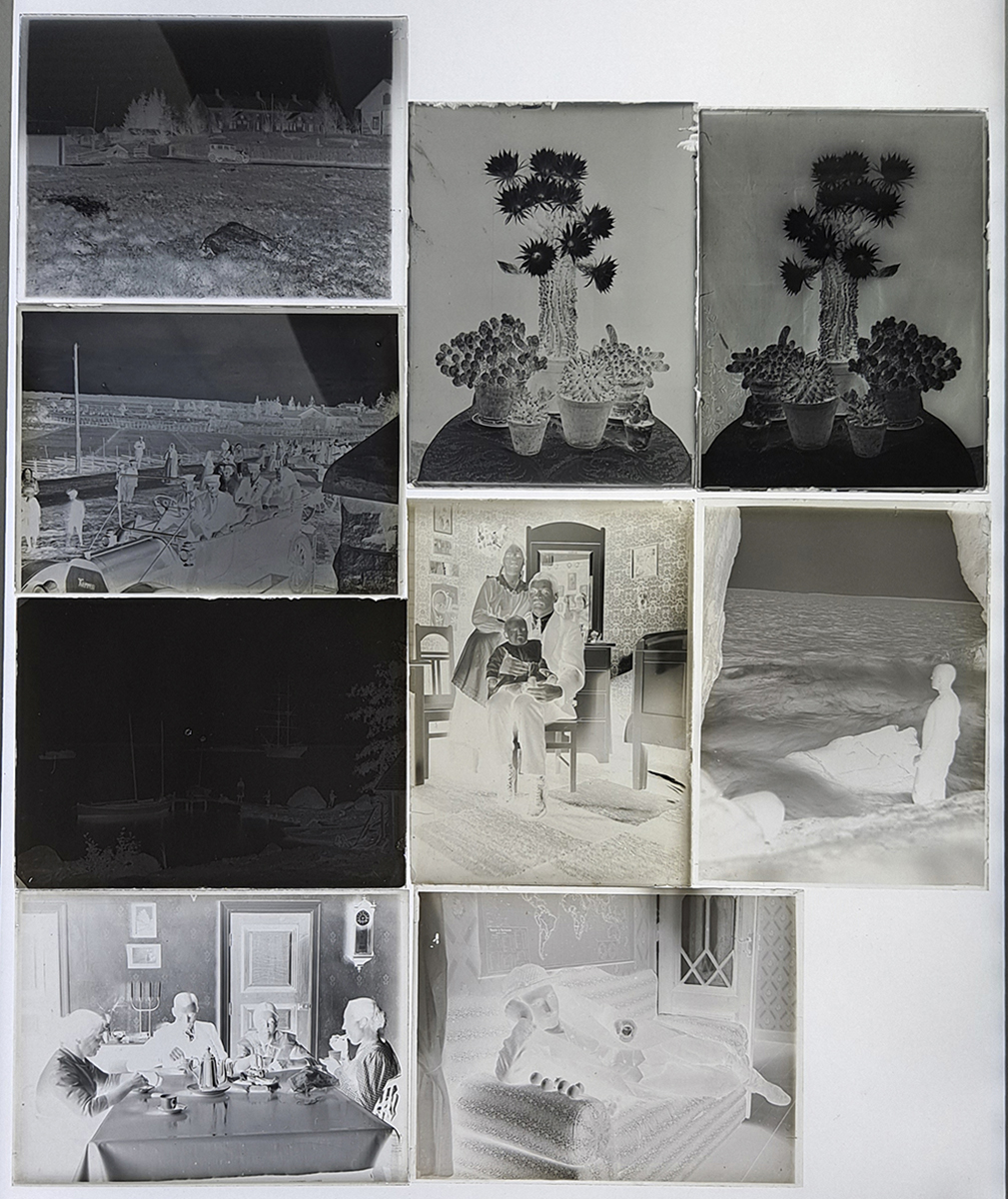
Any photographer who grew up with analogue photography, or any photographer still employing that process, should be good at this. The creation of an analogue print, is exactly that transformation. However, the transferral of a chemical process into real life, is not easy.
Each day I speak with my 89 year-old father and each day our conversation ends, with him telling me that “the world is on fire”. In this Summer of 2026, his observation could be seen as being literal in the UK, Spain, France, Greece, Portugal, Italy and Canada, but he doesn’t mean global warming. He means politically, socially and economically. As people and photographers, these real life situations impact directly on the relationships we have, with people connected to our photography and our practice.
I was recently asked to work on a project prior to a meeting. I did my research, trusted the brand and completed the work. The meeting went ahead and it seemed to go well. Lot’s of laughing and agreement. They said they would be in touch in a few days. Seven days later, they rang to say that the project was not going ahead. They gave no clear reason, just a selection of cryptic sentences. My wife thought that I would be angry and disappointed. I wasn’t, I was actually grateful. Not grateful that the project didn’t go ahead, but grateful that the process had made me reassess elements in my work, that I had taken for granted. Literally!
This was not my ‘first rodeo’ and certainly not the first time a project has not progressed, but this time it made me reconsider how creatives are being treated today. I wonder how many times you have worked on a project for free and found yourself being told, that although the client enjoyed meeting you and appreciated your work, the project would not be progressing. It leaves a nasty taste in the mouth everytime, but to me it is an important indicator that this is not a client to work with. In essence you have been saved by them, from them.
This has always been my approach, but it seems that the ‘fake’ project is becoming more prevalent, as the lack of respect for creatives grows. The issue is that we are often approached today by people who are not the decision makers, within an organisation. They may think they do, but they don’t. The money men and women always have the final say. The commissioner may be well intentioned, but such good intention, can be dangerous. For a photographer’s mental wellbeing, self-respect and motivation.
I can’t suggest any way of avoiding these situations. I wish I could, but even with years of experience from both sides of the commissing equation, I still get caught out. My only suggestion is to not take rejection personally. You are not to blame, they are. They are the ones who are being disrespectful and unprofessional.
These days are tough for most of us, and the addition of such behaviour by those we are reliant upon for our income, is not needed. It is dispiriting at best, depressing at worst. The people acting in this way may not be aware of this. If they are, they won’t admit it, but I don’t think they are. If you have never worked on a freelance basis, it is an impossibility to understand the fragility of that life.
I began this article by saying that we are affected by everything that is happening in the world. No one person is immune to the daily news, including commissioners and photographers. It could easily be argued that we are all impacted by the world being ‘on fire’. The challenge is to take the positive from a tsunami of negatives. I always try to be a ‘stoic-realistic-optimist’. Someone, who attempts to distance themselves from having high expectations of others and situations, whilst accepting that stuff happens, but that good can come from even the worst situations. If you want to put that into photographic terms, try this. A good print can come from a bad negative, if it’s printed by a really good printer with a positive attitude.
Dr.Grant Scott
After fifteen years art directing photography books and magazines such as Elle and Tatler, Scott began to work as a photographer for a number of advertising and editorial clients in 2000. Alongside his photographic career Scott has art directed numerous advertising campaigns, worked as a creative director at Sotheby’s, art directed foto8 magazine, founded his own photographic gallery, edited Professional Photographer magazine and launched his own title for photographers and filmmakers Hungry Eye. He founded the United Nations of Photography in 2012, and is now a Senior Lecturer and Subject Co-ordinator: Photography, at Oxford Brookes University, Oxford, and a BBC Radio contributor. Scott is the author of Professional Photography: The New Global Landscape Explained (Routledge 2014), The Essential Student Guide to Professional Photography (Routledge 2015), New Ways of Seeing: The Democratic Language of Photography (Routledge 2019), and What Does Photography Mean To You? (Bluecoat Press 2020). His photography has been published in At Home With The Makers of Style (Thames & Hudson 2006), Crash Happy: A Night at The Bangers (Cafe Royal Books 2012) and Inside Vogue House: One building, seven magazines, sixty years of stories (Orphans Publishing 2024). His film Do Not Bend: The Photographic Life of Bill Jay was premiered at the Martin Parr Foundation, Bristol in 2018. He is the founder and presenter of the weekly A Photographic Life podcast.
© Grant Scott 2026
Leave a Reply